
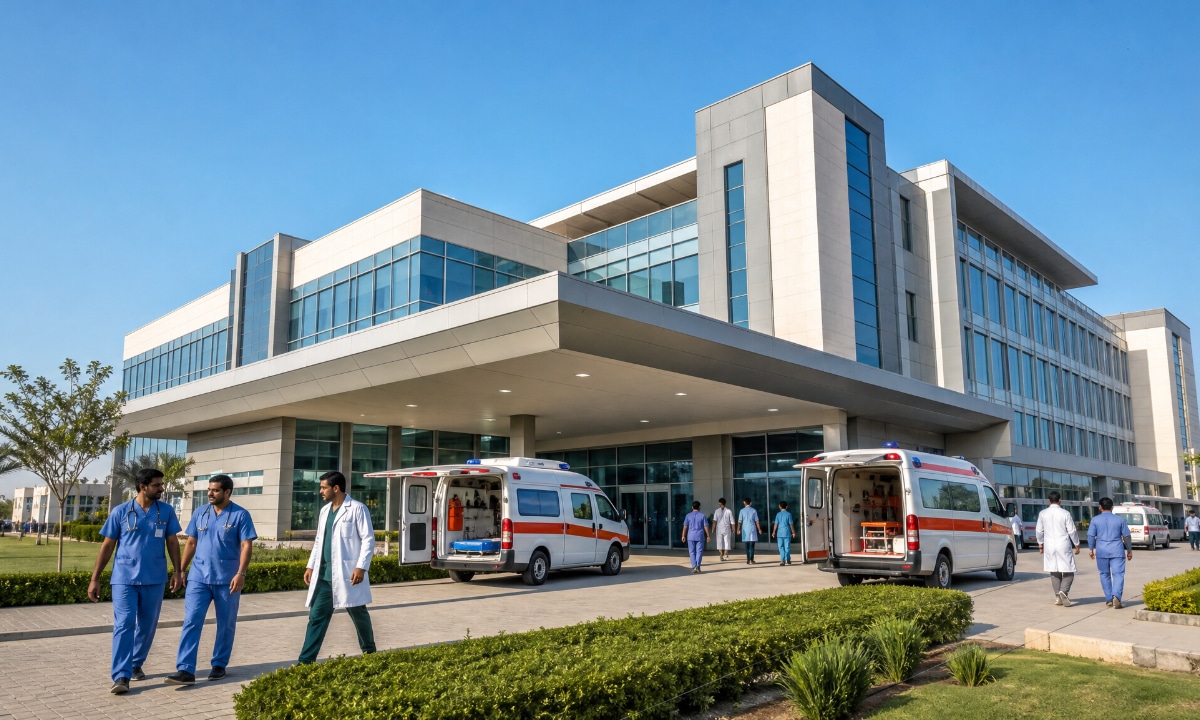
The Punjab government has calibrated its healthcare strategy with the upcoming inauguration of the Jinnah Institute of Cardiology on August 15. This structural advancement in Lahore represents a precision-engineered response to the rising demand for cardiovascular specialized services. Consequently, the facility will effectively bridge the gap between existing capacity and patient volume, ensuring a more resilient health baseline for the province.
The Translation: Decoding Specialized Infrastructure
The launch of the Jinnah Institute of Cardiology serves as a catalyst for systemic efficiency. Rather than merely adding beds, this institute introduces a centralized model for specialized heart care. Specifically, the government is investing in modern medical technology to shorten waiting times and improve patient throughput. Furthermore, the strategic placement of this institute aims to alleviate the current burden on over-saturated cardiac centers, allowing for a more calibrated distribution of medical resources across Punjab.
The Socio-Economic Impact: Precision Care for the Public
How does this development change the daily life of a Pakistani citizen? For the average household, this facility translates to localized access to high-tier medical interventions. Previously, patients often faced long delays for life-saving cardiovascular procedures. Consequently, the institute will provide a baseline of security for urban and rural residents alike. By providing advanced treatment within the public sector, the government reduces the financial strain on families who would otherwise seek expensive private care.
The Forward Path: A Momentum Shift in Healthcare
In the view of STEM-driven analysis, the opening of the Jinnah Institute of Cardiology represents a definitive Momentum Shift. It moves Pakistan beyond the era of passive reporting on health crises and into a phase of structural progress. While maintenance of existing facilities remains a priority, the addition of specialized, high-capacity hospitals is essential for national advancement. This development signals a strategic pivot toward a more sophisticated and capable public health frontier.








