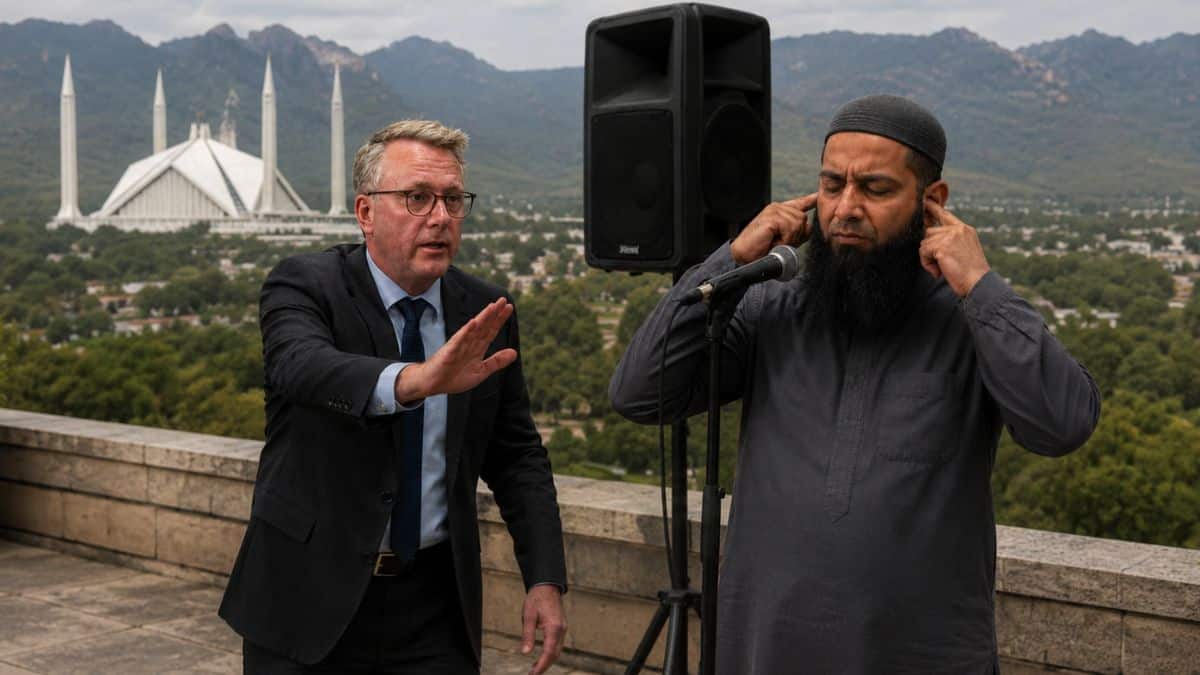
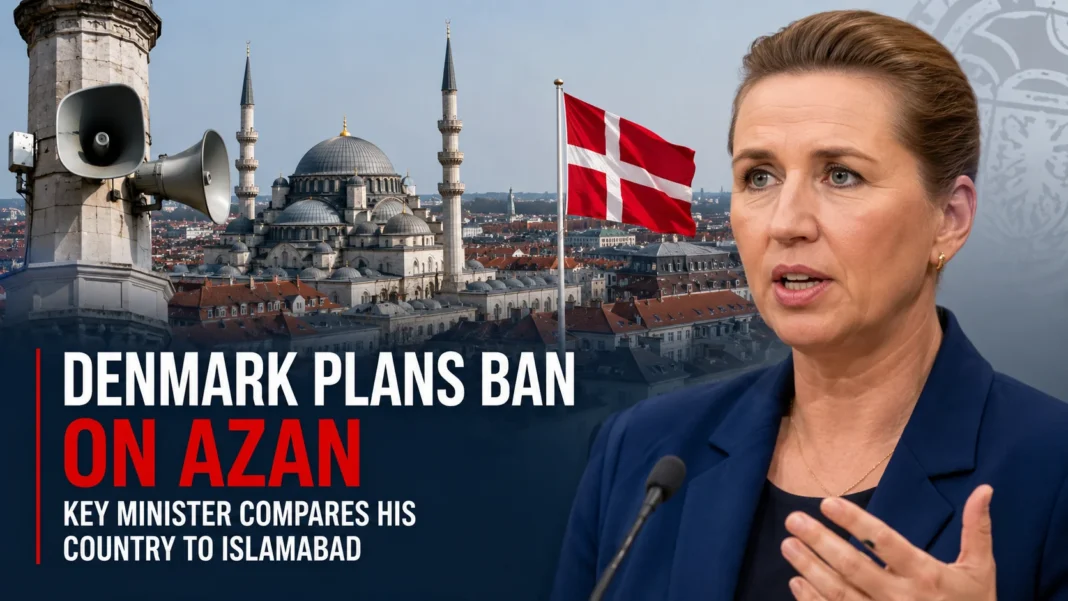
The architectural framework of Danish secularism is undergoing a significant recalibration. Denmark’s immigration ministry recently proposed a Denmark Azan ban to restrict the public Islamic call to prayer from mosque loudspeakers. Minister for Immigration and Integration Morten Bødskov initiated a legal review to prevent religious signals from broadcast across Danish urban landscapes. He specifically compared certain local districts to a “suburb of Islamabad,” signaling a strategic pivot in the country’s integration baseline.
The Translation: Contextualizing “Systemic Secularism”
In technical terms, the Danish government is attempting to redefine the “public soundscape.” While religious practice remains protected within private structures, the state is seeking to eliminate amplified religious markers from public squares. This move translates to a structural preference for a neutral or historically Christian acoustic environment. Furthermore, the comparison to “Islamabad” indicates that the ministry views the public Azan as a catalyst for cultural parallel societies rather than religious expression alone.
Socio-Economic Impact: Structural Friction for the Diaspora
This policy change directly affects the daily lives of thousands of Pakistani-Danes and other Muslim residents. For many, the Azan serves as a precision-timed anchor for community life and spiritual discipline. Consequently, a Denmark Azan ban could increase the feeling of “othering” among professional and student populations in urban centers like Copenhagen and Aarhus. In contrast to the open religious displays in Pakistan, this move creates a social friction point that might discourage high-skilled Muslim talent from viewing Denmark as a long-term home.
Legal Precision: The Constitutional Baseline
The Danish constitution strictly protects the right to practice religion. However, it calibrates this right against the baseline of “public order or morality.” Legal experts must now determine if mosque loudspeakers constitute a breach of this order. Supporters argue that noise pollution laws offer a calibrated pathway to justify the restriction. Conversely, critics suggest that targeting the Azan specifically, rather than all religious sounds, could be a discriminatory move that violates equal treatment principles.
The Forward Path: Momentum or Stabilization?
Opinion: Stabilization Move. This development represents a calculated move to stabilize the domestic political landscape by addressing the concerns of the Danish right-wing electorate. While presented as a matter of “soundscape management,” it is clearly a strategic tool for cultural homogenization. For Pakistanis, this is a signal to adapt to a more “private” religious practice model. We view this as a stabilization move for the current government but a potential momentum loss for pluralistic social cohesion in the Nordic region.
- Key Stakeholder: Morten Bødskov, Minister for Immigration.
- Current Status: Legal review in progress; no bill introduced yet.
- Core Conflict: Religious freedom vs. Public order regulations.