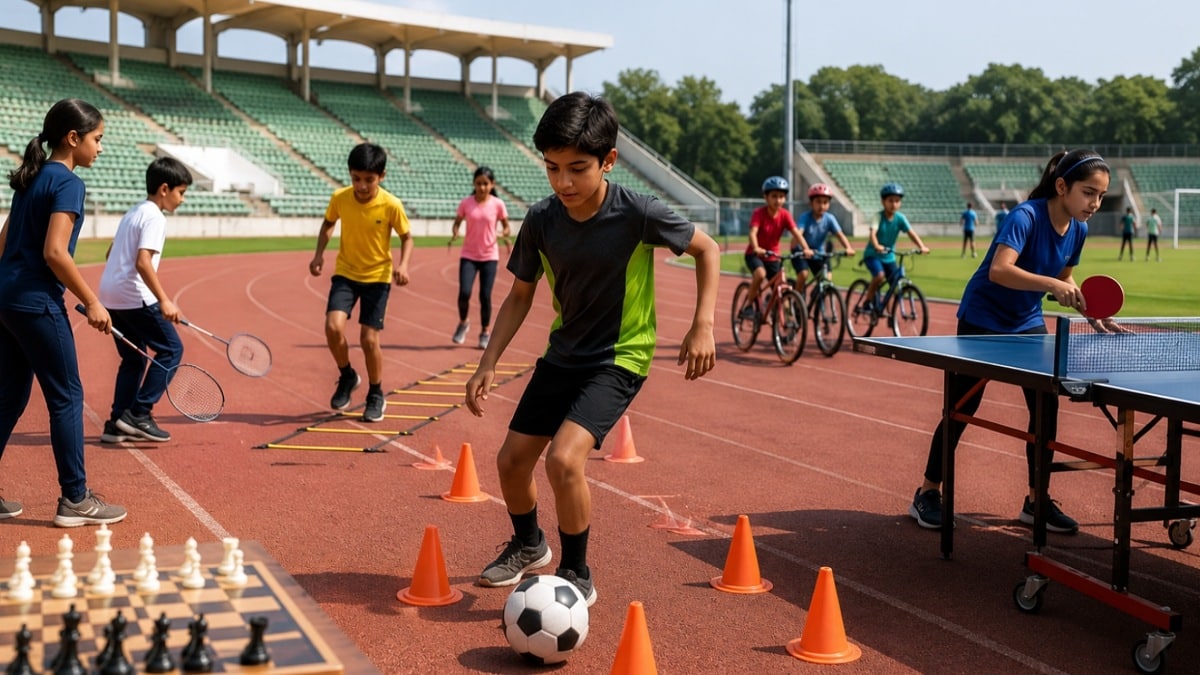
The structural evolution of a nation’s sporting potential depends on the precision of its grassroots infrastructure. Recently, the government established 19 free Punjab Sports Academies in Lahore, creating a strategic baseline for high-performance training in the province. Consequently, this first-of-its-kind initiative provides over 2,500 registered athletes aged 6 to 19 with access to specialized coaching and modern facilities. Furthermore, the program serves as a critical catalyst for identifying future champions across 19 diverse disciplines.
A Structural Blueprint for Elite Performance
Punjab Minister for Sports Faisal Ayub Khokhar inaugurated the facilities during a ceremony attended by over 2,000 athletes. Specifically, these Punjab Sports Academies offer year-round training under the guidance of experienced coaches. The project adopts a “China Model,” which prioritizes bringing youth into sports grounds before grooming them for international excellence. Resultantly, the curriculum integrates modern coaching methods to ensure a competitive edge.
Comprehensive Discipline Coverage
The academies facilitate training in a wide range of sports, including:
- Field Sports: Cricket, Football, Hockey, and Kabaddi.
- Court Sports: Basketball, Badminton, Tennis, and Table Tennis.
- Combat & Strength: Boxing, Wrestling, Karate, Taekwondo, Wushu, and Ju-Jitsu.
- Precision & Endurance: Swimming, Archery, Squash, Athletics, and Laser Run.
While the first phase focuses on Lahore, the provincial leadership plans to scale these operations to district and divisional levels across Punjab in subsequent phases.
The Situation Room: Strategic Analysis
The Translation (Clear Context)
This initiative represents a shift from recreational physical education to a structured, data-driven academy model. Historically, Pakistan’s youth relied on informal clubs; however, these academies provide a calibrated environment where technical skills are developed systematically. By removing financial barriers, the province is effectively industrializing the talent scouting process.
The Socio-Economic Impact
For the average Pakistani household, professional sports training is often an inaccessible luxury due to high costs. Consequently, these free academies democratize elite training, allowing talent from all socio-economic backgrounds to compete on a level playing field. This creates a viable professional pathway for students and professionals, potentially boosting Pakistan’s representation in the global sports economy.
The Forward Path (Opinion)
This development is a definitive Momentum Shift. By moving toward a year-round training cycle rather than seasonal camps, Punjab is stabilizing its talent pipeline. To maintain this progress, the government must ensure the sustained maintenance of these facilities and integrate performance-tracking technology to monitor athlete growth beyond the first phase.