
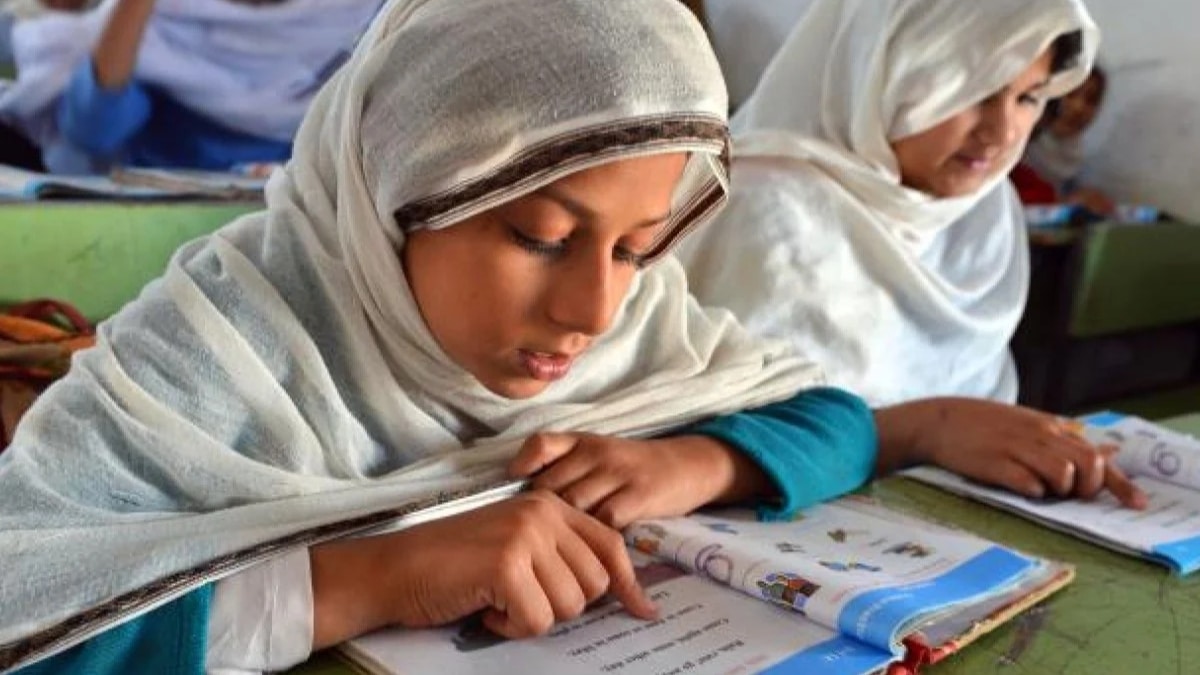
The structural integrity of a nation is calibrated by its baseline literacy rates. Currently, a systemic Pakistan learning crisis compromises our human capital. Data from Gallup Pakistan indicates that by Class 5, only 52.3% of students can read a Class 2-level story in Urdu, Sindhi, or Pashto. Furthermore, only 56.3% can read English sentences, while just 49.6% possess the proficiency to solve two-digit division. This precision data suggests a fundamental disconnect between years of schooling and actual knowledge acquisition.
Quantifying the Pakistan Learning Crisis: Literacy and Numeracy Baselines
The situation in early childhood education remains even more precarious. By Class 3, a staggering only 12.4% of students can read a basic story in their national or regional languages. Consequently, the foundation for higher learning is severely weakened before students even reach the middle-school level. Only 13.8% of these children can read English sentences, and a mere 9.1% can perform basic division.
Notably, private schools continue to outperform government institutions in these metrics. However, learning levels remain far from satisfactory across both sectors. While demographic variables like gender and rural-urban location show minor variances, the most significant gap remains linked to schooling status and institutional quality.
The Translation: Breaking Down the Data
In “Next Gen” clarity, this data tells us that the “Seat-Time” metric is failing. Just because a child occupies a desk for five years does not mean they have calibrated their skills to the expected level. A Class 5 student struggling with Class 2 material implies a three-year cognitive deficit. This gap indicates that our curriculum delivery is not synchronized with the developmental milestones of the average student.
The Socio-Economic Impact: Why It Matters to You

For the average Pakistani household, this educational gap functions as a “low-skill trap.” If children cannot master basic literacy by Class 5, their ability to transition into high-value STEM fields or technical vocations is effectively neutralized. This systemic inefficiency leads to a workforce that lacks the precision required for global competition. Consequently, households remain stuck in low-income cycles, and the national economy loses the catalyst of a highly skilled middle class.
The Forward Path: Momentum Shift or Stabilization?

We classify this development as a Momentum Shift. While the raw figures are discouraging, the transparency provided by Gallup Pakistan serves as a necessary catalyst for reform. We must move beyond simple enrollment targets and focus on “Learning Outcomes.” Precision in teacher training and a structural overhaul of the government school syllabus are the only strategic moves that can stabilize the nation’s intellectual capital. The era of passive reporting must end; the era of data-driven educational engineering must begin.
Visit EduNation to find scholarships from around the world.
Source: Gallop Pakistan








