
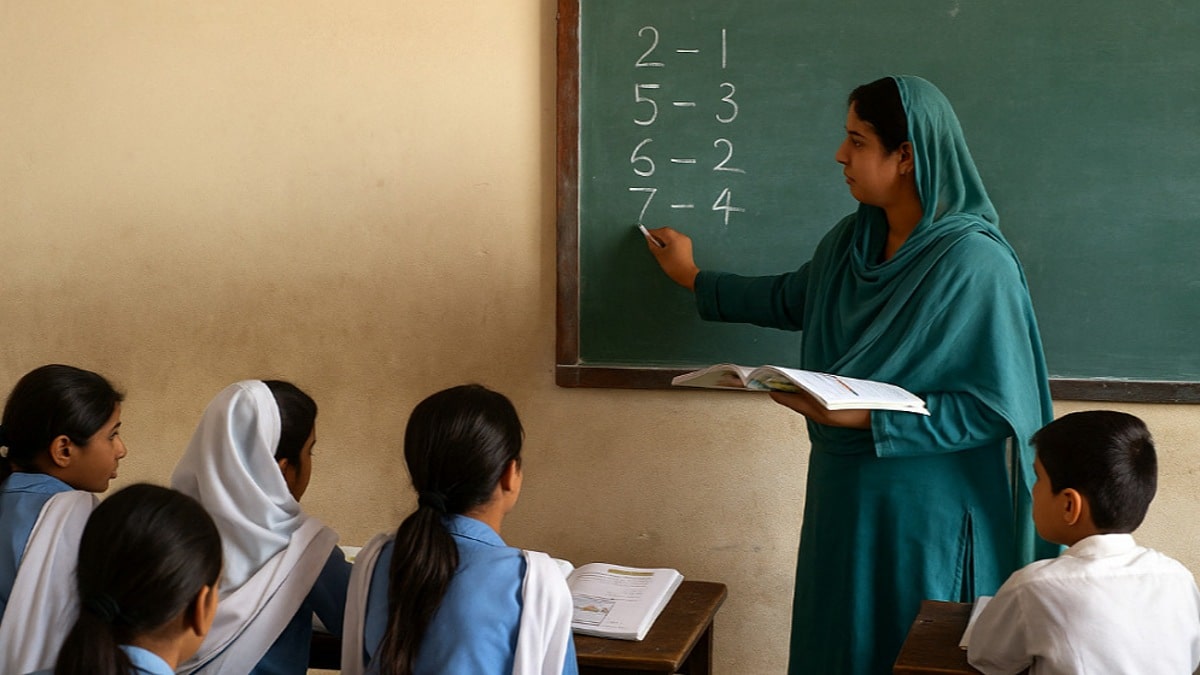
The Structural Realities of Government Schools in Pakistan
The structural integrity of a nation’s future depends entirely on its primary educational baseline. Recent data reveals that approximately 30% of government schools in Pakistan rely on a single teacher to manage multiple grades simultaneously. This multigrade teaching model reflects a calibrated pressure on the public sector, especially when compared to the 20% rate found in private institutions. While school access has expanded, the quality of delivery remains a significant bottleneck for national advancement.

Analyzing the Infrastructure and Resource Gap
Beyond staffing shortages, the survey by Gallup Pakistan identifies a precision-level deficit in basic infrastructure. Primary government schools in Pakistan frequently lack the essential utilities required for a conducive learning environment. For instance, boundary walls exist in only 71% of public schools, whereas private institutions reach an 81% benchmark. Furthermore, drinking water availability sits at 60% in the public sector, trailing the 74% recorded in private schools. Consequently, these discrepancies create an uneven playing field for students across the country.
The Digital Divide and Facility Access
The technological landscape appears even more fractured. Only 7% of government primary schools possess internet access, a stark contrast to the 32% found in the private sector. Computer labs follow a similar trajectory, appearing in a mere 3% of public facilities. Additionally, the study highlights the following disparities in student-facing amenities:
- Student Toilets: 60% in government schools versus 74% in private schools.
- Playgrounds: 45% in public institutions compared to 52% in private ones.
- Science Labs: Reported at critically low levels across all sectors.

The Situation Room: Strategic Analysis
The Translation
In technical terms, “multigrade teaching” is often a forced adaptation rather than a strategic choice. It occurs when the student-to-teacher ratio is so skewed that one professional must split their cognitive focus between different curricula at once. For government schools in Pakistan, this indicates a systemic failure to synchronize school construction with human resource allocation.
The Socio-Economic Impact
This development directly impacts the daily life of the average Pakistani household. Students in these under-resourced schools experience lower learning outcomes, which eventually limits their upward mobility in the job market. For a rural professional or a student in an urban settlement, this gap means that the public system is not yet a catalyst for economic equality. Instead, it maintains a baseline that requires significant private intervention to overcome.

The Forward Path
This data represents a “Stabilization Move” rather than a momentum shift. While we have achieved broader access to schools, we have not yet calibrated the quality of those environments. To achieve a true momentum shift, the state must prioritize digital integration and specialized teacher recruitment. Without these catalysts, the public sector will remain a secondary option for the nation’s youth.
Visit EduNation to find scholarships from around the world.
Source: Gallup Pakistan








