
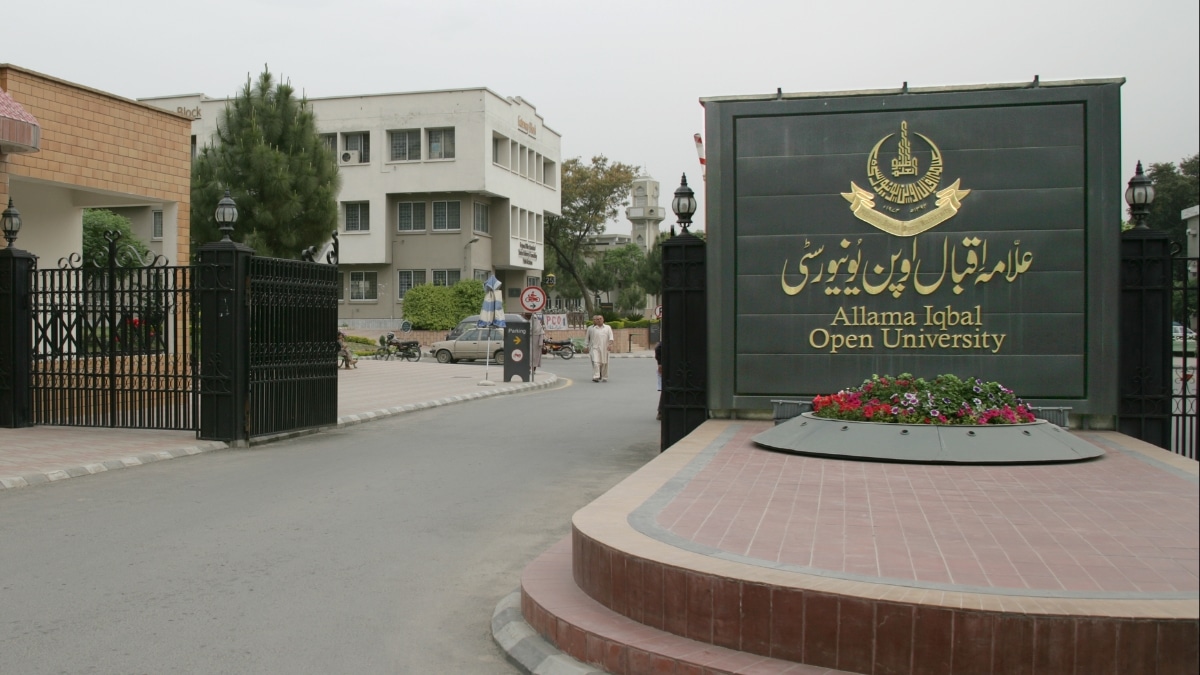
Allama Iqbal Open University (AIOU) has calibrated its academic timeline by releasing the AIOU 2026 Schedule, confirming that Autumn 2026 admissions commence on 1 July 2026. Simultaneously, the university will initiate the Spring 2026 semester examinations on 1 September 2026. This dual-track system requires students to maintain high operational precision to manage their academic progression effectively.
Critical Milestones for the AIOU 2026 Schedule
Precision in administrative documentation is vital for student success. Consequently, AIOU will upload official admit cards and roll number slips by 15 August 2026. Students must secure these documents before the examination phase begins. Furthermore, the university advises recently enrolled individuals to apply for their subsequent semester before their current examinations start. This strategic overlap ensures that the academic engine continues to move without unnecessary pauses between cycles.
Academic Calendar: Open and Distance Learning (ODL)
The ODL framework provides a structured pathway for remote learners across Pakistan. The following milestones define the AIOU 2026 Schedule for this stream:
- Admission Window: 01 July to 05 September
- Mailing of Materials: 01 September to 15 November
- Intensive Study Period: 16 November to 28 February
- Examination Phase: 01 March to 30 April
- Result Declaration: 30 June
Academic Calendar: Face-to-Face (F2F) Programs
For students engaged in direct instructional environments, the timeline shifts to accommodate tests and interviews. Consequently, the schedule follows this calibrated path:
- Admission Window: 01 July to 05 September
- Test & Interview Phase: 06 September to 30 September
- Instructional Study Period: 01 October to 30 January
- Examination Phase: 01 February to 28 February
- Result Declaration: 15 March
The Translation: What This Means for You
The university is implementing a “Continuous Enrollment” logic. Instead of waiting for exam results to decide your next step, AIOU expects students to commit to the next phase of their degree during the current semester. This reduces “idle time” in the national education system, though it requires students to manage registration and exam preparation concurrently.
The Socio-Economic Impact
For the average Pakistani student, especially those in rural or working-class sectors, this clarity in scheduling acts as a catalyst for better financial and professional planning. By providing fixed dates for the AIOU 2026 Schedule nearly a year in advance, the university allows households to budget for fees and professionals to align their work leave with exam dates. This systemic efficiency directly bolsters the productivity of the national workforce.
The Forward Path: An Analyst’s Perspective
This development represents a Momentum Shift for the institution. By standardizing the overlapping admission and examination cycles, AIOU is moving toward a more resilient, high-throughput educational model. While the administrative burden on students increases, the structural benefit of a faster degree completion rate is a net positive for Pakistan’s intellectual capital.








