
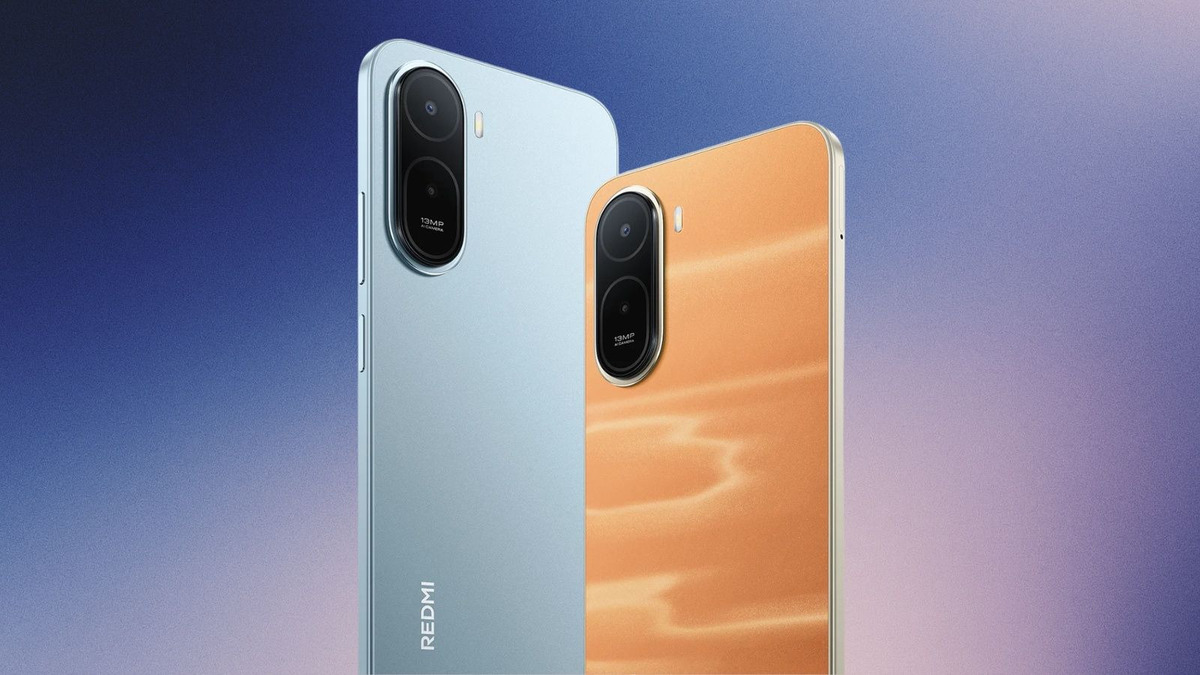
Pakistan’s digital ecosystem requires mobile hardware that bridges the gap between high-performance demands and energy constraints. Xiaomi has strategically calibrated this balance with the release of the Redmi A7 Pro, a device engineered to serve as a catalyst for mobile accessibility. Consequently, this launch introduces a 6,000mAh battery and a high-refresh-rate display into the sub-Rs. 35,000 price bracket, establishing a new baseline for the value-driven consumer.
Visual Engineering and Structural Design
The Redmi A7 Pro features a 6.9-inch LCD panel that delivers a resolution of 1,600 x 720 pixels. Moreover, the display architecture supports adaptive refresh rates of 60Hz, 90Hz, and 120Hz, ensuring fluid transitions during system navigation. With a peak brightness of 800 nits in High Brightness Mode, the device maintains clarity even in high-glare environments. Furthermore, the inclusion of TÜV Rheinland certifications ensures the hardware is circadian-friendly, reducing flicker and blue light exposure during extended use.
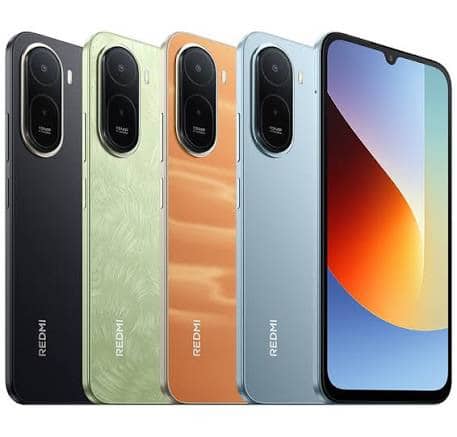
Weighing 208g and measuring just 8.15mm in thickness, the chassis remains ergonomic despite its large-scale power cell. Users can choose from precision-finished colors including Mist Blue, Palm Green, and Sunset Orange. Security is managed through a strategically placed side-mounted fingerprint sensor and integrated AI face unlock technology.
Internal Architecture and HyperOS 3
At the core of the Redmi A7 Pro lies the 12nm Unisoc T7250 chipset. This octa-core processor utilizes two Cortex-A75 cores for high-demand tasks and six efficiency-focused Cortex-A55 cores. Additionally, the device leverages 4GB of LPDDR4X RAM, which can be virtually expanded by an additional 4GB to optimize multitasking. For data management, Xiaomi offers 64GB and 128GB UFS 2.2 storage options, with a dedicated microSD slot supporting up to 2TB for extensive media archives.
Software performance is driven by Android 16 and the refined Xiaomi HyperOS 3. Consequently, users gain access to sophisticated AI tools, including Google Gemini and Circle to Search. Connectivity remains comprehensive with dual-SIM 4G support, dual-band Wi-Fi, and the retention of the essential 3.5mm headphone jack.
Strategic Power Management and Optics
The primary catalyst for the Redmi A7 Pro’s market positioning is its 6,000mAh battery. Xiaomi engineers claim this power cell provides up to 2.37 days of regular use or 35 hours of video playback on a single charge. Although charging is capped at 15W, the battery is rated to maintain structural integrity and performance after 1,000 full charging cycles.
The optical system features a 13MP main rear sensor with an f/2.2 aperture, capable of 1080p video recording at 30fps. On the front, an 8MP camera serves as the baseline for video conferencing and selfies, supporting dedicated night and portrait modes for varied lighting conditions.
The Situation Room Analysis
The Translation
While “6,000mAh” and “120Hz” sound like technical jargon, they represent a fundamental shift in budget hardware logic. In plain terms, this device provides the smoothness of high-end phones (120Hz) while lasting nearly twice as long as standard smartphones. The “Virtual RAM” expansion allows the phone to borrow storage space to keep more apps open, effectively doubling its multitasking capability during heavy usage.
The Socio-Economic Impact
For the average Pakistani professional or student, the Redmi A7 Pro addresses the “Energy Anxiety” common in areas with frequent power fluctuations. A battery that lasts 2.3 days means gig workers, such as delivery riders and freelance commuters, can operate without relying on external power banks. By pricing this under Rs. 35,000, Xiaomi is making high-end software features (Android 16/AI tools) accessible to the lower-middle-class demographic, potentially increasing digital productivity across the country.
The Forward Path
This development represents a Momentum Shift. While the 15W charging speed is a bottleneck, the inclusion of a 120Hz display and Android 16 in this price tier forces competitors to upgrade their baseline offerings. It is a calculated move that prioritizes longevity and modern software over raw processing speed, which is exactly what the mass market requires for stabilization.
Technical Specifications Summary
- Chipset: Unisoc T7250 (12nm Octa-core)
- Display: 6.9-inch LCD, 120Hz Adaptive Refresh Rate
- Memory: 4GB RAM + 4GB Virtual Expansion
- Storage: 64GB / 128GB UFS 2.2 (Expandable to 2TB)
- Battery: 6,000mAh with 15W USB-C Charging
- OS: Android 16 with HyperOS 3
- Main Camera: 13MP Primary with AI Auxiliary
- Front Camera: 8MP Selfie








