
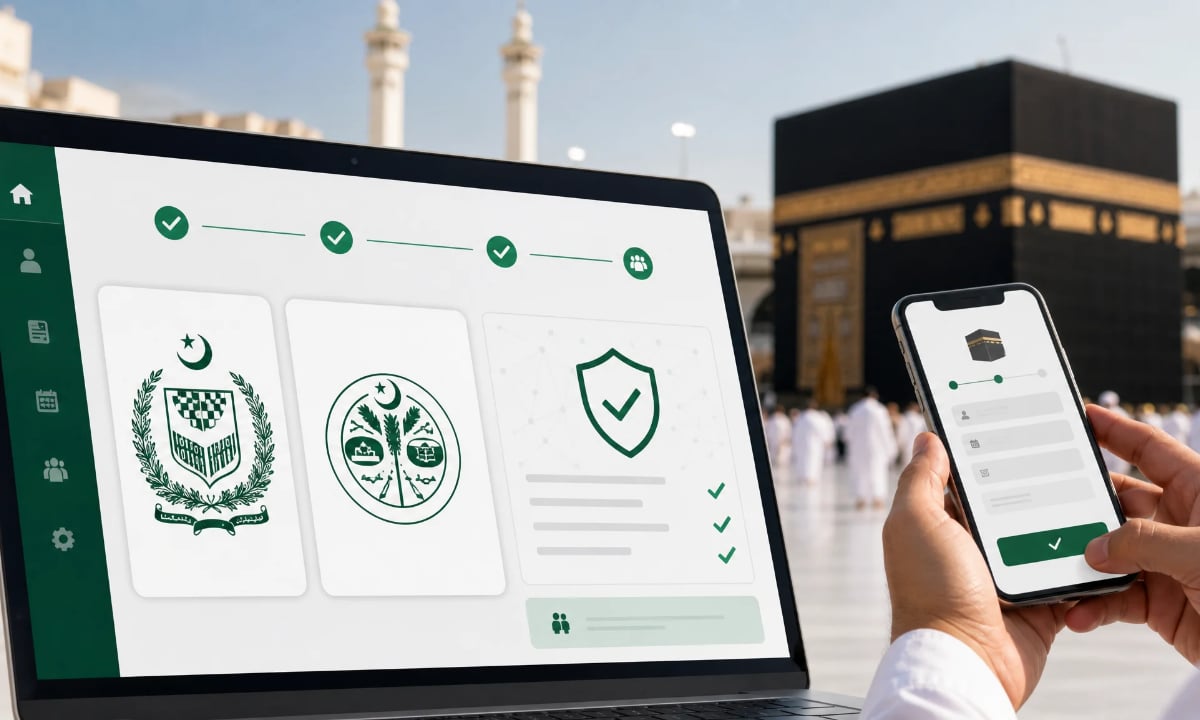
The Federal Cabinet recently calibrated a strategic shift in religious logistics by approving the Private Hajj Policy for 2027–2030. This structural overhaul replaces stagnant quota systems with a meritocratic, performance-based framework designed to enhance system efficiency. Consequently, the Ministry of Religious Affairs is now transitioning all operations into a fully digital ecosystem to ensure unprecedented transparency for Pakistani pilgrims.
Systemic Calibration: Performance-Based Quota Allocation
Under the new directives, the government will allocate private Hajj quotas based on the “First Come, First Served” principle. However, efficiency and strict regulatory compliance remain the primary baseline for selection. Furthermore, the Ministry has introduced a minimum booking threshold; any private firm failing to secure at least 2,000 pilgrims will face immediate deactivation. Consequently, the state will confiscate half of the security deposit from underperforming firms and reallocate their pilgrims to active, verified operators.
Digital Integration and Financial Precision
This policy eliminates manual processes by mandating a Private Hajj Management Portal. This digital infrastructure integrates directly with NADRA and the State Bank of Pakistan to monitor every transaction in real-time. Notably, the government has strictly prohibited cash transactions and manual bookings. To prevent financial mismanagement, private companies can no longer hold pilgrim funds directly. Instead, the State Bank of Pakistan will handle all payments to Saudi service providers, ensuring a secure financial pipeline.
The Situation Room Analysis
The Translation (Clear Context)
The government is essentially “de-risking” the Hajj experience by removing the human element from financial transactions. By enforcing a 2,000-pilgrim minimum, the state is consolidating the market into professional, high-capacity entities. This move eliminates “shell companies” that previously traded quotas like commodities, ensuring that only licensed, capable professionals manage the journey.
The Socio-Economic Impact
For the average Pakistani citizen, this policy acts as a shield against fraud and overpricing. The direct payment system via the State Bank ensures that funds are actually used for the promised services in Saudi Arabia. Students and professionals planning their pilgrimage can now expect a standardized service level, as companies are now ranked and evaluated by independent experts every three years.
The Forward Path (Opinion)
This development represents a Momentum Shift. Moving from a discretionary quota system to a performance-linked digital framework is a catalyst for administrative maturity in Pakistan. While the consolidation may initially challenge smaller operators, the resulting precision and accountability will ultimately elevate the national standard for religious tourism and logistics.








