
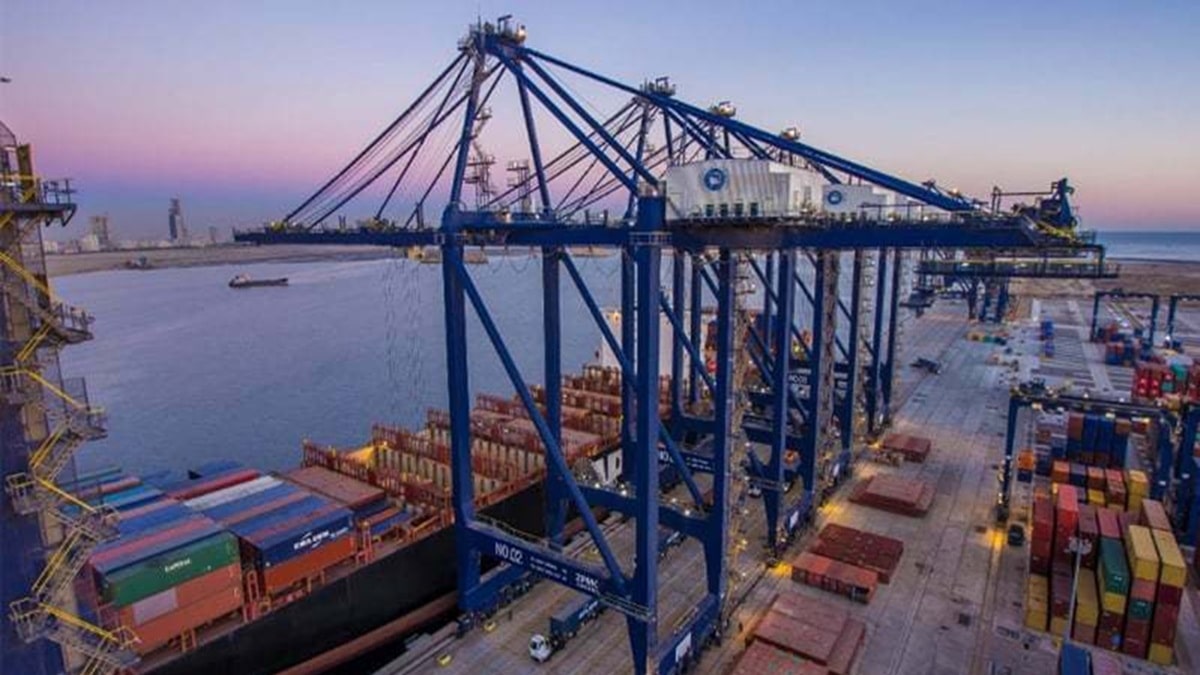
Karachi Port has officially established a monumental Karachi Port record by processing over 2.651 million Twenty-foot Equivalent Units (TEUs) before the conclusion of the current fiscal year. This precision-driven achievement signals a structural shift in Pakistan’s maritime capabilities and industrial throughput. Minister for Maritime Affairs, Junaid Anwar Chaudhry, confirmed that this milestone reflects surging business confidence in the national maritime sector, effectively positioning the port as the country’s primary engine for containerized trade.
Strategic Infrastructure: Analyzing the Karachi Port Record
The government’s calibrated focus on port reforms and modern infrastructure has acted as a catalyst for this unprecedented increase in cargo traffic. By upgrading baseline facilities, Karachi Port has successfully strengthened Pakistan’s shipping and logistics capacity. Furthermore, the administration continues to pursue a strategic mission to transform the nation into a primary regional transshipment hub. Consequently, these operational efficiencies have allowed the port to surpass its previous historic performance benchmarks.

A Vision for Regional Connectivity
The maritime ministry emphasizes that Karachi Port plays a critical role in the broader economic framework of Pakistan. The integration of modern technology and streamlined administrative processes has reduced bottlenecks, allowing for a higher volume of trade. Specifically, the minister highlighted that these structural improvements ensure the port remains competitive within the global maritime trade landscape.
The Situation Room Analysis
The Translation (Clear Context)
In maritime terms, a “TEU” (Twenty-foot Equivalent Unit) is a standard measure for cargo capacity. Handling 2.651 million TEUs indicates that Karachi Port has optimized its “berth productivity”—the speed at which ships are loaded and unloaded. This record is not merely a number; it represents the port’s ability to handle high-velocity global trade without the systemic delays that previously hindered the maritime corridor.
The Socio-Economic Impact
This development directly influences the daily lives of Pakistani citizens by reducing “landed costs” for imported goods and improving the speed of national exports. For the local professional, this growth translates into job stability within the logistics and supply chain sectors. Furthermore, increased port revenue provides the state with the fiscal space necessary to reinvest in urban infrastructure, potentially lowering the cost of living through more efficient trade routes.
The Forward Path (Opinion)
This achievement represents a definitive Momentum Shift. Moving from routine operations to record-breaking throughput suggests that the recent infrastructure upgrades are yielding high returns. To maintain this trajectory, Pakistan must now focus on digitalizing the entire customs process and expanding “hinterland connectivity”—the rail and road networks that move containers from the port to the rest of the country.








