
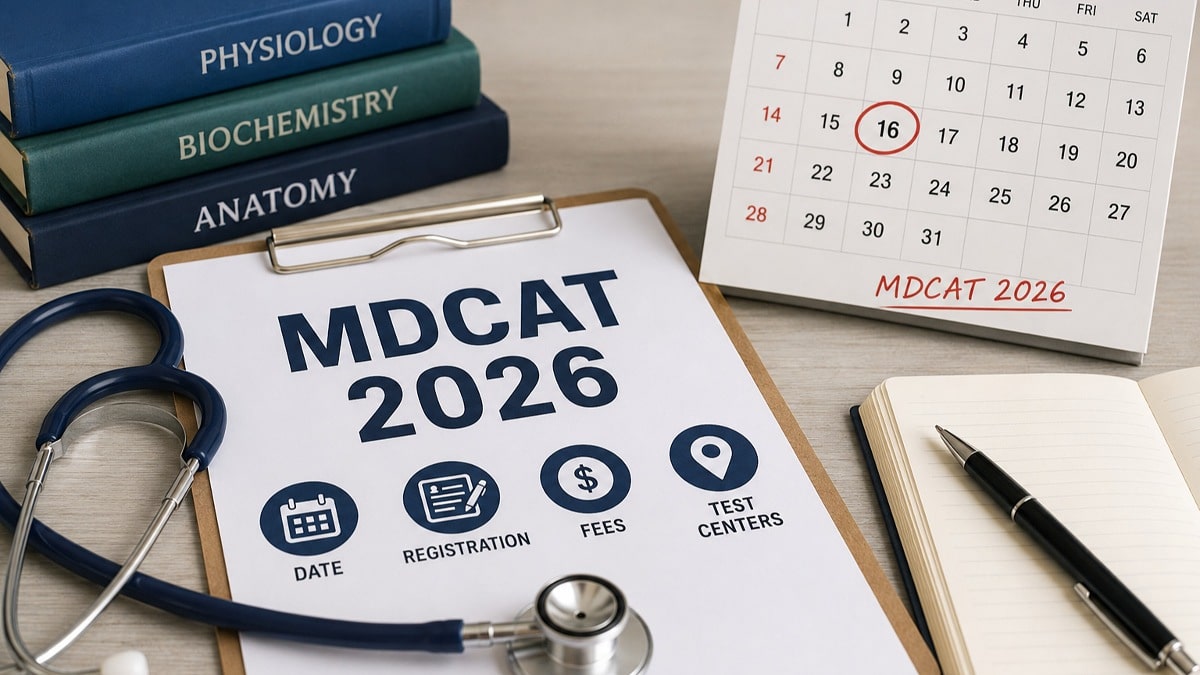
The Pakistan Medical and Dental Council (PMDC) has officially calibrated the MDCAT 2026 registration window, marking a critical milestone for the nation’s healthcare pipeline. This mandatory examination serves as the structural baseline for entry into MBBS and BDS programs across Pakistan. Consequently, candidates must adhere to a strict timeline to ensure their participation in the upcoming August 16 session.
Strategic Timeline for MDCAT 2026 Registration
Precision timing is essential for administrative success. The PMDC has established a clear sequence of events to manage the high volume of applicants efficiently. Candidates should prioritize the normal registration window to minimize costs and ensure systematic processing.
- Online Registration Starts: June 22, 2026
- Online Registration Ends: July 8, 2026
- Late Registration Deadline: July 13, 2026
- Examination Date: August 16, 2026 (10:00 AM PST)
Calibrated Fee Structure and Financial Framework
The PMDC has announced a tiered fee structure for MDCAT 2026 registration, distinguishing between domestic and international testing logistics. Furthermore, all fees are categorized as non-refundable and non-transferable, reinforcing the need for candidate certainty during the application phase.
Domestic Test Center Fees (Pakistan)
- Normal Registration: Rs. 9,000
- Late Registration: Rs. 13,000
International Test Center Fees (Riyadh, Saudi Arabia)
- Normal Registration: Rs. 45,000
- Late Registration: Rs. 55,000
Structural Logistics: Conductive Universities and Centers
To maintain regional efficiency, the PMDC has delegated the examination process to strategic provincial universities. This structural decentralization allows for better resource management and local oversight during the high-stakes test.
- Punjab: University of Health Sciences (UHS), Lahore
- Sindh: Sukkur IBA University
- Khyber Pakhtunkhwa: Khyber Medical University (KMU), Peshawar
- Balochistan: Bolan University of Medical and Health Sciences (BUMHS), Quetta
- ICT/AJK/GB/International: SZABMU, Islamabad
Systemic Framework: MDCAT 2026 Paper Pattern
The 2026 examination remains a paper-based model, designed to test high-level cognitive skills without the penalty of negative marking. This logic-driven approach ensures that the assessment captures the true competency of the candidate across core STEM disciplines.
Subject Distribution Matrix
- Biology: 81 MCQs
- Chemistry: 45 MCQs
- Physics: 36 MCQs
- English & Logical Reasoning: 18 MCQs (9 each)
Complexity Weighting
The paper is architected with three distinct difficulty tiers: 15% Easy, 70% Moderate, and 15% Difficult. This distribution ensures a fair but rigorous filter for the nation’s future medical professionals.
Situation Room Analysis
The Translation
The 2026 MDCAT framework reflects a drive toward administrative standardization. By announcing the MDCAT 2026 registration details months in advance, the PMDC is providing a predictable environment for students. The inclusion of Sukkur IBA in Sindh suggests a continued effort to diversify and secure the testing process through reputable third-party institutions.
The Socio-Economic Impact
For the average Pakistani household, the MDCAT is more than a test; it is a catalyst for social mobility. The fee of Rs. 9,000 represents a significant investment for many. However, the geographic spread of centers across 37+ cities reduces the logistical and travel burden on families in remote areas, effectively democratizing access to the medical profession.
The Forward Path
This development represents a Stabilization Move. While there are no radical shifts in the paper pattern or syllabus, the early announcement and clear regional division of labor suggest a maturing system. For a true momentum shift, Pakistan must eventually look toward a digitized, year-round testing model to alleviate the single-day pressure on the national infrastructure.








