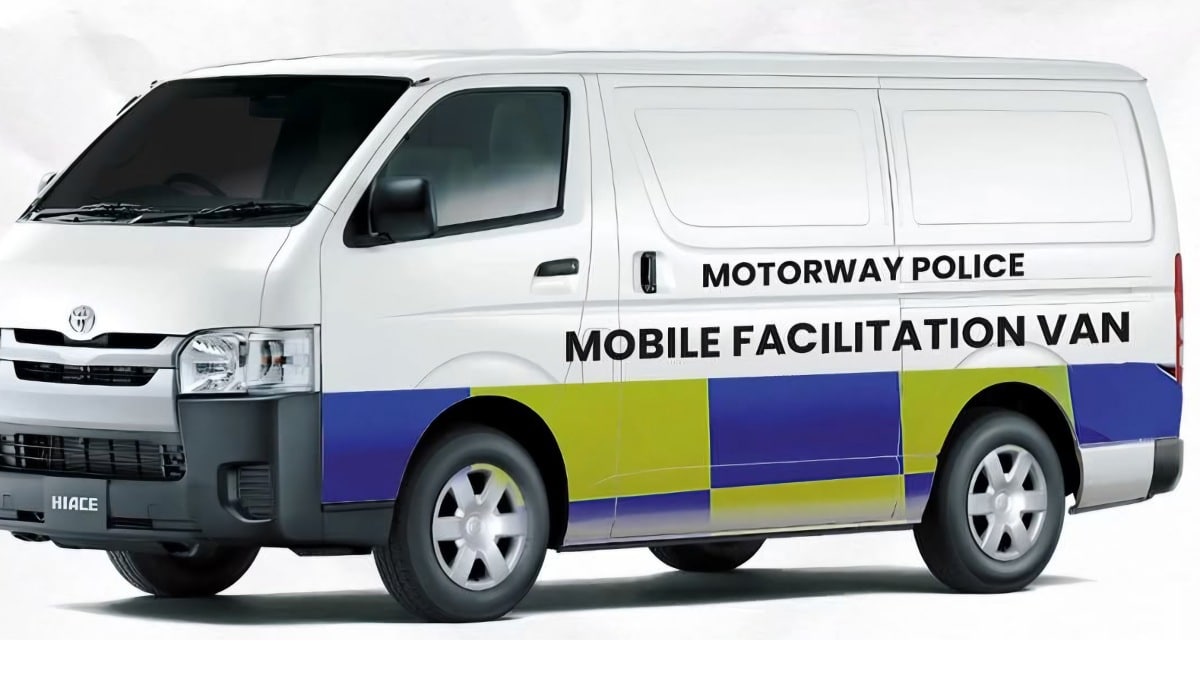
National advancement requires the integration of high-efficiency logistics into public administration, a milestone recently achieved through the NHMP mobile license initiative. The National Highway and Motorway Police (NHMP) transitioned from static to mobile service delivery by launching specialized vans for learner driving licenses. Consequently, this strategic deployment allows citizens to acquire legal documentation at designated local hubs without visiting traditional licensing centers.
Precision in Public Service: The NHMP Mobile License Initiative
The NHMP designed this mobile framework to calibrate public accessibility with modern administrative demands. By utilizing mobile facilitation vans, the police force provides on-the-spot processing for learner permits in various urban and rural sectors. Furthermore, this systemic shift effectively eliminates the friction of long-distance travel for aspiring drivers. The Motorway Police confirmed that this service acts as a catalyst for broader compliance, ensuring that more citizens enter the legal driving baseline with minimal resistance.

Structural Safety: Mandating Fire Extinguishers on Motorways
Beyond administrative convenience, the NHMP is implementing a rigorous safety protocol concerning vehicle fire prevention. Specifically, all vehicles—with a focus on cargo and passenger transport—must now carry functional fire extinguishers. This calibrated safety measure aims to mitigate thermal risks during high-speed transit or unforeseen collisions. Officials announced that after June 24, enforcement will intensify, and non-compliant vehicles will face restricted access to the motorway network. To ensure a smooth transition, the NHMP is executing a nationwide awareness campaign to educate the populace on equipment standards.

The Translation: Simplifying Administrative Barriers
This development represents a shift from “Bureaucratic Inertia” to “Agile Governance.” Instead of the citizen pursuing the state, the state now brings its core infrastructure to the citizen. The move to mandatory fire safety equipment is not merely a legal hurdle but a structural upgrade to the national safety net. It transforms a private responsibility into a collective baseline for road worthiness.

Socio-Economic Impact: Efficiency and Road Resilience
For the average Pakistani household, this initiative reduces “Time Poverty.” Students and young professionals can now secure an NHMP mobile license during lunch breaks or at local community spots, preserving valuable productive hours. Economically, the fire safety mandate protects the national supply chain. By preventing vehicle fires, the NHMP reduces cargo loss and prevents traffic bottlenecks that cost the economy millions in lost fuel and time.

The Forward Path: A Momentum Shift
We categorize this development as a Momentum Shift. The NHMP is moving away from purely reactive policing toward a model of preventative infrastructure. While the fire safety deadline of June 24 is ambitious, it establishes a high-precision standard for national road safety. This evolution signals that Pakistan’s transport authorities are prioritizing system efficiency and human safety over legacy administrative procedures.