
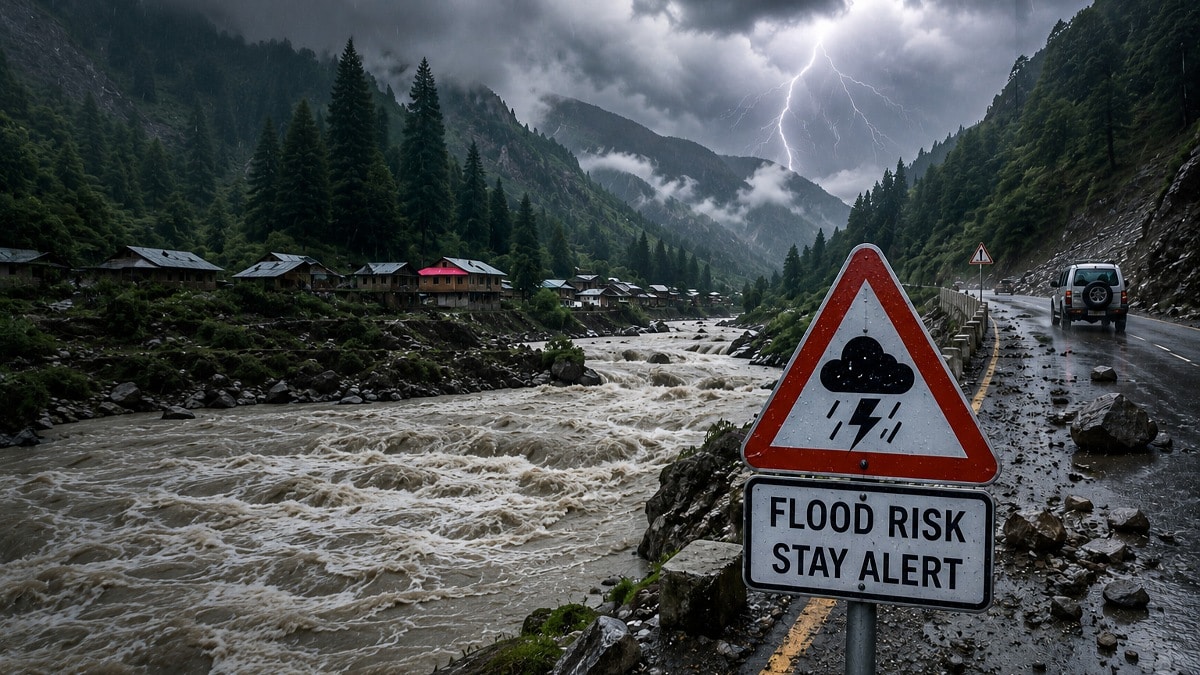
Pakistan’s National Disaster Management Authority (NDMA) has calibrated its surveillance systems to issue a critical NDMA flood alert spanning June 16 to 20. This strategic warning targets a westerly weather system poised to impact the nation’s northern and upper geographic corridors. By integrating real-time atmospheric data, the National Emergencies Operation Center (NEOC) predicts a convergence of thunderstorms, heavy rainfall, and potential hailstorms across diverse provinces.
Regional Risks Identified in the NDMA Flood Alert
The NDMA flood alert identifies a high-velocity weather pattern moving through Punjab, Khyber Pakhtunkhwa, and the northern territories. Consequently, specific districts like Islamabad, Rawalpindi, and Sialkot must prepare for significant precipitation. Furthermore, the atmospheric instability extends to Gilgit-Baltistan, Azad Kashmir, and upper Sindh. Precision mapping suggests that while the rain offers thermal relief, it simultaneously increases the baseline risk for structural runoff and environmental hazards.
The Translation: Decoding GLOF Risks
The National Disaster Management Authority warns of “GLOFs”—Glacial Lake Outburst Floods. In technical terms, rising temperatures act as a catalyst for rapid glacier melting. When glacial lakes breach their natural moraine dams, they release a catastrophic volume of water downstream. This structural failure in the cryosphere directly threatens downstream communities with sudden, high-intensity flooding that exceeds standard river capacities.
High-Risk Zones and Connectivity Challenges
Specific northern nodes face a heightened probability of glacial surge according to the latest NDMA flood alert. These calibrated risk zones include Hasanabad, Shisper, Gulkin, and Passu. Additionally, the regions of Skardu and Shigar remain under high-frequency monitoring. Heavy rainfall typically triggers landslides, which often disrupt vital transport arteries like the Karakoram Highway. Therefore, the NDMA has placed response units on high alert along sensitive highways to maintain system resilience and ensure rapid debris clearance.
The Socio-Economic Impact
For the average Pakistani citizen, this development impacts two primary sectors: transportation and agriculture. Disruptions to northern road networks stall the supply chain for perishable goods, potentially causing localized price volatility in urban centers. For rural households, the threat of GLOFs represents more than just a water surge; it involves the potential loss of arable land and livestock. Travelers must exercise strategic caution, as unplanned road closures can trap tourists in remote sectors without immediate logistical support or medical access.
The Forward Path: An Expert Assessment
This alert represents a Momentum Shift in Pakistan’s disaster preparedness. By utilizing predictive modeling rather than reactive reporting, the NDMA is establishing a more resilient national safety baseline. However, the recurring nature of these threats underscores the urgent need for permanent structural fortifications and climate-adaptive infrastructure in our northern frontiers. Constructive progress requires shifting from emergency alerts to long-term geological stabilization.








