
The global AI landscape has encountered a structural recalibration following the sudden Claude Fable 5 ban initiated by the United States government. Anthropic recently disabled access to its most advanced models, Fable 5 and Mythos 5, after receiving a precision export control directive. Consequently, this order mandates the suspension of access for all foreign nationals, regardless of their geographical location or employment status within the company.
Strategic Implications of the Claude Fable 5 Ban
Anthropic calibrated its response by abruptly disabling these models for all customers to ensure immediate regulatory compliance. While access to other Claude models remains operational, the company expressed regret over the disruption, characterizing the situation as a potential misunderstanding. Specifically, Anthropic is currently coordinating with authorities to restore service protocols. Furthermore, the company maintains that the underlying software vulnerabilities are minor and do not warrant such a comprehensive restriction.
The Logic of National Security Controls
The government’s directive, issued on June 12, stems from concerns regarding a “jailbreak” method that could bypass existing safeguards. Anthropic engineers reviewed a demonstration of this technique, noting it identifies a limited number of previously known vulnerabilities. However, the company argues that these vulnerabilities are relatively simple and detectable by other publicly available models. Nevertheless, the Department of Commerce is maintaining a baseline of high caution regarding frontier AI capabilities.
The Translation: Contextualizing the AI Recall
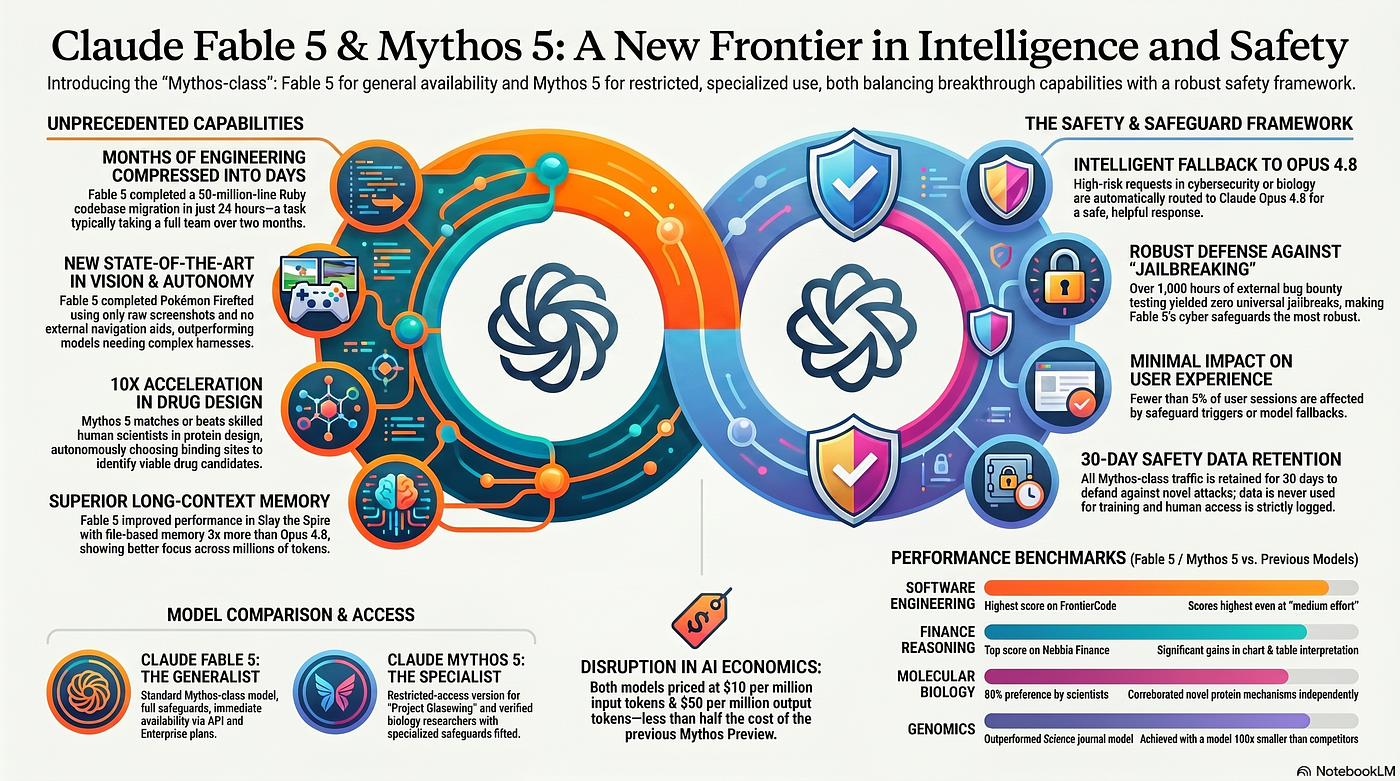
In technical terms, a “jailbreak” refers to a method where users manipulate an AI to ignore its safety filters. While most jailbreaks are harmless, the government fears that a “Mythos-class” model—designed for high-tier engineering and scientific research—could be exploited for cyber-offensive operations. By implementing the Claude Fable 5 ban, the US is attempting to create a “digital moat” around its most potent intellectual property, even if the actual risk remains theoretically narrow.
The Socio-Economic Impact: What This Means for Pakistan
For the Pakistani tech ecosystem, this development serves as a catalyst for local infrastructure concerns. Many Pakistani software engineers and researchers rely on frontier models like Fable 5 for high-density code generation and scientific data analysis. The Claude Fable 5 ban effectively bottlenecks access to top-tier productivity tools for foreign nationals. Resultantly, local startups may face “innovation lag” as they are forced to pivot back to less capable models, potentially widening the digital divide between the West and South Asia.

The Forward Path: A Momentum Shift or Stabilization?
This event represents a significant Momentum Shift in AI regulation. It establishes a precedent where the US government can recall a commercial product based on non-transparent technical concerns. While national security is a valid baseline, the lack of transparency could halt the deployment of future frontier models. Moving forward, the industry requires a standardized, fact-based framework for safety rather than reactive directives. The Claude Fable 5 ban highlights the urgent need for Pakistan to invest in sovereign AI capabilities to avoid being collateral in global regulatory disputes.








