
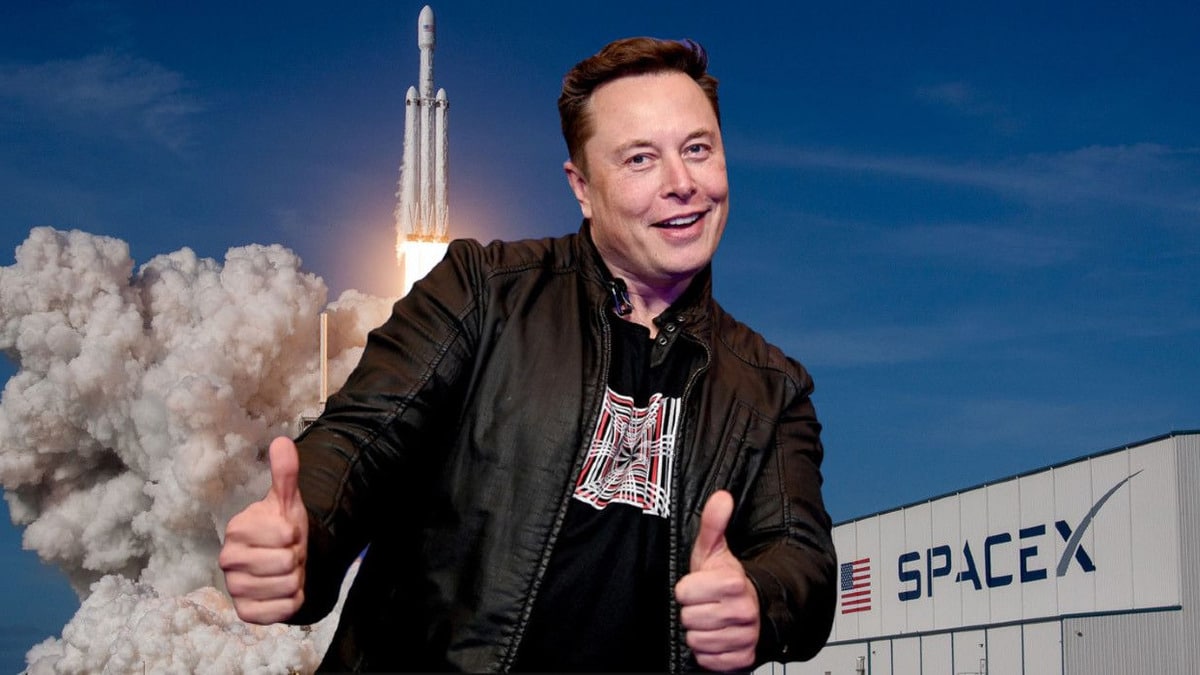
The structural re-calibration of global capital reached a new baseline on Friday as the SpaceX IPO propelled Elon Musk into trillionaire status. This unprecedented milestone occurred after shares in the aerospace titan surged during the most significant stock market debut on record. Consequently, the Tesla and SpaceX founder solidified his position as the world’s wealthiest individual, with a total net worth reaching $1.11 trillion. This valuation aligns with the Bloomberg Billionaires Index, following SpaceX’s Nasdaq listing at a staggering $2.2 trillion valuation.
Calibrating the $2.2 Trillion Market Entry
The SpaceX IPO demonstrated immediate market precision. Although the company initially offered shares at $135, trading opened at $150 and briefly peaked at $176.50. Investors aggressively targeted the company’s integrated portfolio of rocketry, telecommunications, and artificial intelligence. By the close of Friday’s session, shares stabilized at approximately $161. Furthermore, the debut raised $75 billion in capital from global underwriters before the shares entered the open market. This influx of liquidity provides a catalyst for Musk’s broader multiplanetary ambitions.

Strategic Control and Asset Allocation
Musk retains a disciplined 42% stake in SpaceX, ensuring absolute strategic control over the company’s capital expenditure. At the market close, his SpaceX holdings alone reached a value of $767.1 billion. Additionally, he maintains $53.8 billion in SpaceX options. When integrated with his $168 billion in Tesla shares and $116.4 billion in Tesla options, his portfolio represents a concentrated force in global engineering. However, observers note that this wealth remains largely illiquid. Specifically, Musk cannot divest any SpaceX stock for a minimum of twelve months, ensuring institutional stability.
Infrastructure for a Multiplanetary Expansion
The company’s mission focuses on building the structural frameworks required to make life multiplanetary. In its IPO prospectus, SpaceX emphasized the development of a “lunar economy.” This involves the systematic transport of personnel and cargo to the Moon and Mars. While the core business remains reusable rockets and Starlink satellites, the recent acquisition of xAI has introduced a precision AI component to the ecosystem. Consequently, SpaceX plans to utilize SpaceX IPO funds to develop experimental orbital data centers, pushing the digital frontier beyond Earth’s atmosphere.

The Translation: Decoding Paper Wealth
In the context of “Next Gen” clarity, Musk’s trillionaire status is a valuation of potential rather than realized profit. An IPO allows a private company to sell shares to the public to raise capital. While SpaceX lost over $9 billion in the 2025-2026 period due to aggressive infrastructure spending, the market values the company based on its future monopoly over space logistics. The “trillionaire” figure represents the market’s confidence in Musk’s ability to monetize the stars, even though most of his assets remain tied to company performance rather than cash in a bank.
The Socio-Economic Impact: What This Means for Pakistan
For the average Pakistani citizen, this development signals a shift in global connectivity and STEM opportunities. The expansion of the Starlink network, fueled by this capital injection, could provide high-speed internet to remote regions in Gilgit-Baltistan and Balochistan, bypassing terrestrial infrastructure limitations. Furthermore, the emergence of a “lunar economy” creates a new baseline for Pakistani engineers and software developers to participate in global aerospace supply chains. This is not merely a wealth milestone; it is the opening of a new economic sector for the next generation of digital professionals.
The “Forward Path”: An Expert Perspective
This development represents a Momentum Shift. While critics highlight the “cash incinerator” nature of AI and heavy losses, the successful execution of the SpaceX IPO proves that the market is now willing to fund high-risk, high-reward planetary infrastructure. We are moving from a world of digital services to a world of physical expansion. This is a strategic move toward establishing a permanent human presence beyond Earth, marking a transition from experimental technology to a sustainable commercial industry.








