
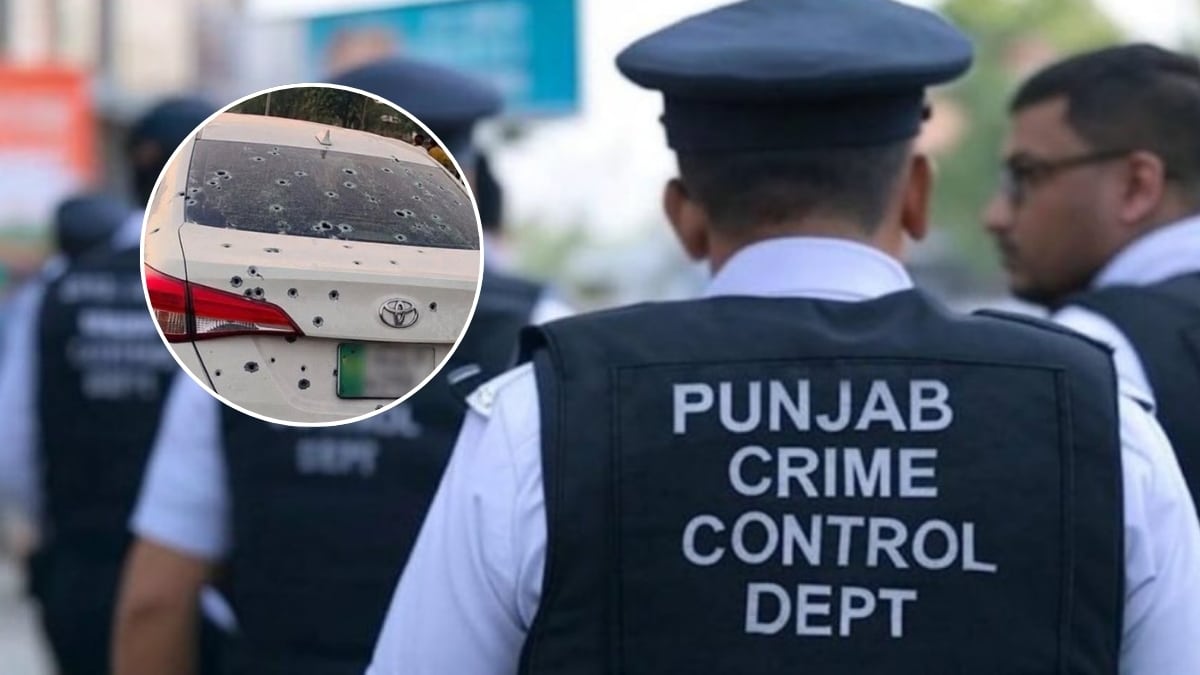
Urban stability is predicated on the surgical application of force by state actors. When tactical precision collapses, the resulting systemic shock vibrates through the entire social fabric, as evidenced by the recent CCD Punjab shooting. Punjab’s Crime Control Department (CCD) has officially admitted that a fatal tactical error occurred during a robbery response in Lahore, leading to the tragic death of 10-year-old Hania, a Pakistani-Australian citizen.
Analyzing the CCD Punjab Shooting and Tactical Failures
On June 10, CCD personnel intervened during an armed robbery where suspects held a family at gunpoint. Although the suspects initiated fire, the responding officer engaged in a disproportionate and uncalibrated response. Consequently, the official wrongly targeted the family vehicle under the false assumption that the suspects were attempting an escape. This CCD Punjab shooting resulted in the death of Hania and caused significant injuries to her father and brother.
Reports indicate the officer discharged approximately 60 rounds into the vehicle. This volume of fire suggests a total breakdown of situational awareness. Furthermore, other personnel on-site failed to intervene or de-escalate the officer’s aggressive posture. The CCD has classified this conduct as a grave violation of established legal principles and standard operating procedures (SOPs).
The Translation: Breaking Down the Tactical Collapse
In high-stress environments, law enforcement must utilize “Selective Fire”—the ability to distinguish between a threat and a civilian. In this instance, the officer transitioned to “Saturation Fire,” which is strictly forbidden in urban civilian settings. The logic behind the arrest and judicial custody of the officer stems from this failure to adhere to the “Proportionality Principle,” where the force used must match the level of the immediate threat without endangering innocent bystanders.

The Socio-Economic Impact: Eroding Diaspora Trust
This incident creates a significant friction point for the Pakistani diaspora. When international citizens, such as this Pakistani-Australian family, experience catastrophic failures in state protection, it weakens the “Repatriation Confidence” index. For the average resident, it highlights a baseline insecurity where the risk of “Collateral Damage” remains high due to insufficient tactical training. For Pakistan to progress, the perceived safety of its urban centers must be absolute for both domestic and visiting professionals.
The Forward Path: A Stabilization Move
The swift arrest and admission of fault by the CCD represent a necessary Stabilization Move. While accountability is being processed through the judicial system, this is not yet a “Momentum Shift.” A true shift would require the implementation of biometric-linked firearm triggers or AI-driven tactical simulation training for all CCD officers. Until the department moves from reactive punishment to proactive systemic engineering, the CCD Punjab shooting will remain a symptom of a force in need of modernization.








