
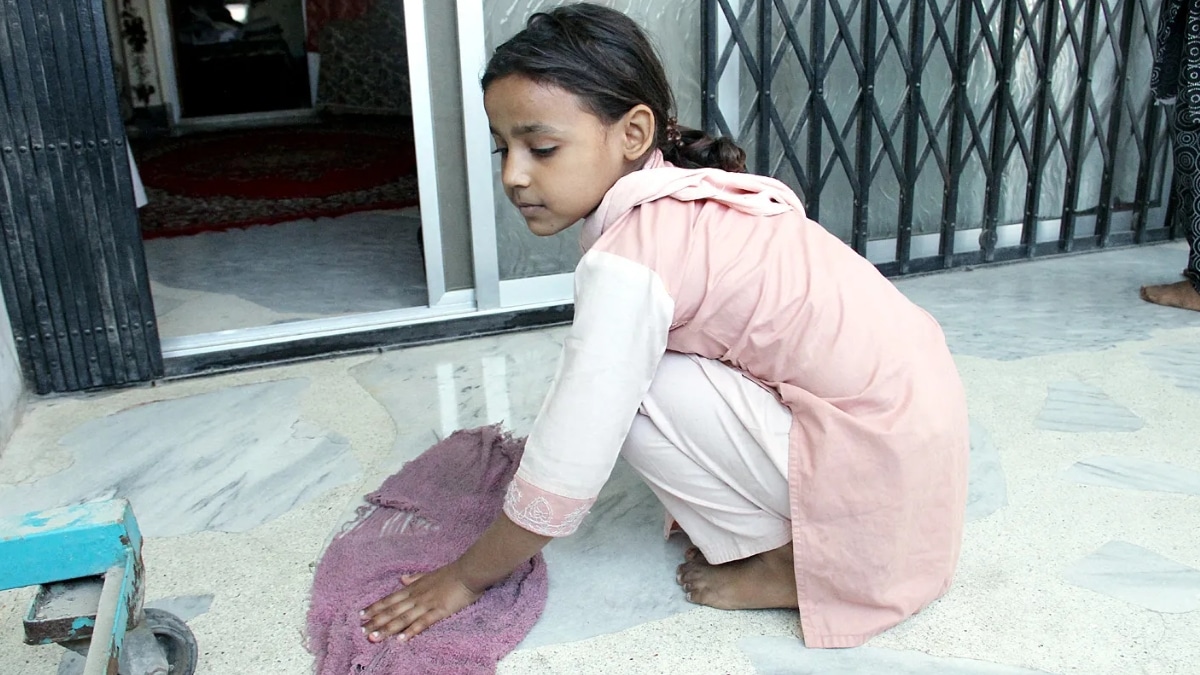
National advancement requires a calibrated approach to human capital, yet Islamabad faces a significant structural baseline failure. Recent findings from the Society for the Protection of the Rights of the Child (SPARC) indicate that every fourth household in the federal capital employs child domestic labor. This systemic oversight persists despite 2020 legislation specifically outlawing the practice within the federal territory. Consequently, the disconnect between legal frameworks and societal practice continues to stall our progress toward a modern, equitable system.
The Structural Reality of the Child Domestic Labor Crisis
Asiya Arif, Executive Director of SPARC, highlighted this crisis during a strategic event with the National Commission on the Rights of the Child. Although Islamabad established legislation regarding child domestic labor four years ago, enforcement remains dangerously weak. To achieve precision in our social protection systems, we must address the strategic gaps that allow exploitation to thrive in private spaces and industrial sectors alike.
Vulnerability extends beyond the home. Children remain at high risk in several critical sectors, including:
- Supply chains and manufacturing logistics.
- Hospitality, specifically local hotels and restaurants.
- Auto workshops and technical repair hubs.
- Brick kilns and heavy manual labor sites.
The Translation: Converting Law into Action
Legislation currently exists as a theoretical blueprint, but practical implementation remains stalled in the prototype phase. While the 2020 law criminalizes the employment of minors, the socio-economic catalyst of poverty often overrides legal constraints. Consequently, families frequently view child domestic labor as a survival mechanism rather than a systemic violation. Bridging this gap requires moving beyond “paper protection” toward a framework of precision enforcement and active monitoring.
The Socio-Economic Impact: A Human Capital Deficit
This development directly degrades the baseline of Pakistan’s future workforce. According to the Federal Ministry of Education, approximately 26.2 million children are currently out of school. This mass exclusion from the education system creates a long-term economic vacuum. For the average Pakistani household, this trend ensures a cycle of low productivity, as the next generation is funneled into domestic service instead of specialized STEM or vocational training.
The Forward Path: Expert Analysis
This situation represents a Stabilization Move rather than a Momentum Shift. While the discourse between parliamentarians and child rights advocates is a necessary catalyst for awareness, it remains a maintenance-level action. True progress requires a transition from reactive reporting to proactive structural reform. We must calibrate our social protection programs and education access to ensure that every child is an asset to our national advancement, not a casualty of our domestic economy.








