Integrated infrastructure represents the structural baseline for urban efficiency in a growing metropolis. The Lahore Ring Road Authority (LRRA) recently calibrated its expansion strategy by announcing the development of modern Ring Road Services at six strategic nodes. Consequently, this initiative transforms the highway from a simple transit route into a high-utility economic circuit for the city.
Engineering a Modern Transit Ecosystem
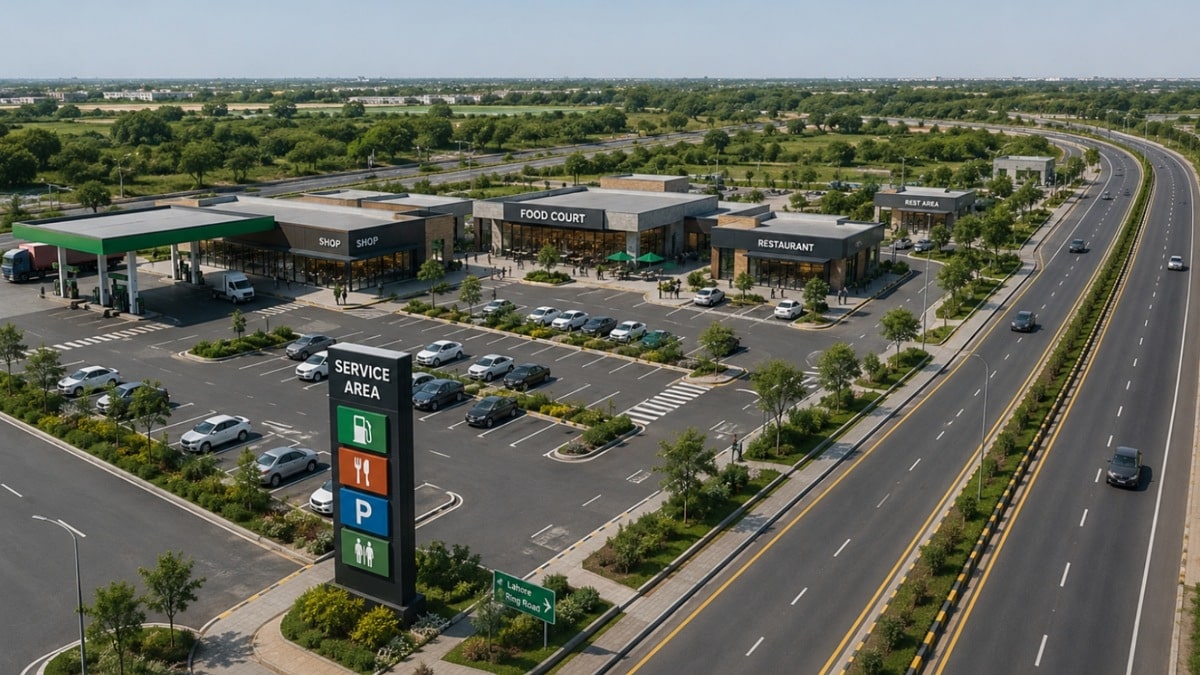
The LRRA has allocated approximately 10 kanals of land for each individual site to ensure maximum functionality. These Ring Road Services will be situated at critical junctions, including Bahria Town, DHA, Haloki, and Shafiqpura. To ensure operational excellence, the authority invited applications from experienced firms to manage these facilities under a long-term lease agreement.

Amenities and Operational Logistics
- Food Courts: Diverse dining options designed for long-distance commuters and local travelers.
- Fuel Stations: Strategic refueling points to prevent mid-journey shortages on the high-speed loop.
- Parking Facilities: High-capacity zones for passenger vehicles and commercial transport.
- Rest Areas: Calibrated spaces specifically built for driver fatigue management.
The authority confirmed a 20-year lease period for successful operators to maintain service standards. Furthermore, bidders have the potential to extend this contract by an additional 25 years based on performance metrics. The deadline for application submissions is currently set for June 25, 2026, marking a significant milestone for private sector involvement in public infrastructure.
The Translation
This project represents a shift from “passive asphalt” to “active services.” Instead of just providing a path between points A and B, the LRRA is building a service-driven ecosystem. By leasing land to private entities, the government reduces its own maintenance burden while generating consistent non-toll revenue. It effectively crowdsources the quality of the commuter experience to the private sector, ensuring that maintenance remains high-priority.
The Socio-Economic Impact
For the average Pakistani citizen, these service areas offer three primary benefits. First, they enhance safety by providing secure rest stops, which reduces accidents caused by driver exhaustion on the Ring Road. Second, the development creates localized employment hubs at each of the six locations. Third, these areas provide small business owners and franchises with high-visibility platforms to reach a massive daily audience of commuters, stimulating the local economy.
The Forward Path
This development is a clear Momentum Shift. By integrating commercial utility into a transit corridor, Lahore is adopting a global infrastructure standard. This model ensures that the Ring Road remains financially sustainable and operationally superior. It acts as a strategic catalyst for future urban planning across Pakistan’s major highway networks, proving that mobility and commerce can coexist seamlessly.