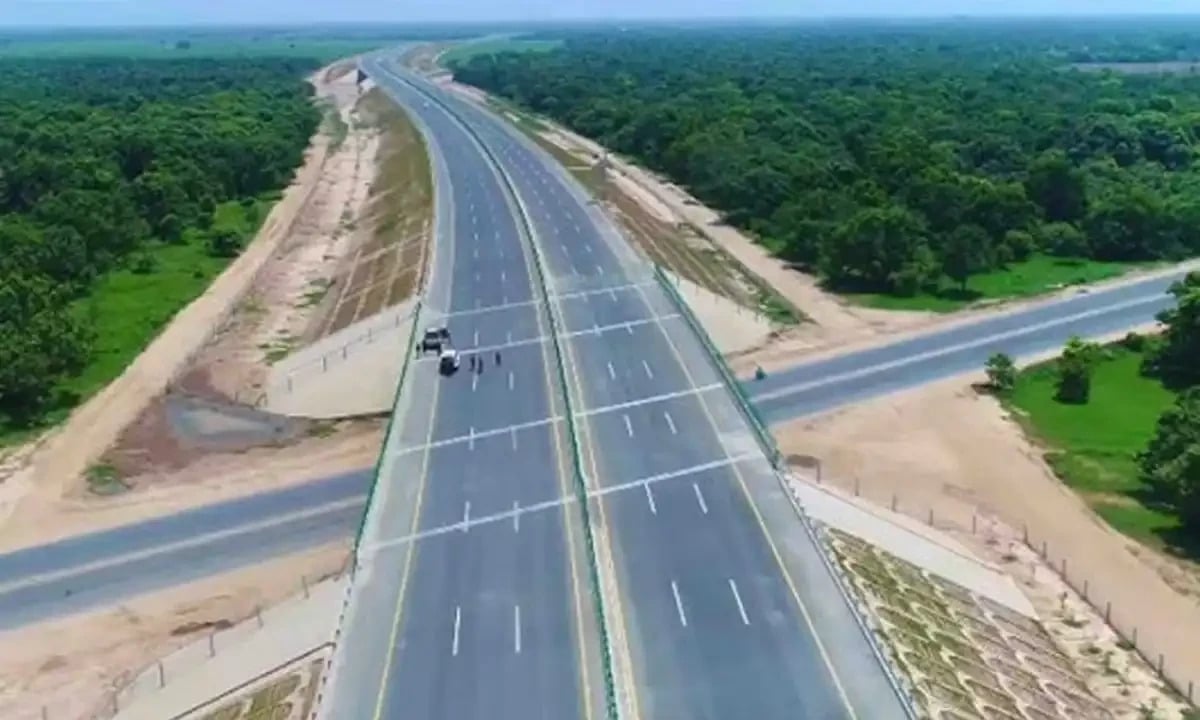
The federal government has calibrated its latest development cycle by earmarking a significant Rs 365 billion Infrastructure Development Budget for the 2026-27 fiscal year. This precision-focused funding targets vital transport and communication conduits, signaling a structural shift toward enhanced national logistics. Consequently, the state aims to catalyze economic growth through systemic upgrades to the road and railway networks, ensuring seamless connectivity across all provinces.
Strategic Infrastructure Development Budget: Major Project Allocations
The government allocated Rs 100 billion specifically for the N-25 Karachi-Quetta-Chaman highway. This corridor serves as a vital artery for Balochistan, facilitating improved trade routes. Furthermore, the M-6 Sukkur-Hyderabad Motorway received a Rs 30 billion allocation, with additional financing support expected from the Asian Development Bank. These calibrated investments ensure that high-velocity transport remains a priority for the national executive.
Railways also represent a core component of this structural upgrade. Specifically, the government set aside Rs 25 billion for the Karachi-Rohri section of the ML-1 project. This initiative will likely commence in the upcoming financial year, modernizing the baseline of Pakistan’s transit efficiency. Moreover, Rs 2 billion will fund the Thar Coal Connectivity Project, linking local energy reserves to the national grid via optimized transport systems.
The Translation: Decoding the Infrastructure Roadmap
In technical terms, this budget moves beyond mere maintenance; it represents a strategic decoupling from antiquated transit systems. By prioritizing the ML-1 and M-6, the government is focusing on “Multimodal Integration.” This means the logic is not just to build roads, but to create a synchronized network where rail and asphalt work in tandem to reduce the cost of doing business. The inclusion of provincial projects worth Rs 93 billion further demonstrates a commitment to decentralizing economic opportunity.
Socio-Economic Impact: Precision Growth for the Citizenry
How does this change the daily life of a Pakistani citizen? For the household in Quetta or the professional in Karachi, these projects translate to reduced transit times and lower commodity prices. When the N-25 and M-6 corridors are optimized, the cost of transporting food and fuel decreases. For students and young professionals, these projects act as a catalyst for job creation in the engineering and logistics sectors, effectively bridging the gap between rural production and urban markets.
The Forward Path: A Momentum Shift in Connectivity
This development represents a Momentum Shift for Pakistan. By securing international financing for the M-6 and initiating the ML-1, the state is moving from a stabilization phase into an expansionary era. The precision of these allocations suggests a data-driven approach to national advancement. Consequently, if execution matches the budgetary intent, Pakistan will successfully modernize its structural baseline, positioning itself as a central regional trade hub.