
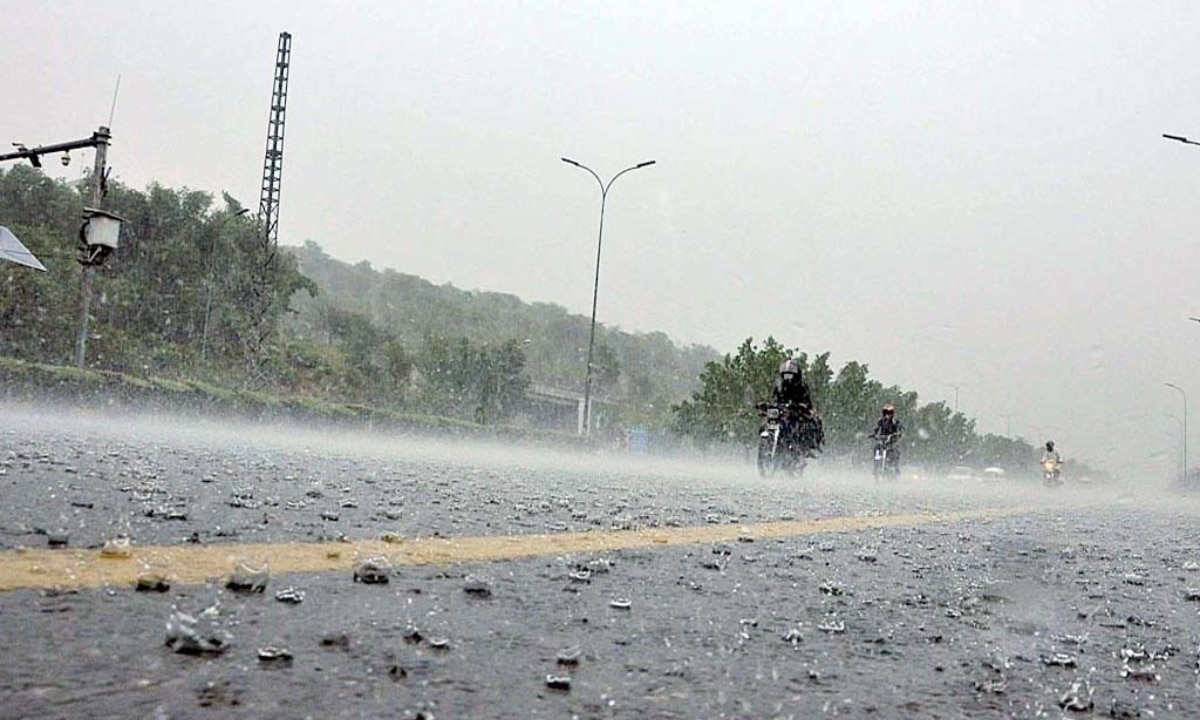
Pakistan’s atmospheric baseline presented a dual-spectrum reality this Thursday, as structural Pakistan weather relief arrived via gusty winds and rainfall across Punjab. While Lahore transitioned into a cooler climate phase, Karachi remained trapped in a high-intensity humidity cycle that tested the limits of the city’s power grid. This meteorological divergence highlights the increasing volatility of regional climate patterns.
Analyzing the Punjab Rainfall and Pakistan Weather Relief
In Lahore and its surrounding industrial hubs, precipitation accompanied by high-velocity winds recalibrated the local environment. These showers successfully neutralized the previous heat accumulation, shifting the atmosphere into a more productive, cooler state. The Pakistan Meteorological Department (PMD) projects that this stabilization will persist, as a westerly wave continues to catalyze more rainfall across upper Punjab.
Local authorities confirmed that the rainfall serves as a strategic cooling mechanism for the province. Consequently, the reduced thermal load is expected to lower the immediate demand on the regional electricity sector, providing a temporary baseline for environmental comfort.
Karachi’s Systemic Failure Amidst Humidity
In stark contrast, Karachi’s coastal geography currently facilitates a severe heat dome. The PMD reported peak daytime temperatures of 38°C, but the 75% humidity level pushed the perceived heat index significantly higher. This humidity creates a high-stress environment for the city’s 20 million residents, as the air’s moisture saturation prevents natural evaporative cooling.
Compounding the environmental stress, the urban center faces a critical energy deficit. Residents in Central, West, South, Malir, and Korangi districts documented electricity outages exceeding 12 hours. These prolonged disruptions have paralyzed household productivity and increased the risk of heat-related health complications across the metropolitan area.
The Situation Room: Analysis of the Climate Disparity
The Translation (Clear Context)
The “heat” Karachi feels is not just a thermometer reading; it is a calculation of the Heat Index. When humidity reaches 75% at 38°C, the human body loses its ability to cool down through sweat. In Punjab, the “relief” is a result of a low-pressure system drawing in moisture-laden winds, which effectively breaks the thermal ceiling that Karachi is currently trapped under.
The Socio-Economic Impact
This weather disparity directly dictates economic output. While Punjab sees a boost in worker comfort and potential agricultural benefit, Karachi faces a “Double Crisis.” The combination of extreme heat and a 12-hour load shedding cycle results in a massive loss of man-hours and increased medical expenditures for middle-income families. For the average Pakistani citizen, this is a reminder that energy security is now inseparable from climate survival.
The “Forward Path” (Opinion)
This development represents a Structural Deficit in Pakistan’s urban planning. While the rain in Lahore is a welcome “Stabilization Move,” the crisis in Karachi exposes the fragility of our southern power distribution architecture. We must move beyond “waiting for rain” and transition toward heat-resilient urban design and decentralized solar grids to mitigate these predictable atmospheric shifts.








