
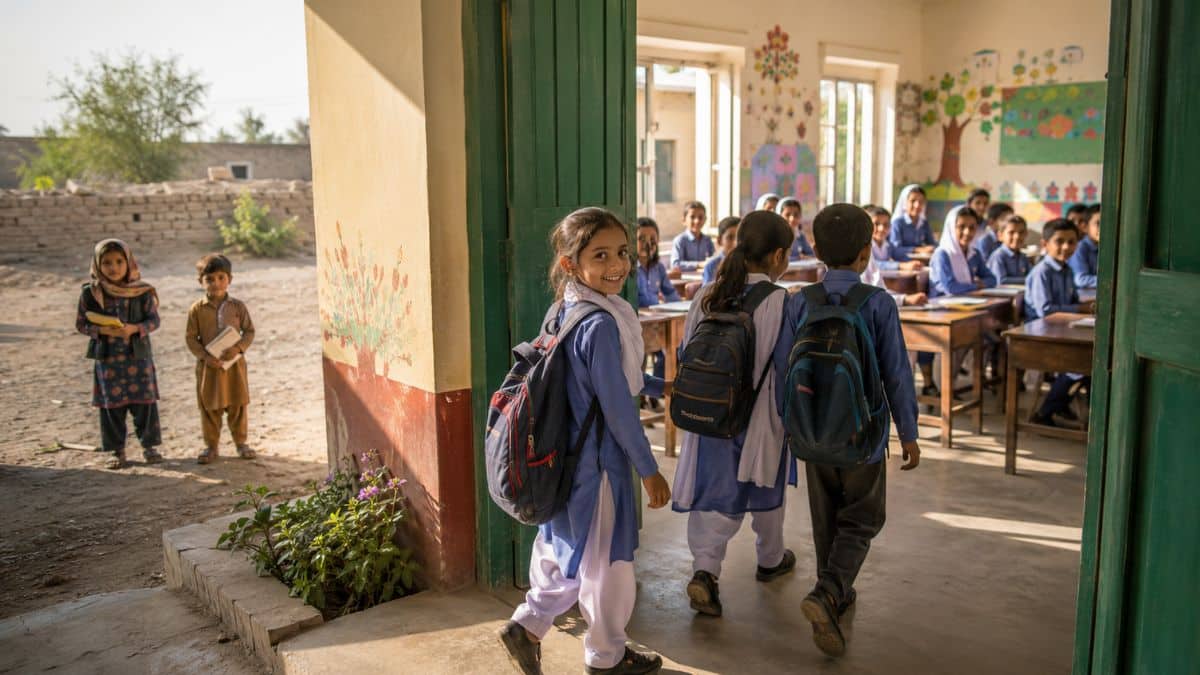
Pakistan’s educational infrastructure is undergoing a calibrated structural shift as the population of out-of-school children dropped to 28% in 2025. According to the Pakistan Economic Survey 2025-26 released on June 11, 2026, this metric represents a 10% decline from the 38% baseline recorded in 2023. This trajectory indicates a measurable acceleration in national school enrollment and systemic efficiency.
Analyzing the 10% Momentum Shift in National Enrollment
The data reveals a consistent downward trend across all demographics. Specifically, the percentage of out-of-school boys declined from 35% to 25%. Simultaneously, the percentage of out-of-school girls transitioned from 42% to 31%. While these figures signify progress, the gender delta remains a critical variable, as girls are still statistically more likely to remain outside the formal education system.
Provincial Performance and Calibrated Improvements
Success metrics varied across the provinces, with Balochistan emerging as the primary catalyst for change. Balochistan’s out-of-school rate plummeted from 69% to 45%, marking the most significant regional advancement. Other provincial data points include:
- Punjab: Decreased from 32% to 21%.
- Sindh: Decreased from 47% to 39%.
- Khyber Pakhtunkhwa: Decreased from 30% to 28%.
Consequently, these shifts suggest that provincial funding and localized educational strategies are beginning to stabilize the national average.
The Situation Room: Data Analysis
The Translation (Clear Context)
The Pakistan Economic Survey 2025-26 serves as a precision instrument to measure human capital. The 10% reduction is not merely a number; it represents millions of children entering a structured learning environment. This decline suggests that federal and provincial literacy programs are finally achieving “escape velocity,” moving past stagnant historical baselines toward a more functional educational ecosystem.
The Socio-Economic Impact
For the average Pakistani household, this shift translates into long-term economic resilience. Higher enrollment rates typically correlate with improved workforce readiness and higher household income over a 15-year horizon. Furthermore, the reduction in Balochistan is a vital indicator of narrowing the regional development gap, potentially reducing future socio-economic volatility in the province.
The Forward Path (Opinion)
This development represents a Momentum Shift. The timing of this report, arriving 24 hours before the Budget 2026-27, is strategic. Policymakers must now capitalize on this baseline to prioritize girls’ education and provincial funding. To maintain this trajectory, the government must move from “enrollment quantity” to “educational quality” to ensure these children remain within the system for the duration of their secondary education.








