
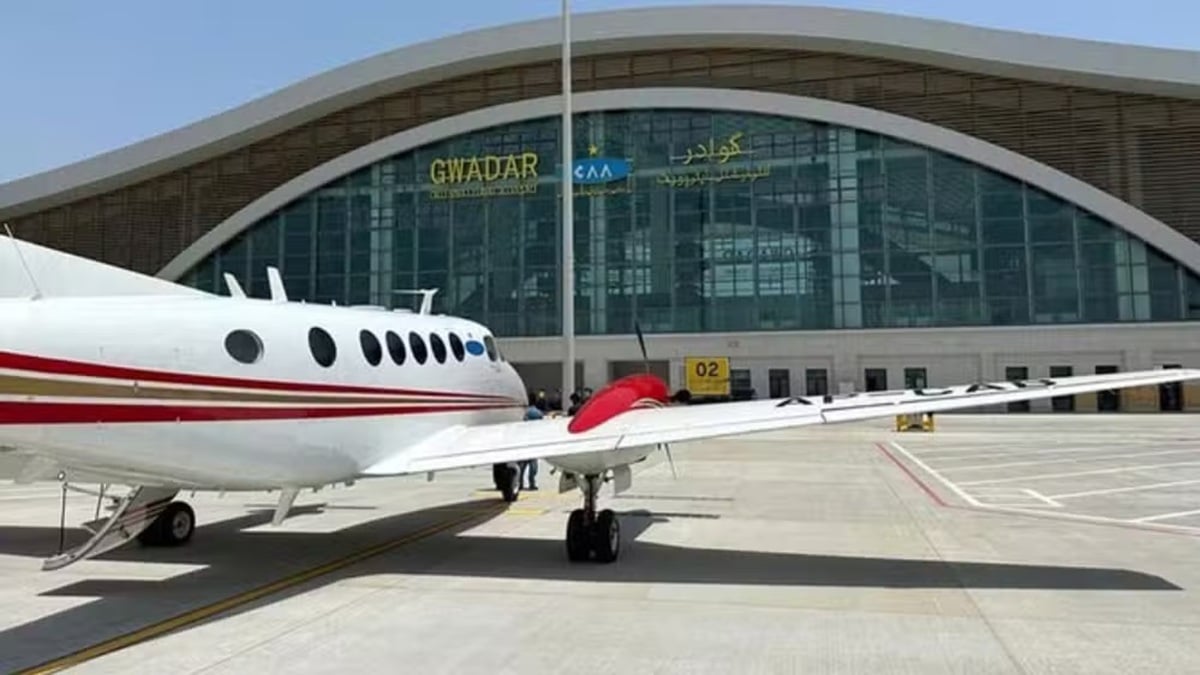
Precision in regional logistics serves as the bedrock for Gwadar’s emergence as a global trade hub. Consequently, the recent structural disruption in the Gwadar Airport Navigation System has triggered an immediate calibrated response from the Pakistan Airports Authority (PAA). The authority officially suspended the Doppler Very High Frequency Omnidirectional Range (DVOR) system after detecting a critical technical fault. This suspension remains effective until June 16, as engineers work to restore the facility to its baseline operational capacity.
Restoring the Gwadar Airport Navigation System Baseline
The PAA issued a formal Notice to Airmen (NOTAM) to inform all flight crews about the current facility unavailability. This strategic move ensures that pilots remain fully aware of the technical limitations before entering the airspace. While the primary navigation tool is offline, the PAA has implemented alternative procedural protocols. These arrangements allow flight operations at Gwadar Airport to continue without compromising passenger safety or airside security.
The Situation Room: Technical and Social Analysis
The Translation: Breaking Down the DVOR System
In aviation, the DVOR system acts as an electronic lighthouse. It provides pilots with precise bearing information, allowing them to navigate toward the airport with mathematical accuracy. When this system experiences a fault, pilots must rely on secondary “non-precision” procedures or visual navigation. PAA’s decision to suspend the system represents a commitment to precision over convenience, preventing any margin for error during the approach and landing phases.
The Socio-Economic Impact: Connectivity and Trade
Gwadar serves as the catalyst for the China-Pakistan Economic Corridor (CPEC). Any disruption in its aviation infrastructure directly affects technical experts, investors, and logistics managers who frequent the region. For the average Pakistani citizen, such technical suspensions underscore the need for modernized, redundant infrastructure. While alternative arrangements keep the airport open, the temporary loss of the Gwadar Airport Navigation System highlights the fragility of our current regional connectivity nodes.
The Forward Path: Momentum Shift or Stabilization?
We categorize this development as a Stabilization Move. While a technical fault is never ideal for momentum, the PAA’s proactive suspension and immediate NOTAM issuance demonstrate a disciplined adherence to international safety standards. To transform this into a Momentum Shift, Pakistan must invest in next-generation satellite-based augmentation systems (SBAS). Such upgrades would provide a fail-safe secondary layer, ensuring that Gwadar’s gateway remains open regardless of localized hardware failures.








