
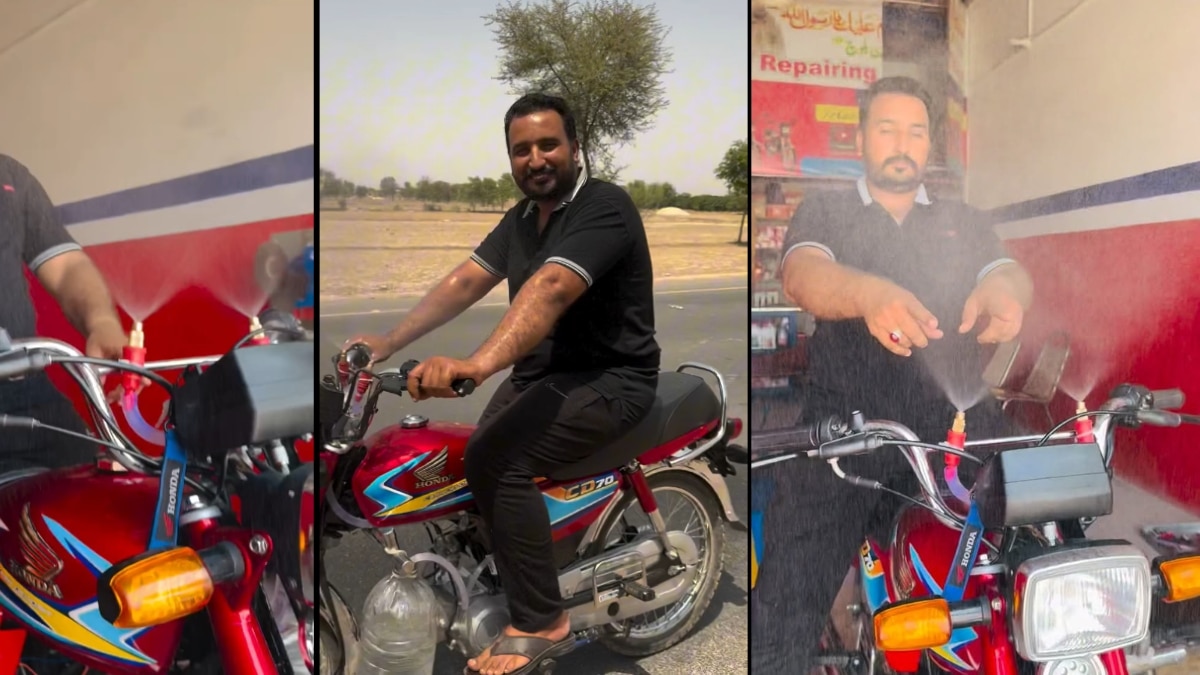
Resourceful engineering often emerges as a vital catalyst when environmental extremes challenge existing infrastructure. As Pakistan’s urban centers record extreme temperatures, a local technician from Zubair Bike Repairing has calibrated a strategic biker cooling system to mitigate the physiological impact of the ongoing heatwave. This structural adaptation represents a precision response to the dangerous thermal baseline currently affecting millions of commuters.
Engineering a Low-Cost Thermal Baseline
The mechanic, who also operates as a digital content creator, engineered a unique water sprinkler mechanism designed for seamless integration with standard motorcycle handlebars. The architecture of the system involves a pressurized water reservoir mounted to the bike’s chassis, which delivers a fine mist to the rider via strategic nozzle placements. Consequently, this simple but effective biker cooling system allows for continuous thermal regulation while the vehicle is in motion.
The Translation (Clear Context)
While the device appears unconventional, it utilizes the principles of evaporative cooling to lower the rider’s ambient temperature. By converting a standard water bottle into a high-utility reservoir, the mechanic has transformed “frugal innovation” into a functional safety tool. This setup bypasses the need for expensive air-conditioning tech, providing a localized climate control solution for a fraction of the cost.
Climate Adaptation and the Biker Cooling System
Data from recent weather reports indicates that Lahore remains locked in a severe thermal grip, with daytime temperatures exceeding 44°C. Furthermore, humidity levels in Karachi have pushed the “feels-like” index to a staggering 54°C. These extreme conditions necessitate proactive interventions like the biker cooling system to prevent heatstroke and exhaustion among the workforce. Authorities currently advocate for limited exposure, yet for many professionals, remaining indoors is not a viable economic option.
The Socio-Economic Impact
This innovation directly benefits the backbone of Pakistan’s urban economy: delivery riders, couriers, and daily wage commuters. By reducing the physical strain caused by heat, this device preserves the productivity and health of citizens in both Punjab and Sindh. It democratizes heat protection, ensuring that those most exposed to the elements have a calibrated defense against rising global temperatures.
The Forward Path (Opinion)
This development represents a significant Momentum Shift in how local innovators approach climate adaptation. Rather than waiting for top-down infrastructure changes, grassroots technicians are deploying precision solutions to immediate threats. While this cooling system is a maintenance move for individual safety, the ingenuity behind it serves as a catalyst for larger conversations regarding sustainable urban mobility in an warming world.








