
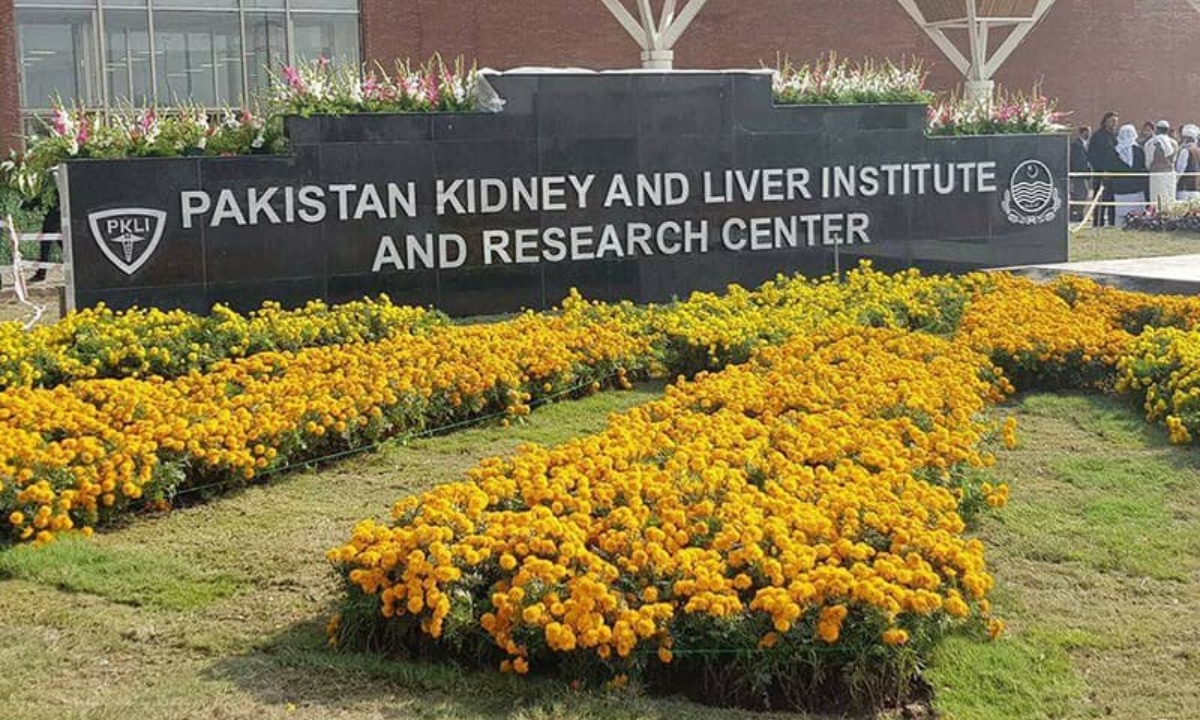
Structural efficiency meets surgical mastery as the Pakistan Kidney and Liver Institute (PKLI) successfully completed a record-breaking PKLI liver transplant series. The medical team performed 10 complex procedures within a calibrated window of 23 hours and 20 minutes. This strategic operation, which included a nine-month-old infant, marks a significant baseline shift for transplantation medicine in South Asia. Consequently, the institute has formally submitted its documentation to Guinness World Records for official global recognition.
The Logistics of a PKLI Liver Transplant Milestone
The operation’s success relied on a multidisciplinary force of 120 professionals. This precision-oriented team included transplant surgeons, hepatologists, and specialized pediatricians. Furthermore, they utilized advanced surgical methodologies to maximize donor utility. By employing seven domino liver transplants and eight Auxiliary Partial Orthotopic Liver Transplants (APOLT), the team extended the life-saving potential of only three organ donors to ten recipients. This “metabolic chimera” model represents a catalyst for systemic change in organ scarcity management.
Strategic Innovation and Historical Data
Professor Faisal Saud Dar noted that this initiative successfully combined two of the world’s most sophisticated transplant techniques. Specifically, the domino method allows a healthy liver from one recipient to be transferred to another, while the APOLT technique preserves the patient’s existing liver alongside the partial donor organ. Since its inception, PKLI has calibrated its systems to deliver high-volume care, completing 1,175 PKLI liver transplant operations and 1,276 kidney transplants to date.
The Translation (Clear Context)
The technical achievement here lies in “resource multiplication.” Typically, one donor equals one recipient. However, by using domino and auxiliary techniques, PKLI surgeons treated ten patients using only three donor organs. This logic transforms the scarcity of organs from a hard limit into a manageable challenge through innovative surgical architecture.
The Socio-Economic Impact
For the average Pakistani household, this development lowers the barrier to life-saving precision medicine. By localizing world-class techniques, PKLI reduces the need for expensive medical tourism. Additionally, the success of the PKLI liver transplant program means shorter waitlists and a more resilient healthcare infrastructure for both urban and rural citizens.
The Forward Path (Opinion)
This development represents a Momentum Shift. Moving beyond mere stabilization, PKLI is now actively defining the global frontier of surgical efficiency. This record bid is not just about prestige; it is a structural demonstration that Pakistan possesses the technical discipline to lead in complex biotechnological sectors. The next phase must focus on scaling this metabolic model to other provincial centers.








