
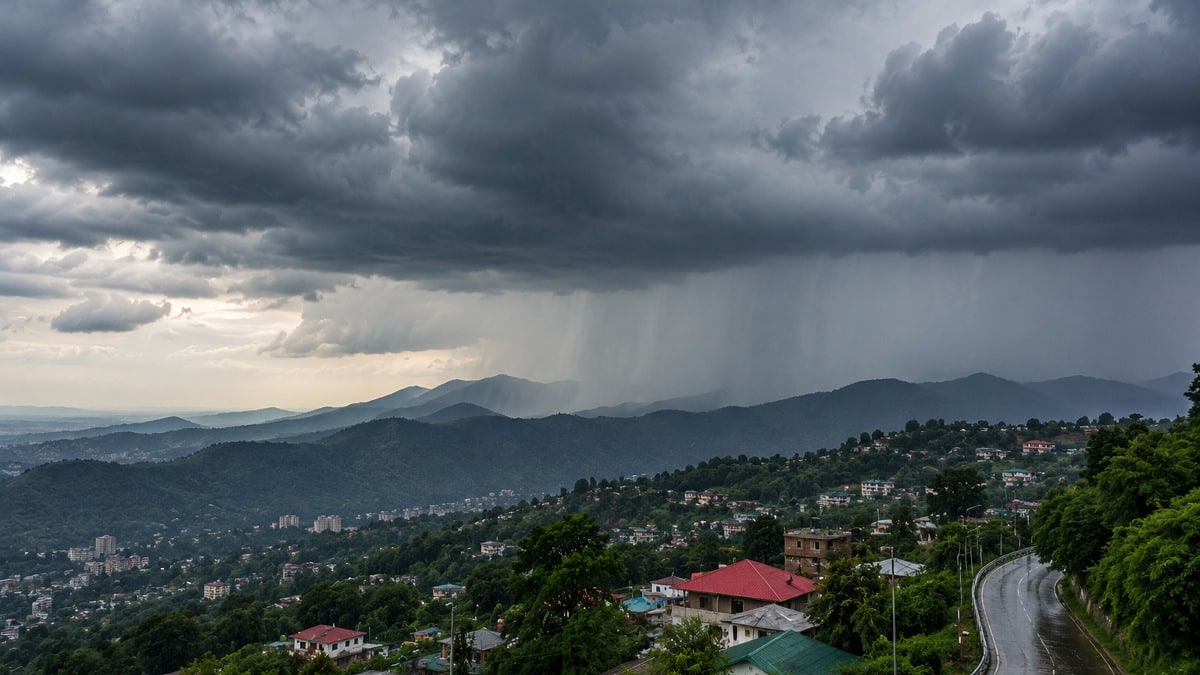
Climate resilience requires a calibrated response to atmospheric shifts. A significant Pakistan Weather Alert indicates that a Western Disturbance will intersect with moist Arabian Sea currents between June 11th and 13th. This meteorological convergence will act as a catalyst for widespread rainfall and windstorms across the upper and central regions of the country, impacting baseline infrastructure and daily logistics.
Strategic Regional Impact Zones
The forecasted weather pattern will manifest differently across Pakistan’s diverse geography. Precision planning is required for the following zones:
- Punjab and Islamabad: Heavy rain, hailstorms, and windstorms are expected in Islamabad, Rawalpindi, Lahore, Faisalabad, and Multan. Consequently, urban centers should prepare for potential drainage challenges.
- Kashmir and Gilgit-Baltistan: Intense precipitation is projected for Neelum Valley, Muzaffarabad, Skardu, and Hunza. These areas remain high-risk zones for localized hailstorms.
- Khyber-Pakhtunkhwa: Widespread storms will impact Peshawar, Abbottabad, and Swat. Furthermore, the northern belts may experience significant wind-driven disruptions.
- Balochistan and Sindh: Dust storms will primarily affect northeastern Balochistan and upper Sindh regions, including Sukkur and Larkana.

The Translation: Decoding the Meteorological Logic
A “Western Disturbance” is a calibrated low-pressure system originating from the Mediterranean region. When these currents penetrate Pakistan’s upper atmosphere and merge with moist Arabian Sea air, they create intense atmospheric instability. This synergy is the primary driver of the predicted thunderstorms and hailstorms. Understanding this systemic interaction is vital for developing long-term climate adaptation strategies.
The Socio-Economic Impact: Urban and Rural Disruptions
How does this change the daily life of a Pakistani citizen? This weather event will likely disrupt the efficiency of urban transportation and logistics. Furthermore, hailstorms present a structural risk to the agricultural output in the northern and central belts. While the rain offers a necessary thermal reset, the potential for power fluctuations and localized flooding in metropolitan hubs remains a baseline concern for households and small businesses.

The Forward Path: A Stabilization Move
We categorize this development as a Stabilization Move. While the rainfall provides temporary relief from the intense heatwave, it highlights the urgent need for structural upgrades in our national drainage and energy grids. To transition from reactive management to proactive resilience, Pakistan must integrate these precision weather alerts into its broader urban planning and disaster mitigation frameworks.








