
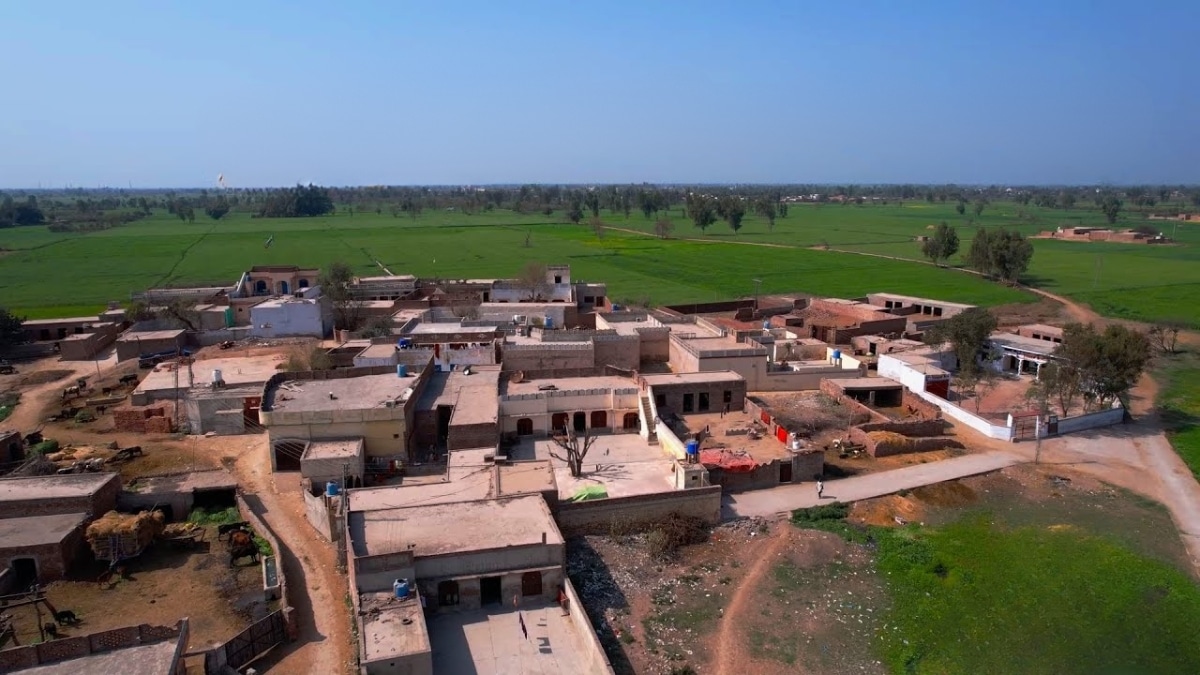
The Punjab government is calibrating a massive structural overhaul of its rural landscape through the development of Punjab modern villages. Consequently, this initiative targets 485 villages for a precision-led upgrade, injecting an additional Rs. 39 billion into local infrastructure. This strategic move ensures that approximately four million residents gain access to calibrated municipal services by December 2026. Furthermore, the ‘Maryam Nawaz Ka Sohna Punjab’ project serves as a catalyst for systemic rural equity across ten administrative divisions.
Strategic Resource Allocation for Punjab Modern Villages
Local Government Minister Zeeshan Rafique recently reviewed the progress of the Punjab Rural Municipal Services Company. Data reveals a calculated distribution of development across the province. Specifically, the project encompasses 63 villages in Multan, 58 in Rawalpindi, and 55 in Gujranwala. Other regions include Bahawalpur (48), DG Khan (39), Sargodha (41), Sahiwal (44), Gujrat (51), Lahore (50), and Faisalabad (36). The ministry has issued strict directives to conclude the first phase by late 2026, ensuring no delays in service delivery.
The Translation: Decoding the Model Village Framework
The “Model Village” concept represents a shift from traditional passive reporting to active structural engineering. Instead of localized repairs, the government is implementing a standardized baseline of urban-grade services in rural sectors. Punjab modern villages will feature fully paved street networks, restored ecological ponds, and integrated street lighting systems. By treating rural areas as precision-mapped zones rather than peripheral territories, the state aims to eliminate the infrastructure gap between cities and villages.
The Socio-Economic Impact: Precision Living Standards
This development directly recalibrates the daily lives of millions of Pakistani citizens. Paved streets will reduce transit friction for farmers and students, while the restoration of traditional ponds improves local water management. Additionally, the inclusion of children’s parks provides a social catalyst for community health. The government is also optimizing resource utility by restricting water supply schemes only to villages facing actual scarcity. This precision-based approach ensures that capital is deployed where it generates the highest human ROI.

The Forward Path: A Momentum Shift in Governance
We categorize this development as a significant Momentum Shift. The current focus on 485 villages is merely the baseline; Chief Minister Maryam Nawaz intends to scale this architecture to 7,500 villages in subsequent phases. By integrating lessons from the initial rollout, the government is building a scalable model for national advancement. This initiative transitions Punjab from maintenance-mode governance to a proactive, STEM-driven strategy for total provincial modernization.








