
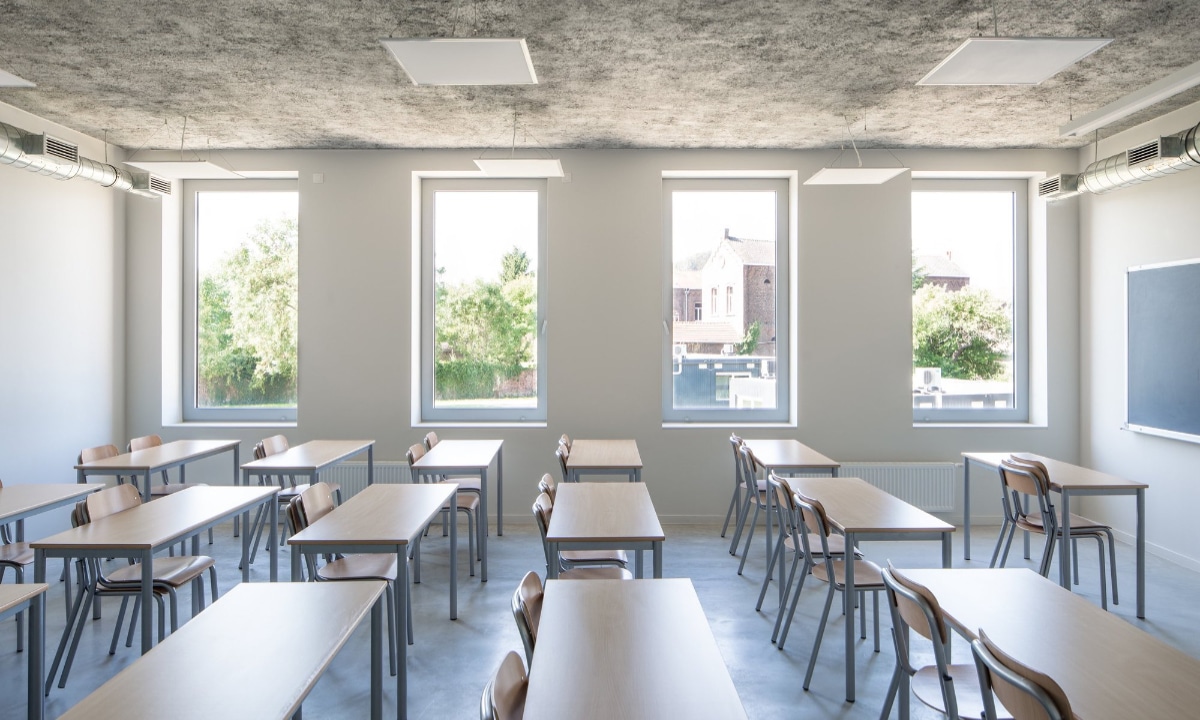
The Punjab government has initiated a calibrated structural overhaul of the provincial education system through comprehensive Punjab school reforms. This strategic roadmap, spearheaded by Education Minister Rana Sikandar Hayat under the vision of Chief Minister Maryam Nawaz Sharif, prioritizes the construction of 25,000 new classrooms to optimize learning environments. Consequently, this initiative seeks to stabilize the academic baseline and resolve long-standing capacity deficits in public institutions.
Strategic Infrastructure: The Core of Punjab School Reforms
During a high-level site inspection in Multan, Minister Rana Sikandar Hayat inaugurated critical development projects at Government Aam Khas High School. This visit, conducted alongside Provincial Secretary of School Education Mudassar Riaz Malik, marked the official commencement of a massive infrastructure surge. Specifically, the department is accelerating the deployment of information technology laboratories and the strengthening of boundary walls to ensure student security.
Furthermore, the government is investing billions of rupees into the education sector to upgrade sports facilities and academic standards. The minister described this ongoing development program as one of the largest in the history of the province. By providing students with modern educational resources, the state aims to catalyze a higher precision of learning across all socio-economic tiers.
Financial Calibration: Doubling Student Subsidies
In a move to expand access to quality education, the Punjab government has doubled the per-student subsidy for children enrolled in schools supported by the Punjab Education Foundation (PEF). This financial adjustment ensures that private-sector partnerships remain a viable catalyst for educational equity. Consequently, the increased investment will facilitate better opportunities for students in underprivileged districts.
Minister Hayat has directed all relevant officials to ensure that development projects adhere to strict prescribed timelines. He emphasized that the efficacy of these Punjab school reforms depends on the timely completion of infrastructure. Through these structural improvements, the administration intends to foster a system where every Pakistani student can thrive in a calibrated, modern environment.
The Situation Room Analysis
The Translation (Clear Context)
Beyond the headline of 25,000 classrooms, this reform represents a shift from “enrollment focus” to “capacity focus.” By doubling the PEF subsidy and building IT labs, the government is acknowledging that digital literacy and public-private synergy are the only ways to handle the massive student population. It is a technical upgrade of the system’s hardware and software.
The Socio-Economic Impact
For the average Pakistani household, these reforms reduce the “quality gap” between expensive private schooling and government education. Better facilities and more classrooms mean reduced overcrowding, which directly improves teacher-to-student ratios. For rural families, reinforced boundary walls and better sports facilities encourage higher school attendance, particularly among female students.
The Forward Path (Opinion)
This development represents a Momentum Shift. While building classrooms is a foundational maintenance task, the integration of IT labs and the doubling of subsidies suggest a strategic move toward modernizing the pedagogical framework. If the government maintains this pace, it could successfully transition the provincial education system from a state of survival to one of excellence.








