
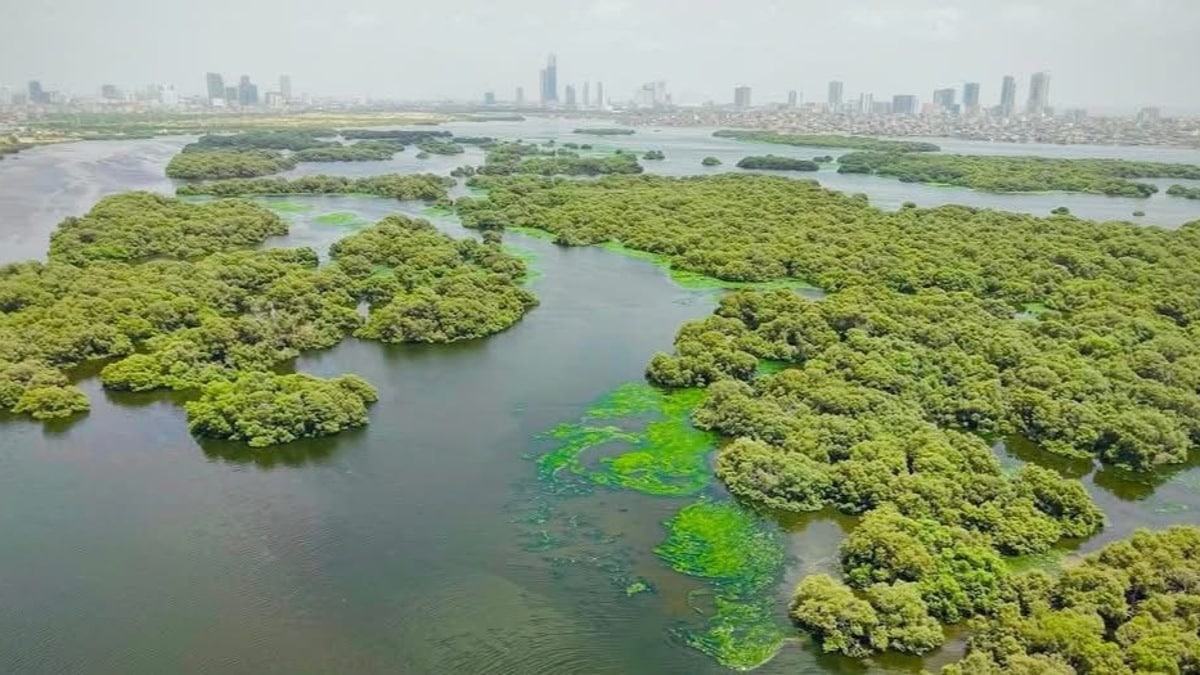
Karachi’s coastal architecture is undergoing a strategic recalibration as the city integrates natural infrastructure to combat systemic environmental risks. The Karachi Metropolitan Corporation (KMC) has officially launched the Karachi Mangrove Park and Learning Centre at China Creek, a project designed to serve as a catalyst for environmental sustainability and eco-tourism. Consequently, this initiative transforms a vulnerable coastline into a calibrated ecosystem that balances urban expansion with biological preservation.
Designing a Karachi Mangrove Park for Urban Resilience
Mayor Barrister Murtaza Wahab recently highlighted that this development represents a long-term investment in the city’s structural security. Strategically, mangroves function as a natural barrier, protecting coastlines from erosion, rising sea levels, and climate-driven disasters. Furthermore, these ecosystems serve as high-capacity carbon sinks, absorbing emissions at a rate significantly higher than terrestrial forests. By focusing on blue carbon assets, the city is establishing a baseline for modern environmental management.
Strategic Features and Public Utility
The project is not merely a conservation zone; it is a multi-functional public asset. Specifically, the facility will incorporate the following features:
- Biodiversity Trails: Calibrated paths for ecological observation and research.
- Learning Centres: Educational infrastructure for students and environmentalists to study marine biology.
- Eco-Tourism Hubs: Attractions designed to invite millions of annual visitors without disrupting the local flora.
Currently, the project has entered the execution phase with a targeted completion date in November. As a result, Karachi will soon possess a major environmental landmark that integrates economic growth with ecological health.
The Situation Room: A Strategic Analysis
The Translation
In technical terms, this is the implementation of “Nature-based Solutions” (NbS). Instead of building expensive, static sea walls, the KMC is using the Karachi Mangrove Park to create a living, self-repairing coastal defense. This approach uses biological growth to mitigate the kinetic energy of sea waves and trap sediment, effectively growing the land naturally over time.
The Socio-Economic Impact
For the average Karachi resident, this project offers a dual benefit. Economically, it stabilizes the local fishing industry by protecting breeding grounds for marine life, which directly impacts food security and market prices. Socially, it provides a high-quality “green lung” in an industrial urban landscape. Students and researchers gain a precision-designed laboratory, while households gain a safe, sustainable recreation space that counters the “urban heat island” effect.
The Forward Path
This development represents a Momentum Shift. Moving from reactive disaster management to proactive ecological engineering marks a transition in how Pakistan manages its urban frontiers. While maintenance will be critical to ensure the mangroves survive urban pollution, the initial investment signals a precision-driven approach to national advancement.








