
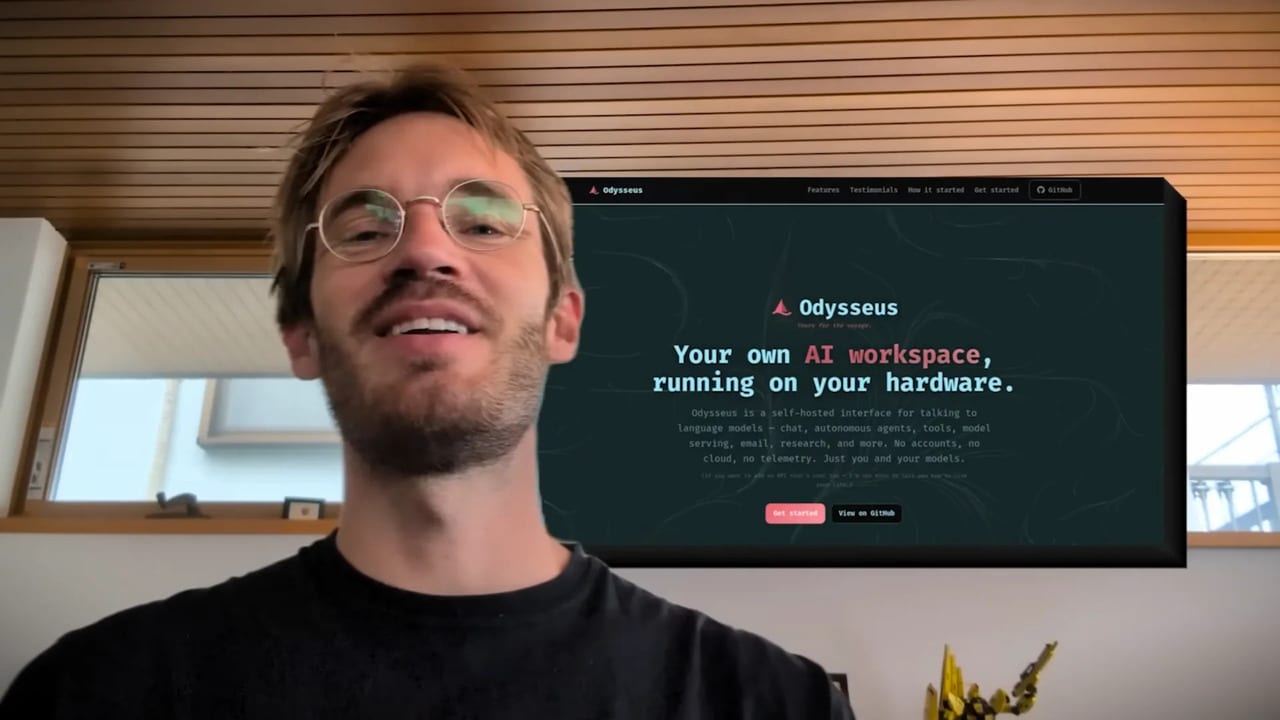
The centralized era of artificial intelligence is facing a structural shift. Digital creator PewDiePie has released Odysseus, a free and open-source private AI workspace that operates entirely on a user’s local hardware. This development signals a calibrated move away from corporate-cloud dependency, offering a self-hosted interface that rivals the utility of mainstream platforms like ChatGPT and Claude without the privacy risks.
Defining the Architecture: What is Odysseus?
Odysseus is not a new large language model (LLM). Instead, it functions as a sophisticated management layer. Users can connect various local models or external API providers to this interface. Consequently, the workspace allows for complete data sovereignty. Instead of routing prompts and sensitive files through third-party servers, Odysseus processes information within the user’s local environment.
Local-First Security and Data Sovereignty
The platform prioritizes a local-first philosophy. Its GitHub repository confirms support for several precision tools including vLLM, llama.cpp, and Ollama. Furthermore, the system operates without telemetry. This means users maintain an absolute private AI workspace where no usage data is tracked or harvested by external entities. For professionals handling sensitive intellectual property, this architectural choice is a critical catalyst for secure innovation.
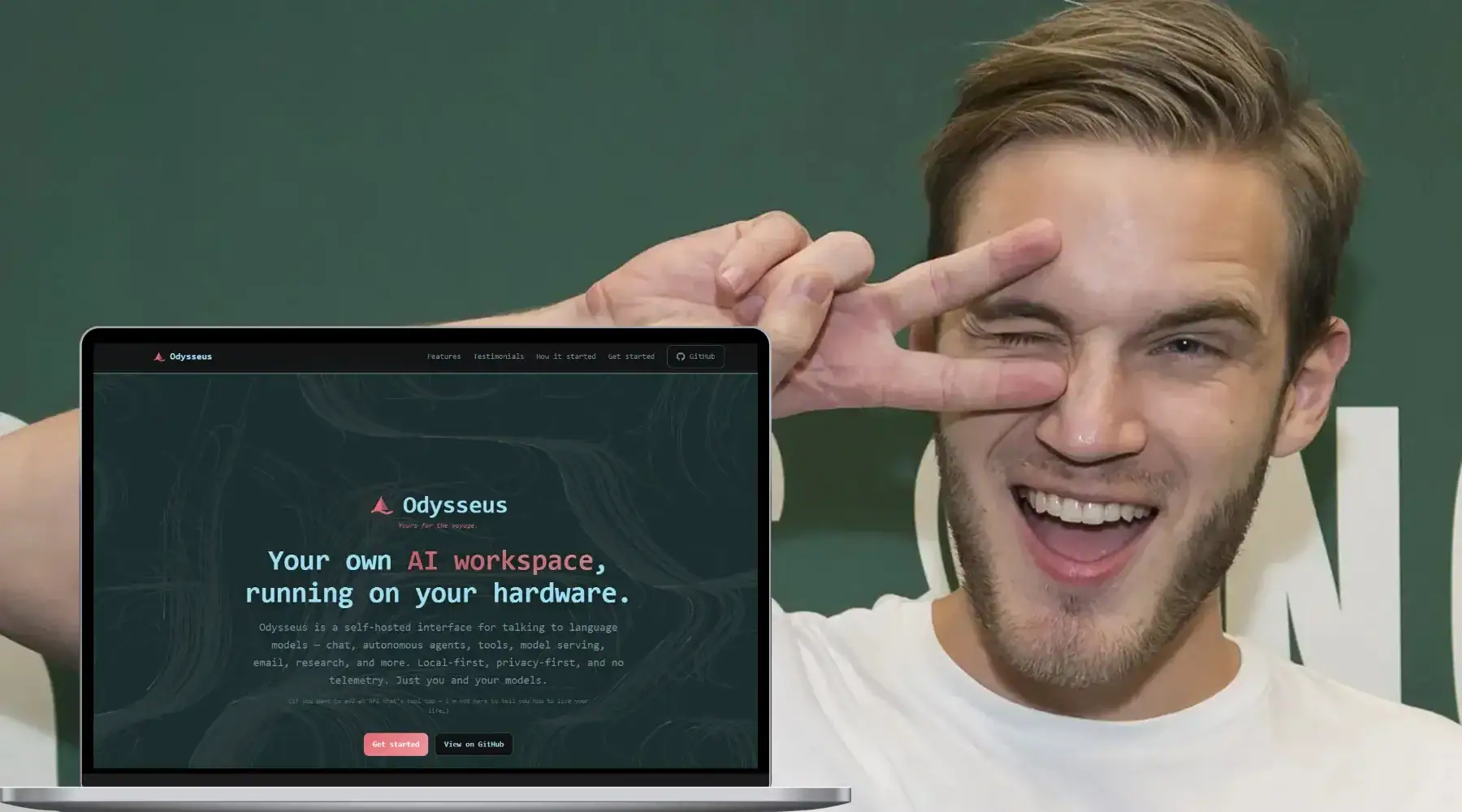
Functional Capabilities: Beyond Simple Chat
Odysseus integrates features that extend far beyond basic conversational AI. The workspace includes autonomous agents, deep research modes, and document editors that support Markdown and HTML. Additionally, it offers built-in tools for email and calendar management. These agents can execute shell commands, manage files, and perform web research within a controlled perimeter.
Deep Research and Integrated Memory
The platform utilizes a “Cookbook” feature to calibrate performance based on available hardware. It scans GPU and VRAM resources to recommend the most efficient model configurations. Moreover, Odysseus includes persistent memory, allowing the assistant to recall context across multiple sessions. This improves workflow efficiency over time while keeping the entire database stored in a local folder on the user’s machine.
The Translation (Clear Context)
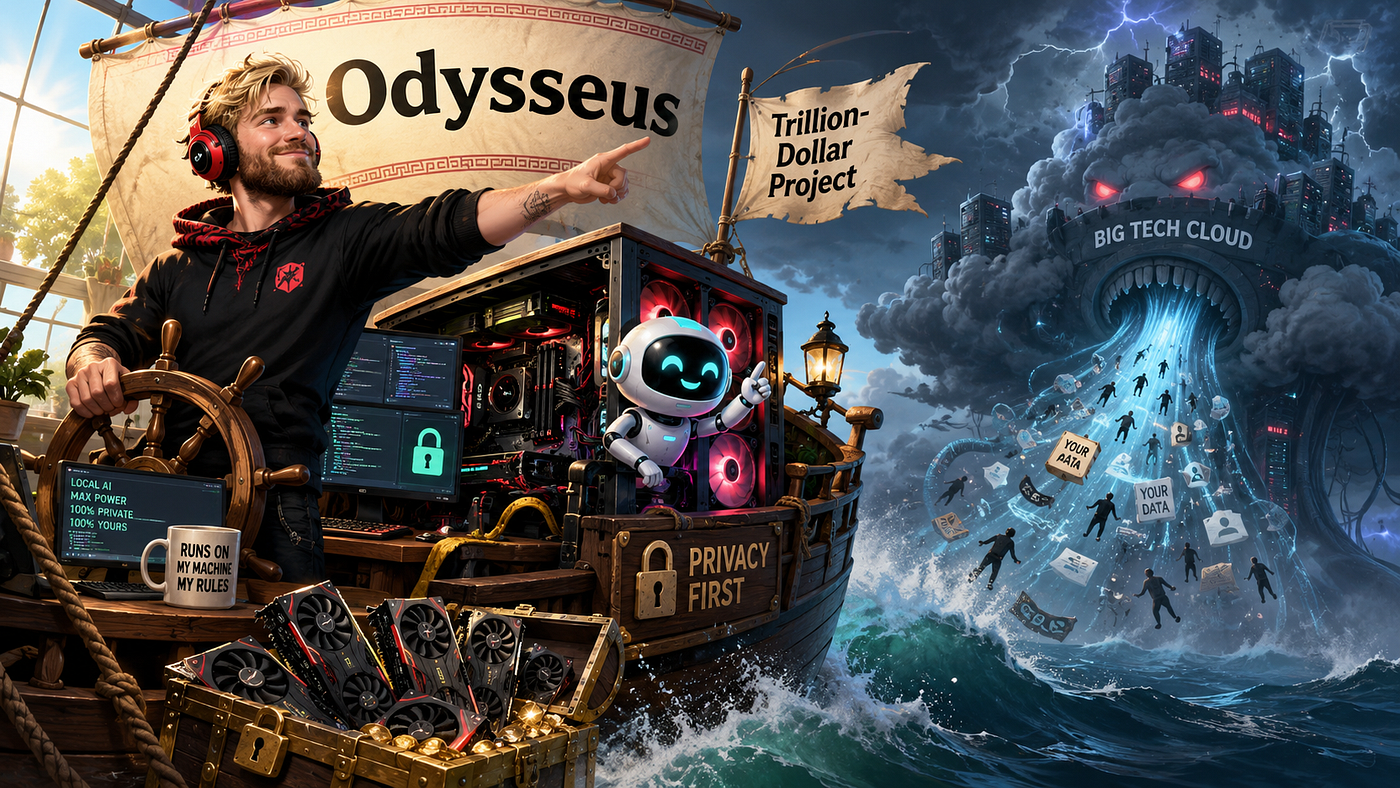
To understand the logic behind Odysseus, consider it an “operating system” for AI. Most people currently use AI like a rental apartment where the landlord (OpenAI or Google) can see everything you do. Odysseus is like building your own house on your own land. It provides the structure—the windows, doors, and rooms—while you choose which “engine” (the model) powers it. You gain total control, but you are also responsible for the maintenance and security of the building.
The Socio-Economic Impact
For the Pakistani digital landscape, this private AI workspace represents a significant leap in accessibility. In regions with fluctuating internet reliability or high data costs, the ability to run AI locally reduces the financial barrier to advanced technology. Furthermore, it empowers Pakistani developers and students to build and test autonomous agents without expensive monthly subscriptions. This democratizes high-tier computational power, allowing local talent to innovate within a secure, cost-effective framework.
The Forward Path (Opinion)
This development represents a clear Momentum Shift in the industry. As users become increasingly aware of data privacy and corporate overreach, the demand for decentralized tools will only accelerate. Odysseus is a strategic baseline for the future of personal computing. While it currently requires technical precision to set up, it paves the way for a future where every individual owns their intelligence tools, rather than just licensing them.








