
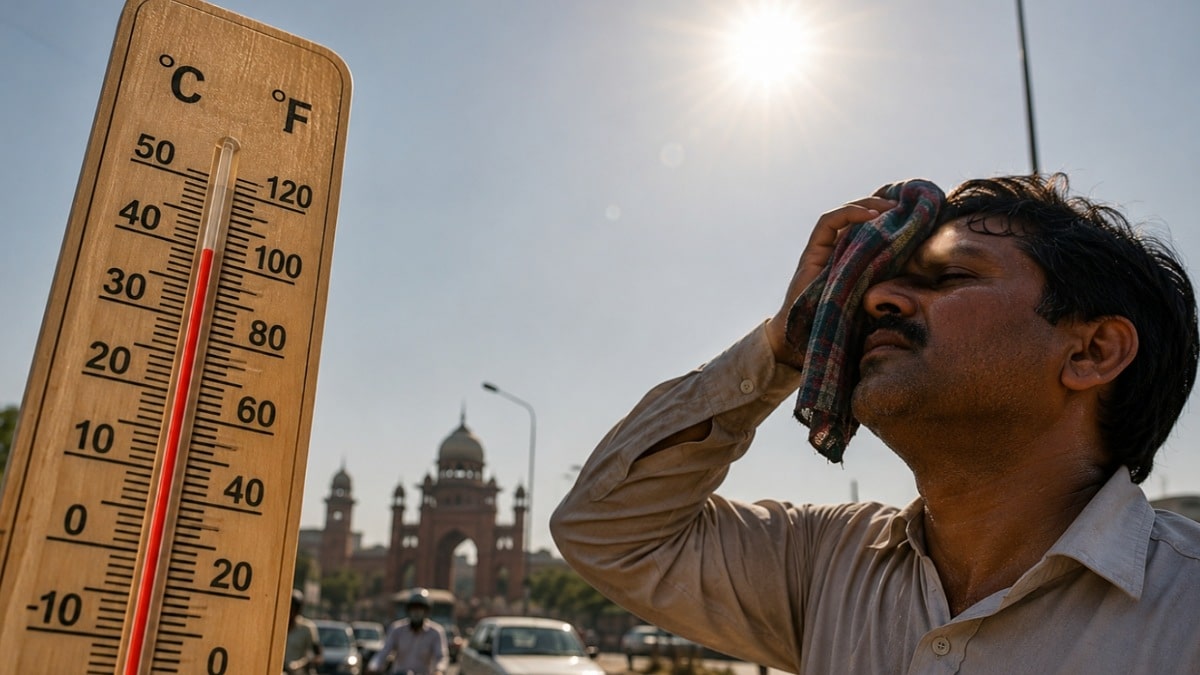
The Punjab Disaster Management Authority (PDMA) has calibrated its emergency response for an incoming Punjab severe heatwave projected to last from June 8 to June 12. Consequently, regional meteorologists predict that temperatures will surge 5°C to 7°C above the established seasonal baseline. This atmospheric shift presents a significant challenge to regional climate stability and public health infrastructure.
Strategic Regional Temperature Projections
Data from the PDMA indicates a distinct variance in thermal intensity across the province. Upper Punjab will likely observe temperatures ranging between 41°C and 44°C. In contrast, South Punjab faces a more rigorous thermal baseline, with projections hovering between 44°C and 48°C. Furthermore, persistent nighttime heat and high-velocity dust storms will likely exacerbate these conditions in Lahore and adjacent districts.
The Translation: Deconstructing the Thermal Delta
When the PDMA identifies a 7°C deviation from the norm, it signals a structural breakdown in local cooling patterns. This phenomenon occurs when high-pressure systems trap heat near the surface, preventing the traditional nocturnal cooling cycle. Consequently, the “feels-like” temperature remains elevated throughout the night, placing continuous stress on the biological systems of humans and livestock alike.
Socio-Economic Impact: Precision Safeguards
This Punjab severe heatwave acts as a catalyst for potential economic disruption in the agricultural sector. Farmers must implement precision irrigation to prevent crop dehydration, while livestock require calibrated shade and water access to avoid mortality. For the urban professional and student, the disruption of outdoor activity between 10 a.m. and 4 p.m. necessitates a strategic shift in daily workflows to maintain productivity while ensuring physiological safety. Relief Commissioner Nabeel Javed has already activated Rescue 1122 to manage heatstroke clusters and potential water shortages.
The Forward Path: A Stabilization Move
The current administration’s proactive deployment of the PDMA represents a necessary stabilization move. By issuing these warnings 72 hours in advance, the government is utilizing predictive data to mitigate a public health crisis before it reaches a critical mass. However, for Pakistan to achieve long-term climate resilience, we must transition from reactive emergency alerts to structural urban cooling initiatives and sustainable water management systems.
Recommended Precision Measures:
- Hydration Cycles: Increase water intake regardless of perceived thirst levels.
- Exposure Windows: Strictly limit outdoor operations during peak solar radiation (10:00–16:00).
- Livestock Baseline: Ensure animals have access to ventilated shelter and electrolyte-stable water.








