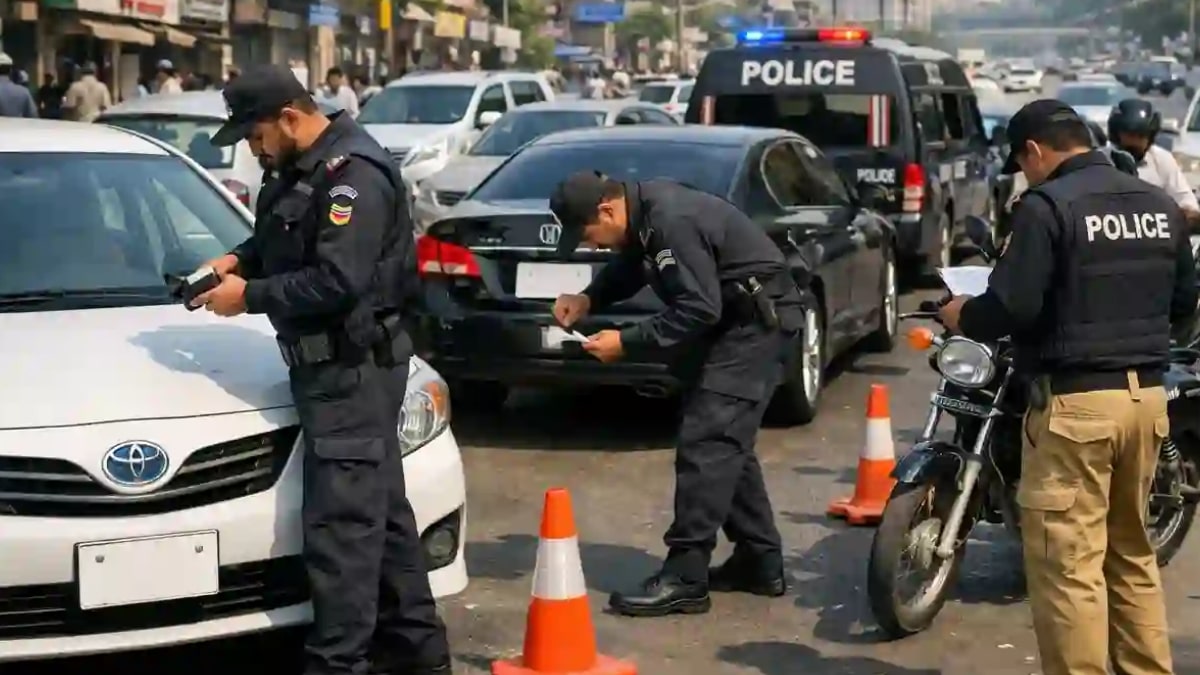
The Karachi vehicle blacklist initiative by the Sindh Police represents a calibrated effort to digitize urban security and enforce structural accountability across the metropolis. By flagging 40,000 non-compliant vehicles under the Safe City project, authorities aim to resolve long-standing documentation gaps before the July 1 enforcement deadline. This strategic move ensures that every asset on the road aligns with a verified identity, creating a precision-driven baseline for public safety.
Precision Enforcement: Understanding the Karachi Vehicle Blacklist
The Sindh Police finalized this extensive list after identifying a critical failure in the secondary car market. Specifically, the list targets vehicles that buyers failed to transfer to their names after purchase. Furthermore, authorities have flagged cars with incomplete ownership records and those carrying significant unpaid government dues. Consequently, owners who neglect these legal requirements risk immediate vehicle seizure and heavy financial penalties when the crackdown commences next month.
- Compliance Deadline: July 1.
- Target Volume: 40,000 blacklisted units.
- Enforcement Measures: Vehicle impounding and structural fines.
- Required Action: Immediate verification via the official Sindh Police portal.
The Translation: Contextualizing the Data
In technical terms, the Karachi vehicle blacklist is a database synchronization exercise. In Pakistan, “open letters” and informal sales often leave a vehicle’s legal identity detached from its actual operator. This project bridges that gap. By blacklisting these assets, the Safe City infrastructure can now use automated surveillance to trigger alerts whenever a non-compliant license plate enters the network. It essentially converts a legal oversight into a digital red flag.
The Socio-Economic Impact: What This Means for You
For the average Karachi resident, this development shifts the “cost of negligence” from a minor annoyance to a major liability. Students and professionals using untransferred vehicles may face sudden disruptions to their commutes if their transport is impounded. On a broader scale, this policy increases the resale value of documented vehicles while penalizing the informal “file” culture. It forces a higher standard of transparency in the local automotive market, ultimately protecting buyers from purchasing stolen or legally compromised assets.
The Forward Path: An Expert Assessment
This initiative represents a significant Momentum Shift for Pakistan’s urban governance. While the immediate enforcement may cause friction, the long-term stabilization of vehicle data is a catalyst for a safer, smarter Karachi. We view this as a necessary structural recalibration. For Pakistan to achieve a truly integrated Safe City environment, the transition from paper-based ambiguity to digital precision is non-negotiable. Citizens should view the July 1 deadline as a strategic window to formalize their assets before the system automates enforcement.