
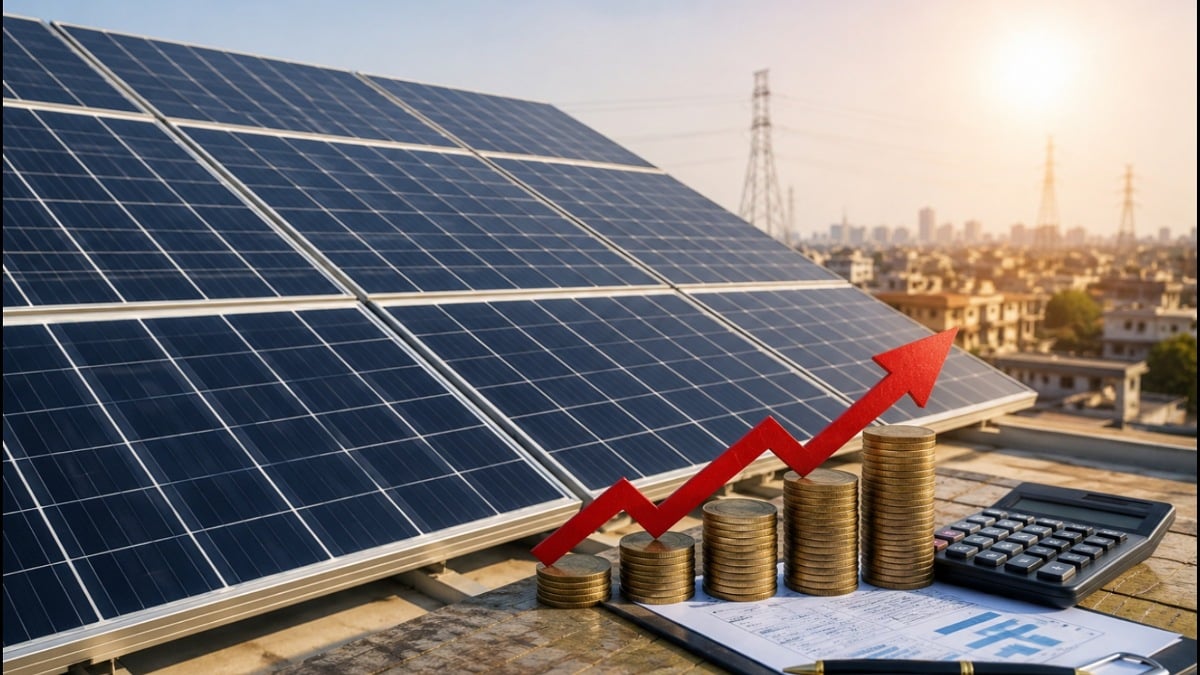
The landscape of sustainable energy in Pakistan is facing a calibrated shift as solar panel prices surge across major markets ahead of the federal budget. Market data reveals that prices have jumped sharply even before the official announcement of proposed tax changes. Consequently, the structural cost of installing renewable energy systems is rising for both residential and commercial sectors.
Analyzing the Recent Hike in Solar Panel Prices
Market observers report that various solar panel models have increased by between Rs. 7,000 and Rs. 9,000 per unit. Specifically, the price of a 585-watt solar panel escalated from Rs. 18,000 to Rs. 27,000. Furthermore, a 645-watt panel now costs Rs. 31,200, a significant rise from its previous baseline of Rs. 22,000. These fluctuations reflect a pre-emptive market adjustment driven by economic uncertainty.

The Translation: Precision Context
While official tax reforms remain in the proposal stage, traders in Karachi and other hubs are executing “speculative pricing.” They are adjusting rates today to hedge against potential duties tomorrow. This proactive market movement creates an artificial supply-demand gap, making precision planning for new installations difficult for the average citizen.
Financial Breakdown of Current Market Rates
- 585-Watt Panels: Increased to Rs. 27,000 (Previously Rs. 18,000).
- 645-Watt Panels: Increased to Rs. 31,200 (Previously Rs. 22,000).
- 720-Watt Panels: Increased to Rs. 33,500 (Previously Rs. 25,000).
Industry sources also warn that inverter prices could follow this trajectory in the coming weeks. Therefore, the total system efficiency regarding cost-to-benefit ratios is currently being recalculated by energy consultants across the country.
The Socio-Economic Impact
How does this change the daily life of a Pakistani citizen? For the middle-class professional or the urban household, the “payback period” for a solar investment has just extended by 12 to 18 months. This volatility discourages the adoption of green technology at a time when electricity tariffs are at an all-time high. In rural areas, where solar is a primary catalyst for agricultural productivity, these costs could lead to a temporary stagnation in system upgrades.
The Forward Path: Strategic Analysis
This development represents a Stabilization Move by traders rather than a momentum shift in global production. The surge is localized to Pakistan’s internal fiscal climate. For the green energy movement to regain its trajectory, the government must provide clear, long-term policy benchmarks that minimize speculative trading and protect the consumer’s ability to innovate at home.








