
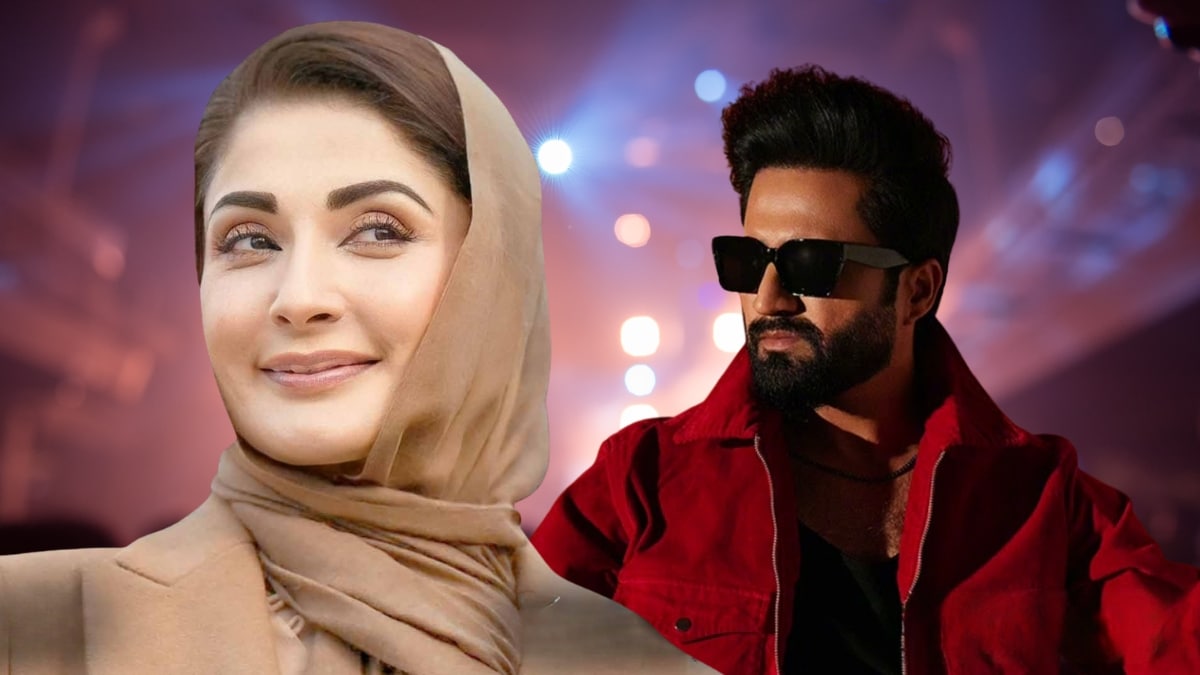
Precision in cultural regulation defines the latest discourse in Punjab’s social landscape. Singer Falak Shabir recently urged Chief Minister Maryam Nawaz to initiate public dress legislation to restrict specific clothing styles in urban centers. This proposal, shared via social media, aims to mitigate a perceived cultural decline that Shabir associates with modern public attire. Consequently, the appeal has triggered a polarized debate regarding personal freedom and administrative oversight.
The Structural Debate Over Public Dress Legislation
The singer articulated his appeal on Instagram while simultaneously debunking misinformation regarding a rumored vape ban. Shabir transitioned from verifying facts to proposing a specific legal framework for public spaces, including bazaars and streets. As a father of two daughters, he calibrated his message to emphasize the protection of traditional values. However, the entertainment community and digital audience responded with a mix of support and skepticism.
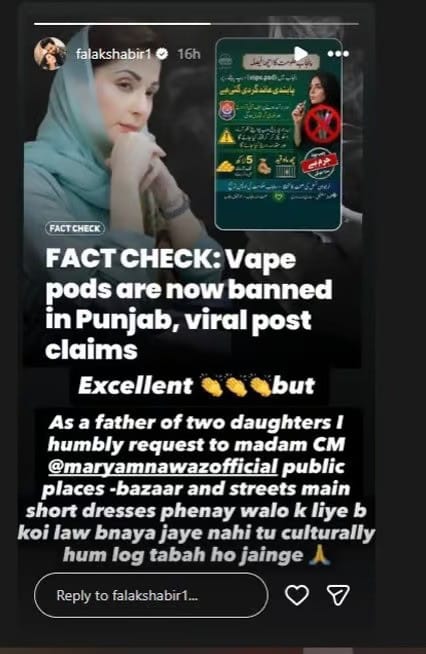
Critics quickly highlighted a perceived hypocrisy in Shabir’s stance. They noted his active role in the entertainment industry, which often challenges conservative norms. Furthermore, many social media users pointed to his international lifestyle as a contradiction to his demand for local restrictions. These reactions suggest a deep-seated tension between individual autonomy and collective cultural identity.
The Translation (Clear Context)
In “Next Gen” terms, this situation represents a clash between cultural preservation and individual agency. Shabir is utilizing his platform to advocate for a state-mandated dress code, moving the conversation from personal preference to legislative action. He views the current trend in fashion as a catalyst for social erosion. Conversely, his critics view his request as an attempt to enforce selective morality through the power of the provincial government.
The Socio-Economic Impact
For the average Pakistani citizen, the introduction of public dress legislation could significantly alter the baseline of daily public life. Such laws often necessitate increased social policing, which can disproportionately affect the mobility of women in urban and rural environments. For professionals and students, this shift could create new barriers to personal expression and inclusivity. Economically, restrictive social environments can sometimes deter the growth of creative industries and modern retail sectors.
The Forward Path (Opinion)
This development represents a Stabilization Move rather than a true momentum shift for Pakistan. It reflects an attempt to anchor national identity through administrative force during a period of rapid digital globalization. While preserving heritage is vital, progress is best achieved through calibrated education and economic empowerment rather than restrictive mandates. True system efficiency requires a balance between respecting tradition and fostering a modern, inclusive society.








