The Strategic Pause on Restoring Lahore Street Names
The Punjab government recently calibrated its cultural policy by deferring the plan to restore original Lahore street names. While the initiative sought to re-establish a historical baseline for the city’s identity, administrative officials paused the movement following feedback from specific religious groups and digital influencers. Consequently, this structural shift reflects the delicate balance between heritage preservation and public sentiment in a modernizing urban landscape.
The Lahore Heritage Areas Revival (LAHR) committee originally approved this restoration in March. PML-N President Nawaz Sharif and Punjab Chief Minister Maryam Nawaz presided over the session. They initially intended to reclaim the pre-partition identity of various sectors to honor the city’s multi-layered history. However, the provincial administration stepped back to avoid social friction, choosing to maintain the status quo for the immediate future.
Analytical Consultation and Expert Consensus
Despite the deferral, the LAHR recently conducted a precision-focused consultation with a diverse panel. This group included historians, architects, and urban planners. These professionals largely advocated for the restoration of Lahore street names, viewing them as vital data points in our national narrative. They argued that preserving a city’s historic identity is a catalyst for cultural maturity and global tourism potential.
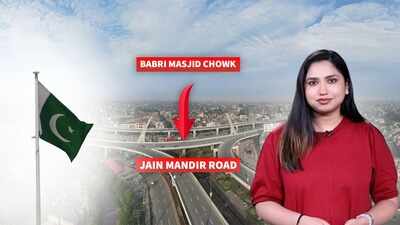
Deputy Commissioner Muhammad Ali Ijaz clarified that the government has not reached a final negative conclusion. Instead, the matter remains under active deliberation. Several iconic locations were part of the initial list for restoration, including:
- Fatima Jinnah Road: Originally known as Queen’s Road.
- Allama Iqbal Road: Formerly identified as Jail Road.
- Sir Aga Khan Road: Previously known as Davies Road.
- Islampura: Historically recognized as Krishan Nagar.
The Translation: Contextualizing the Decision
In the “Next Gen” framework, names are more than just labels; they are the metadata of a city’s architecture. The Punjab government’s plan was an attempt to synchronize Lahore’s physical landscape with its deep historical records. By deferring this, the administration is prioritizing social stability over historical precision. They are treating the city’s identity as a living, evolving organism rather than a static museum piece.
The Socio-Economic Impact
For the average Pakistani citizen, this decision affects the “cultural legibility” of their surroundings. Restoring original names often serves as a catalyst for heritage tourism, which can drive revenue into local economies. However, sudden changes can also cause logistical confusion for households and businesses relying on established modern names for logistics and mapping. This pause ensures that any eventual change will be a calculated move rather than a disruptive shock.
The Forward Path: An Innovator’s Perspective
This development represents a Stabilization Move. While Next Generation Pakistan advocates for the preservation of historical precision, we recognize that structural progress requires public buy-in. A strategic delay allows for a more comprehensive educational campaign. This will eventually help citizens understand that honoring pre-partition history does not diminish our modern national identity but rather provides a more robust foundation for the future.