
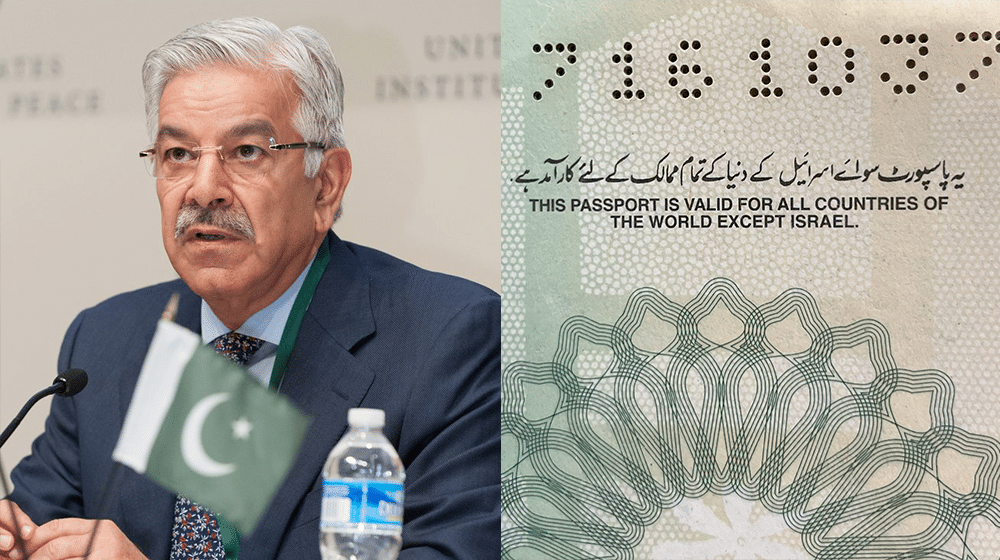
Pakistan’s Israel policy remains a calibrated baseline for the nation’s identity, as the state formally rejects participation in the Abraham Accords despite intensifying external diplomatic pressure. Defence Minister Khawaja Asif recently reaffirmed this position, stating that structural normalization with Israel is not acceptable under current geopolitical conditions. This decision aligns with the national consensus and long-standing commitments to the United Nations and OIC frameworks.
Strategic Continuity in a Shifting Global Framework
During a high-level interaction with the National Assembly Standing Committee on Finance, Khawaja Asif detailed the precision of Pakistan’s diplomatic architecture. He emphasized that the state will not support any agreement involving Israel until the establishment of a sovereign and independent Palestinian state. Consequently, the government views the Pakistan’s Israel policy as a non-negotiable pillar of its foreign relations strategy.
The United States continues to advocate for wider participation in the Abraham Accords, a framework that has already bridged relations between Israel and several Arab nations. However, Pakistan’s leadership maintains a disciplined distance from these accords, citing the baseline requirement for a two-state solution. Furthermore, the Minister reminded the committee that the Pakistani passport structurally prohibits travel to Israel, serving as a legal reinforcement of this diplomatic barrier.
The Translation: Contextualizing Diplomatic Resistance
While the Abraham Accords are often framed as a catalyst for regional economic integration, Pakistan views them through the lens of systematic justice. In “Next Gen” clarity, the government is signaling that economic incentives do not outweigh the constitutional and moral baseline of the state. By rejecting normalization, Pakistan is prioritizing its role as a principled stakeholder in the Muslim world over short-term diplomatic ease.
The Socio-Economic Impact: Impact on the Citizenry
For the average Pakistani citizen, this stance ensures that domestic political stability remains intact, as public sentiment is overwhelmingly aligned with the Palestinian cause. However, maintaining this precision in foreign policy requires a strategic balancing act. It influences how Pakistan negotiates with Western financial institutions and bilateral partners. Students and professionals in the digital frontier should recognize that these decisions define the nation’s “sovereign brand,” which can impact international trade corridors and technical collaborations.
The Forward Path: A Momentum Shift or Stabilization?
This development represents a Stabilization Move. While it does not introduce new variables into the diplomatic equation, it reinforces the existing structural integrity of the state’s foreign policy. Pakistan is choosing to maintain its baseline rather than pivot toward a controversial realignment. For the nation to move from stabilization to a momentum shift, it must now leverage this principled stance to strengthen its leadership role within the OIC, turning diplomatic consistency into economic leverage.








