

The structural integrity of a capital city relies on calibrated urban planning and strict adherence to land-use regulations. Consequently, the Capital Development Authority (CDA) has finalized a strategic Islamabad encroachment drive to reclaim public land and dismantle unauthorized settlements. This high-precision operation aims to restore the city’s baseline blueprint, involving a multi-agency coalition including the Islamabad Police, Frontier Corps (FC), and Rangers to ensure systemic compliance.
Strategic Phasing of the Islamabad Encroachment Drive
Authorities have prepared a comprehensive operational framework for the Islamabad encroachment drive, which now awaits final approval from the Ministry of Interior. Preliminary assessments have already identified several key sites where illegal constructions disrupt the urban flow. Specifically, the operation will focus on sectors G-7 and I-9, alongside the Mehrabadi settlement and other identified katchi abadis. In addition, residents occupying land illegally will receive formal notices over the next thirty days to facilitate a voluntary exit.
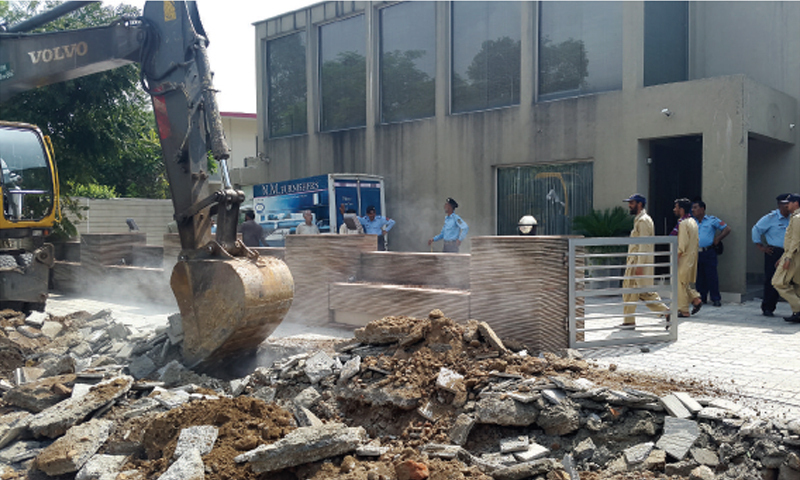
Following the expiration of the notice period, the administration will deploy heavy machinery to demolish remaining structures. Therefore, the coordinated use of law enforcement ensures that the clearing process remains orderly and efficient. This transition from illegal occupation to regulated space serves as a critical step in the city’s modernization efforts.
The Translation: Decoding the Strategic Framework
While “anti-encroachment” often sounds like simple demolition, the logic behind this Islamabad encroachment drive is rooted in system efficiency. Unauthorized settlements often bypass the city’s infrastructure grid, leading to strained utilities and compromised public safety. By removing these anomalies, the CDA is not merely clearing land; it is recalibrating the city’s ability to provide services to its legal taxpayers. This is a move toward a more predictable and governed urban environment.

The Socio-Economic Impact: Reclaiming Public Utility
For the average Pakistani citizen, these operations represent a restoration of public rights. Encroachments often block footpaths, drainage systems, and green belts, which negatively impacts the daily commute and environmental health of the city. Furthermore, the systematic removal of these structures ensures that public utilities like water and electricity are not diverted through illegal connections. Consequently, professionals and families in Islamabad can expect a long-term improvement in utility stability and transit efficiency.
The Forward Path: A Catalyst for Urban Maturity
This development represents a Momentum Shift for the federal capital. It signals a move away from reactive management toward a disciplined, proactive enforcement of urban laws. While the short-term displacement of informal settlers presents a challenge, the long-term stabilization of the city’s master plan is vital for future growth. Sustaining this momentum will require consistent oversight to prevent the re-emergence of these settlements, acting as a catalyst for a more organized Pakistan.








