

The National Database and Registration Authority (NADRA) has strategically recalibrated its identity verification protocols to enhance systemic efficiency. By implementing new CNIC rules, the authority now allows first-time applicants to bypass the signature requirement, marking a significant transition toward inclusive digital governance. Consequently, this update streamlines the onboarding of citizens into the national database, ensuring that administrative barriers do not impede civil registration.
Calibrated Accessibility: Understanding the New CNIC Rules
Under the revised regulatory framework, individuals applying for their identity cards for the first time are no longer mandated to provide a handwritten signature. Specifically, NADRA has confirmed that if an applicant chooses not to submit a signature, the system will automatically populate the signature field with “NA.” This structural adjustment is designed to accommodate a broader demographic, particularly those in the early stages of digital literacy.
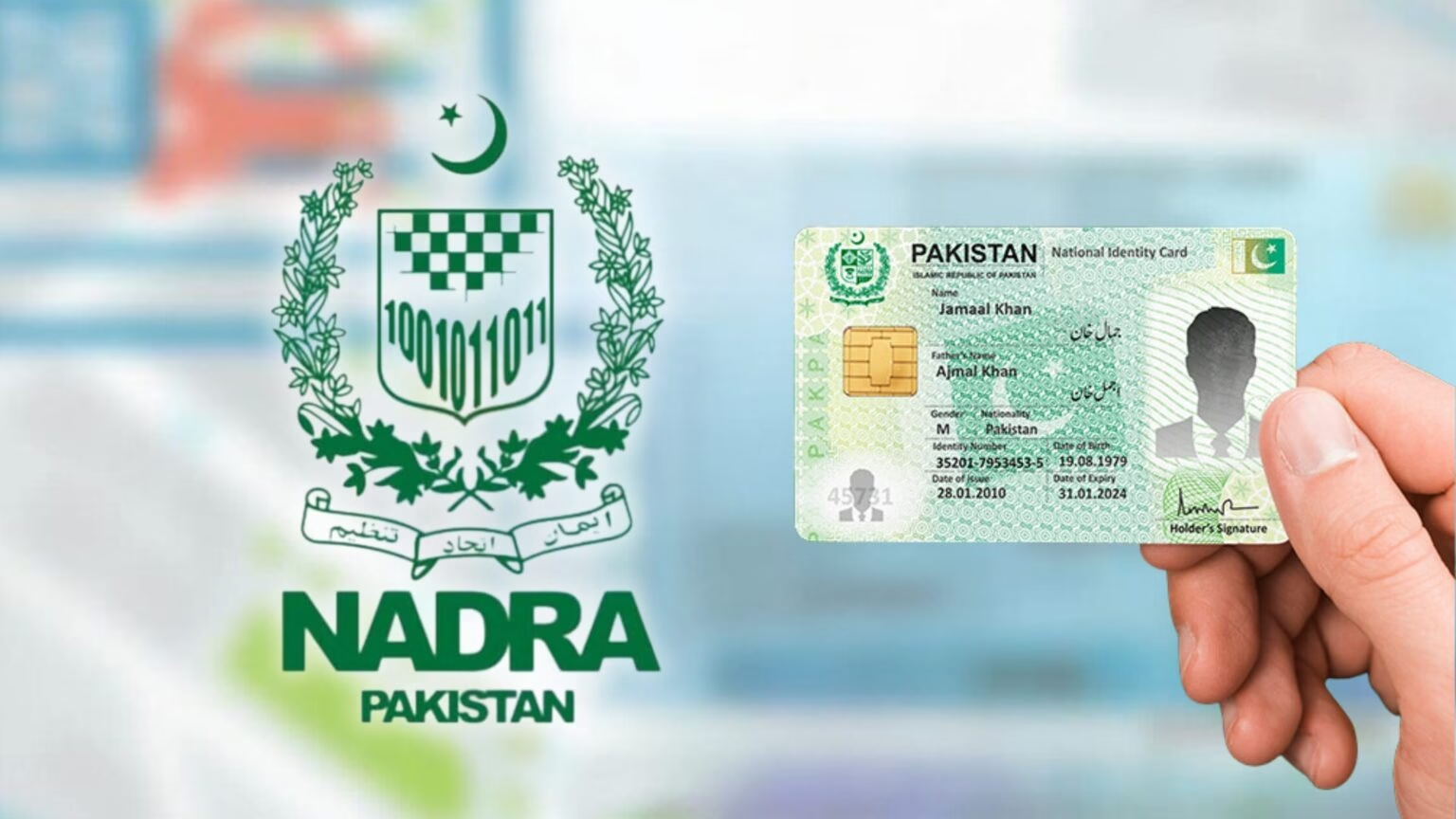
Furthermore, the authority clarified that thumb impressions will not serve as a visual replacement for signatures on the printed card. This decision is a precision move to maintain the aesthetic and functional integrity of the document. Although thumbprints remain a baseline for biometric verification within the backend system, they will not be displayed on the physical card face due to security considerations.
Security Protocols and Digital Fraud Mitigation
Precision in security remains a cornerstone of this reform. A NADRA spokesperson emphasized that thumbprint images are strictly excluded from the card’s surface to mitigate risks associated with forgery and unauthorized data replication. Mobile application users have received specific instructions to avoid uploading thumbprint images during their digital submissions. Consequently, this protocol ensures that the new CNIC rules do not compromise the baseline security of Pakistan’s identity infrastructure.
The Situation Room: Strategic Analysis
The Translation (Clear Context)
NADRA is shifting from a rigid, “one-size-fits-all” verification model to a flexible, data-centric architecture. By making signatures optional, the system recognizes that identity is verified through biometrics (fingerprints and facial recognition) rather than a stylized pen stroke. The “NA” entry is a logical placeholder that prevents system errors while acknowledging the diverse literacy levels of a growing population.
The Socio-Economic Impact
This development serves as a catalyst for social inclusion. In rural and underserved urban areas, individuals who struggle with traditional signatures often face delays or embarrassment during the application process. These new CNIC rules empower students, elderly citizens, and illiterate professionals to secure their legal identity without friction. Improved registration rates directly correlate with better access to government subsidies, banking services, and voting rights for the average Pakistani household.
The Forward Path (Opinion)
This update represents a definitive Momentum Shift toward a modern, biometric-first society. By removing the signature bottleneck, NADRA is prioritizing functional utility over antiquated formalities. However, the authority must remain vigilant; as physical signatures phase out, the precision of biometric encryption must be continuously upgraded to defend against evolving deepfake and digital identity theft threats.








