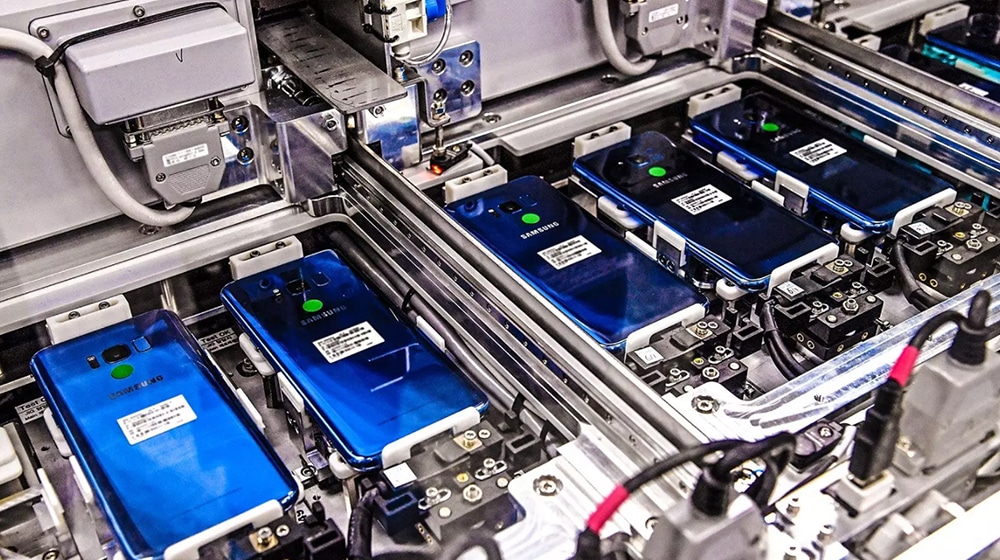
National advancement requires a calibrated industrial baseline, yet April 2026 presented a structural hurdle for our tech sector. Specifically, Pakistan’s mobile manufacturing decline manifested as a sharp 35 percent month-on-month contraction. Data released by the Pakistan Telecommunication Authority (PTA) confirms that production plummeted to 1.81 million units, falling from the 2.79 million units recorded in March. Consequently, the local grid processed nearly one million fewer handsets during this period.
Calibrated Metrics: Analyzing the Production Slowdown
Despite the recent mobile manufacturing decline, domestic assembly continues to function as the primary catalyst for market supply. Local manufacturers accounted for 83 percent of the total demand in April. Although this represents a decrease from the 89 percent benchmark set in March, the cumulative output remains significant. For instance, during the first four months of 2026, local assemblers produced 9.17 million devices. Furthermore, imported handsets saw a marginal 6 percent increase, totaling 0.37 million units in April.
- Total Availability: 2.18 million units in April (down 34% from March).
- Local Dominance: 85% of total market availability YTD 2026.
- Import Volume: 1.59 million cumulative units for Jan-April.

The Situation Room Analysis
The Translation
In essence, the mobile manufacturing decline reflects a temporary industrial recalibration. The 35 percent drop is not a sign of systemic failure but rather a correction following the aggressive production surges of the previous month. The high baseline established in March made a monthly contraction mathematically probable. Thus, the system is currently balancing inventory levels against shifting consumer demand.
The Socio-Economic Impact
This development directly impacts the digital inclusion of the average Pakistani citizen. Because local assembly provides more affordable hardware, any sustained slowdown could lead to price volatility in the retail sector. Moreover, urban professionals and students rely on these locally produced units for their daily digital operations. Consequently, maintaining a steady manufacturing rhythm is vital for social connectivity and economic participation.

The Forward Path
We categorize this development as a Stabilization Move. While the raw numbers suggest a “hit,” the long-term trajectory still favors domestic production over imports. To ensure future momentum, Pakistan must focus on precision-led supply chain management. If the industry can maintain its 80% plus market share, this April slowdown will merely be a brief pause in a larger growth narrative.
Global Tech Ecosystem Context
Strategic shifts in manufacturing often mirror global market trends led by major industry catalysts. Monitoring these movements provides a precision lens through which we can view our own domestic progress.