

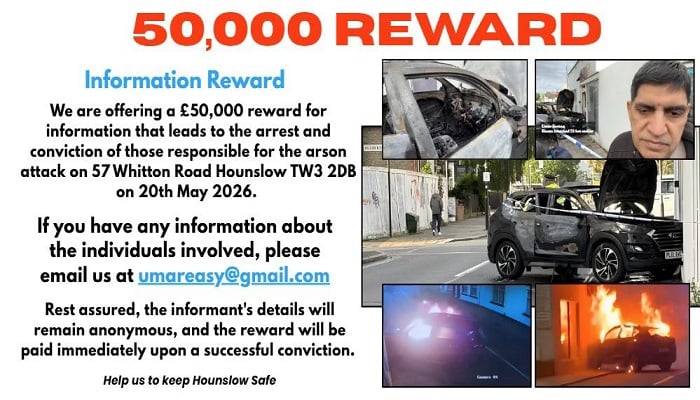
The systemic stability of democratic participation faces a critical challenge following recent violent political attacks against Umer Farooq, a prominent British-Pakistani politician and businessman. Farooq announced a £50,000 reward to identify perpetrators who targeted his family home and airline ticketing business in Hounslow. This surge in aggression follows a shifting political baseline in West London, where Conservative gains have reportedly triggered localized hostility. Consequently, the safety of public figures and their families has become a primary concern for the community.
Strategic Targeting: The Mechanics of the Attack
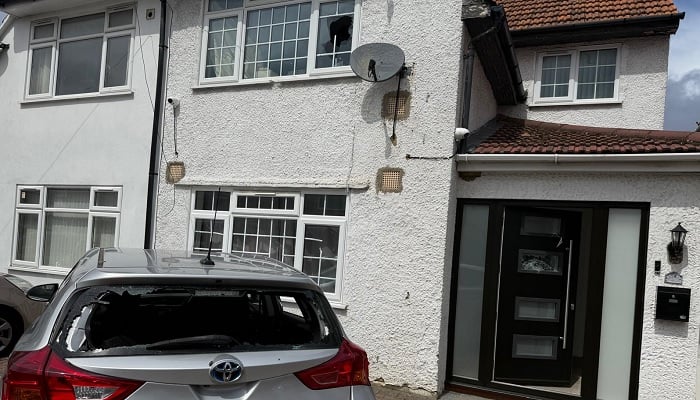
Precision and planning characterize the separate incidents targeting Farooq’s interests. First, unidentified individuals threw bricks through the windows of his family home, nearly injuring relatives and children inside. The attackers also destroyed a family vehicle parked on the premises. This escalation suggests a deliberate attempt to compromise the domestic security of the politician.
Furthermore, suspects executed a calculated firebombing of Farooq’s airline ticketing business just one day later. CCTV footage reveals a black car arriving at the scene before a masked individual poured petrol on a vehicle and ignited it. Notably, the fire brigade’s rapid 15-minute response prevented the blaze from consuming the entire office structure. Farooq described the operation as “planned and professional,” noting the use of a stolen car to evade immediate detection.
The Local Political Landscape and Resulting Friction
The timing of these violent political attacks aligns with significant shifts in the local governance structure. During the recent council elections, the Labour Party experienced substantial losses, losing nearly 1,500 seats nationwide. Specifically in Hounslow, while Labour retained control, their majority decreased significantly as Conservative candidates, particularly those from the Pakistani and Asian communities, secured key strongholds. This transition has seemingly calibrated a more volatile environment for active politicians.
Local supporters suggest that the intensity of the campaign created friction points between rival factions. Although some have alleged that local political figures fueled this hostility, no public evidence currently links specific individuals to the crimes. Farooq has criticized the local police force for a perceived failure in providing adequate protection, emphasizing that no family should exist in fear within their own residence.
The Translation: Deconstructing the Motivation
In “Next Gen” terms, these violent political attacks represent a shift from ideological debate to physical intimidation tactics. When political competition moves from the ballot box to domestic property damage, the democratic “operating system” begins to malfunction. The reward offered by Farooq is not just a search for criminals; it is a strategic attempt to re-establish a baseline of safety through private resource mobilization.
The Socio-Economic Impact: Precision Analysis
For the Pakistani diaspora and residents of Hounslow, these events create a chilling effect on entrepreneurship and civic engagement. When a business providing essential travel links to Pakistan is firebombed, it disrupts the economic bridge between the UK and South Asia. Furthermore, the psychological impact on families in high-density Asian communities can deter future generations from pursuing careers in public service, potentially stagnating our community’s political advancement.
The Forward Path: A Stabilization Move
This development represents a Stabilization Move. While the attacks indicate a regression in safety, the swift public response and the substantial reward offer signify a refusal to accept intimidation as the new norm. For progress to continue, law enforcement must provide a calibrated and decisive response to restore systemic confidence. We must demand that political disagreements remain within the framework of civil discourse to protect the structural integrity of our society.








