The structural integrity of a nation’s sporting future relies on a calibrated pipeline of talent. Pakistan’s junior squash stars demonstrated this strategic edge during the opening rounds of the 33rd Asian Junior Individual Squash Championships 2026 in Panzhihua, China. The delegation initiated their campaign with clinical efficiency, securing high-margin victories across multiple age brackets to establish an early baseline of dominance.
Strategic Dominance by Junior Squash Stars across Age Brackets
In the Under-19 category, Abdullah Nawaz executed a high-precision performance against Indonesia’s Muhammad Razka Idhmi Sulaeman. Nawaz utilized superior court coverage to secure an 11-1, 11-3, 11-5 victory in only 27 minutes. Consequently, this set a disciplined tone for the rest of the Pakistani squad competing in Panzhihua.
The Under-17 and Under-13 divisions mirrored this structural success. M. Umair Arif dismantled Thailand’s Peemawat Poonsiripuk with a score of 11-2, 11-4, 11-2. Simultaneously, Nauman Khan outpaced China’s Liao Zhongyu in a one-sided 11-3, 11-3, 11-4 match. In the Under-13 event, Mustafa Khan maintained the momentum, delivering a comfortable 11-3, 11-4, 11-2 win over Joseph Alexander Chang.
Precision and Speed in the Mid-Tier Categories
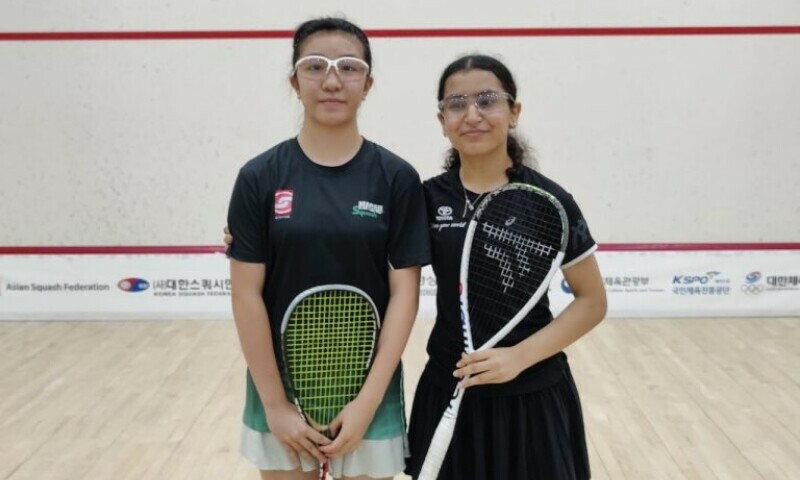
Efficiency reached its peak in the Under-15 category. Sohail Adnan recorded one of the fastest victories of the day by defeating Alexander Muratidis 11-2, 11-1, 11-2. Remarkably, the match concluded in just 11 minutes, highlighting a significant gap in tactical preparation. Furthermore, the girls’ division displayed equal intensity. Mahnoor Ali produced a commanding 11-2, 11-1, 11-0 win against Anna Ugay. Additionally, Sehrish Ali demonstrated exceptional composure, overcoming a third-set lapse to defeat Zhu Chenxuan 3-1.
The Situation Room Analysis
The Translation
The results from Day 1 indicate more than just athletic talent; they represent a high-functioning training ecosystem. While many players rely on raw speed, the Pakistani cohort utilized “economic movement”—reaching the ball faster with fewer steps. This technical superiority allows players to maintain high-intensity output while minimizing physical fatigue during a multi-day tournament architecture.
The Socio-Economic Impact
Consistent success in international arenas like the Asian Junior Squash Championships serves as a catalyst for national morale and “soft power.” For the average Pakistani household, these victories validate sports as a viable professional pathway. This development encourages investment in local grassroots facilities, potentially transforming the athletic sector into a significant contributor to the youth economy and national health standards.
The Forward Path (Opinion)
This performance represents a definitive Momentum Shift. Pakistan is not merely participating; the squad is dictating the pace of the competition. If the junior squash stars maintain this level of precision, the tournament will serve as a structural baseline for reclaiming Pakistan’s historical global squash hegemony. The system is working, but long-term stabilization requires sustained corporate sponsorship to match this level of individual brilliance.