

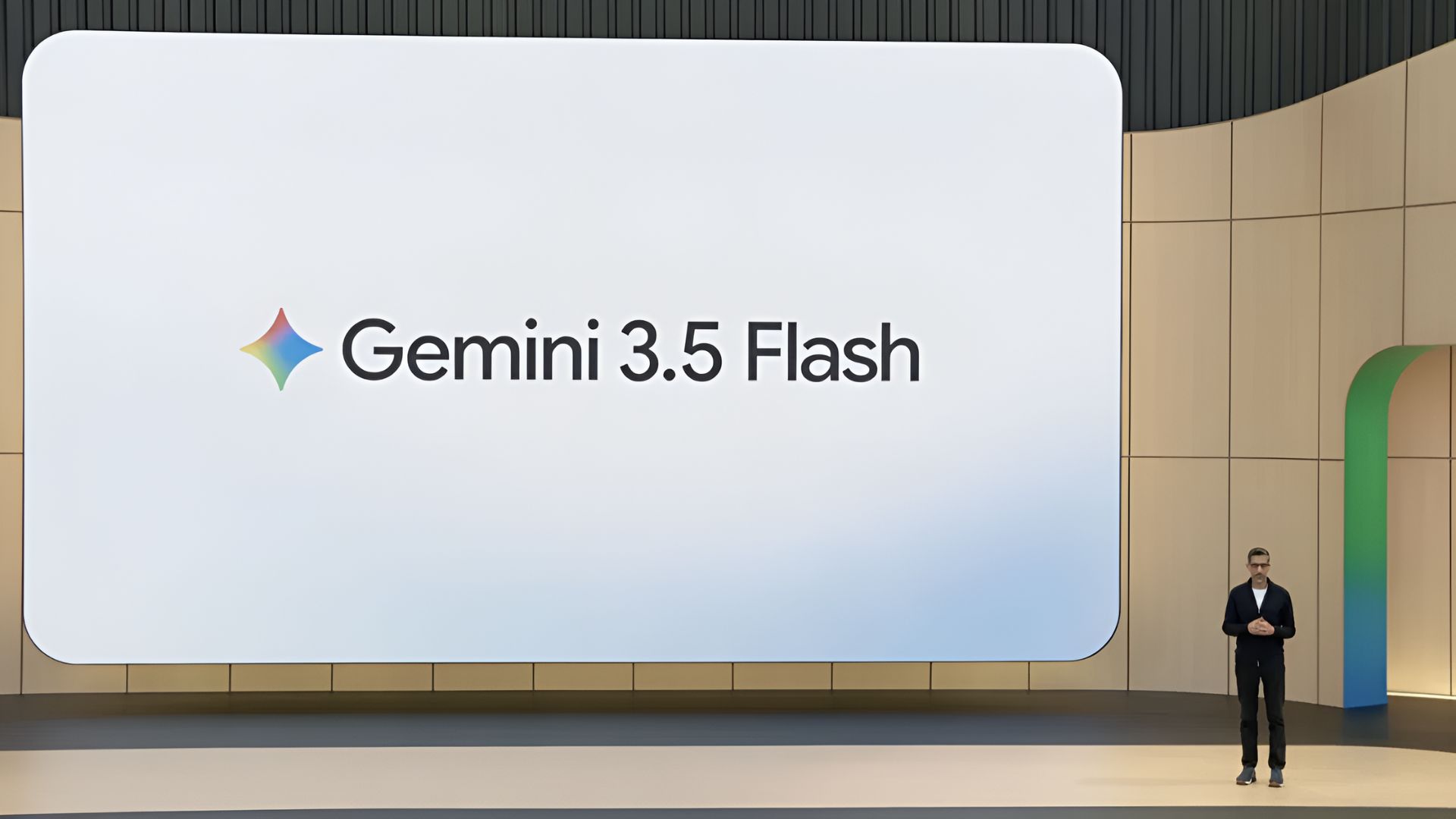
Google recently unveiled Gemini 3.5 Flash at its annual I/O developer conference, marking a calibrated shift toward autonomous agentic systems. This new model operates 4x faster than its frontier rivals, establishing a high-performance baseline for the next era of computational productivity. Consequently, the transition from conversational tools to structural agents is now officially underway.
Unmatched Speed: 4x Faster Than Frontier Rivals
DeepMind’s technical leadership confirmed that Gemini 3.5 Flash delivers high-quality multimodal reasoning with remarkably low latency. Internal metrics show that this model outperforms Gemini 3.1 Pro across almost all benchmarks, specifically in complex coding and agentic tasks. Furthermore, an optimized version of the model demonstrates speeds up to 12x faster, allowing multiple agents to run simultaneously on long-duration workflows.

This speed serves as the catalyst for Google’s broader ecosystem strategy. By designing for high-throughput environments, the system can manage parallel workflows that were previously restricted by processing delays. Therefore, developers can now deploy agents that manage research, execution, and revision with unprecedented precision.
Building the Infrastructure: Antigravity 2.0
Alongside the model launch, Google introduced Antigravity 2.0, a standalone desktop application built for agent-first development. This environment allows engineers to orchestrate multiple AI agents in parallel. During technical demonstrations, these agents successfully collaborated to build a functional operating system from scratch inside the Antigravity harness.
The model was co-developed with this native environment to ensure seamless task execution. Integration with Firebase, Android, and Google AI Studio further enhances the structural utility of Gemini 3.5 Flash. Consequently, the platform now supports dynamic subagents and scheduled background tasks that function with minimal human oversight.
The Situation Room: Strategic Analysis
The Translation (Clear Context)
Historically, AI acted like a digital librarian answering questions. Now, Google has recalibrated Gemini 3.5 Flash to act as a digital engineer. “Agentic” means the AI no longer just talks; it executes, plans, and revises complex projects. It represents a move from passive information retrieval to active system management.
The Socio-Economic Impact
For the Pakistani professional, this speed reduces the “time-to-market” for digital products. Specifically, freelancers and tech startups in urban hubs like Lahore and Karachi can leverage these 4x faster tools to compete globally with lower overhead. Furthermore, autonomous search agents can democratize access to real-time financial and educational data for households across the country.
The “Forward Path” (Opinion)
This development represents a significant Momentum Shift. By moving away from simple chatbots toward autonomous executors, Google is setting a new standard for system efficiency. However, the legal challenges regarding safety remind us that technical precision must be matched by robust ethical frameworks to ensure long-term stability.
Safety Protocols and Global Personal Intelligence
While the model operates autonomously for hours, Google integrated mandatory “human-in-the-loop” checkpoints. These safeguards ensure that the Gemini 3.5 Flash model pauses for human judgment during critical decision points or permission conflicts. Additionally, Google enhanced its cyber and safety calibrations to handle sensitive queries more effectively than previous iterations.
This summer, Google will also deploy information agents in Search to monitor web data 24/7 for subscribers. These personal intelligence tools will extend to nearly 200 countries, connecting with Gmail and Calendar to manage digital lives with architectural precision. As these systems scale, the focus remains on balancing rapid innovation with rigorous safety standards.








