
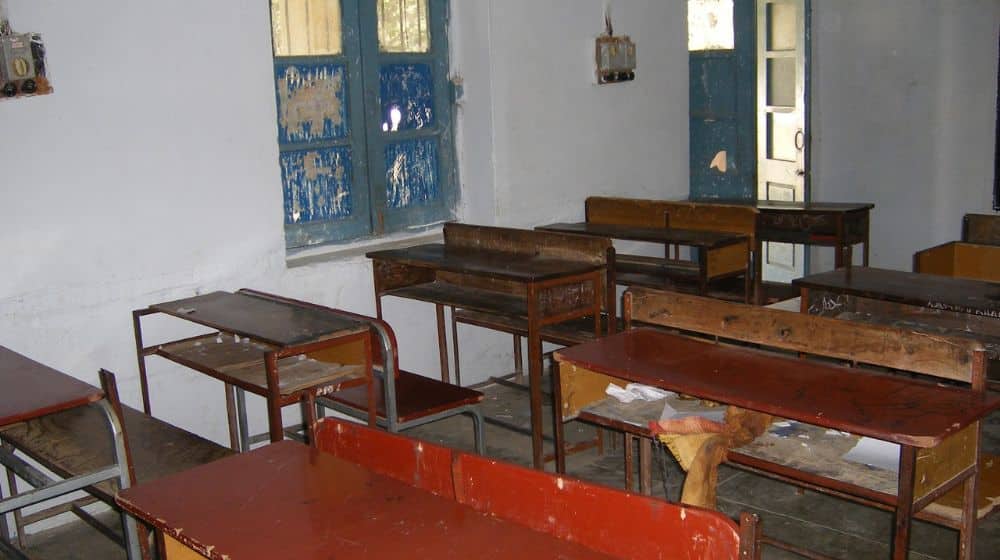
National advancement rests upon the calibration of our learning environments, yet a structural failure in Chiniot demonstrates how fiscal austerity can undermine academic precision. Recent investigations reveal that a Punjab school fans were allegedly deactivated to reduce electricity expenditures at Government Primary School in Chak 131 Lonewala. Consequently, management forced students to endure severe temperatures, prioritizing operational savings over the baseline physiological needs of the learners. This incident highlights a critical friction point between energy management and the fundamental right to a safe educational setting.
The Situation: Structural Oversight and Punjab School Fans
The Punjab Education Foundation (PEF) has initiated a probe after social media footage exposed the overheated classrooms. Specifically, school staff informed students that the deactivated Punjab school fans were a direct response to rising electricity bills. Education authorities confirmed that the government had previously outsourced this facility to a private operator. Furthermore, officials are now drafting a formal letter to the PEF to initiate legal proceedings against the owner for this gross neglect of duty.
- Location: Government Primary School, Chak 131 Lonewala, Chiniot.
- Primary Allegation: Purposeful deactivation of ventilation to cut overhead costs.
- Regulatory Response: Potential termination of the outsourcing contract.
The Situation Room Analysis
The Translation (Clear Context)
This incident represents a “Management-Incentive Conflict” within the outsourced education model. While the government intends for private operators to bring efficiency, the current framework lacks a calibrated monitoring system to prevent unethical cost-cutting. In this case, the operator viewed electricity as a variable cost to be minimized, rather than a fixed necessity for a functional learning environment.
The Socio-Economic Impact
The deactivation of fans in a high-temperature zone directly correlates with decreased cognitive focus and heat-related health risks for students. For the households in Chiniot, this structural betrayal erodes trust in the public-private partnership model. Consequently, when school environments become hostile, the dropout rate in rural demographics typically increases, stalling regional progress.
The Forward Path (Opinion)
We classify this development as a Stabilization Move requiring urgent course correction. To ensure long-term system efficiency, the Punjab government must implement automated environmental standards. This includes smart-metering and climate-controlled audits. True progress cannot be achieved by compromising the health of the next generation for the sake of a utility bill. Precision in governance means protecting the most vulnerable assets: our students.








