

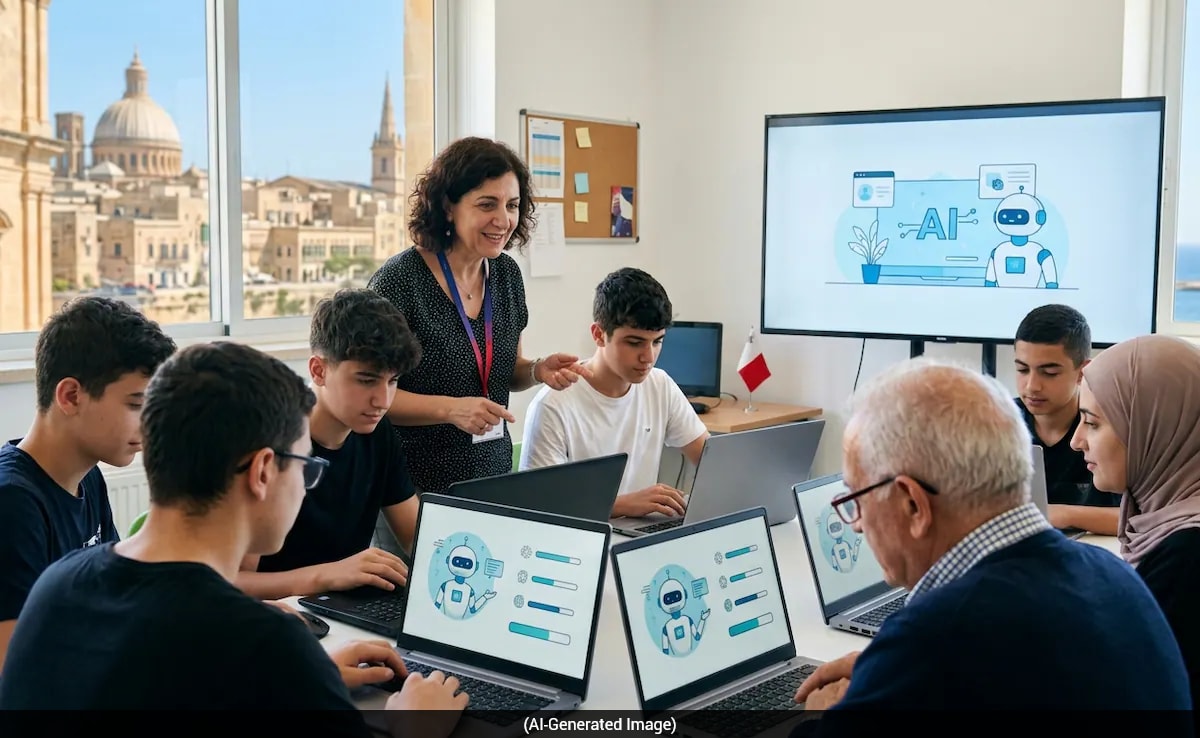
Malta has calibrated its national infrastructure to become a global catalyst for innovation by providing Free ChatGPT Plus access to its entire population. This strategic partnership between the Government of Malta and OpenAI aims to democratize advanced artificial intelligence through a structured national AI literacy programme. Consequently, every Maltese citizen now has the opportunity to harness high-tier AI tools to improve their daily productivity and professional efficiency.
Strategizing National Growth Through Free ChatGPT Plus
The “AI for All” initiative serves as the baseline for this digital transformation. Unlike standard rollouts, Malta requires citizens to complete a comprehensive AI course developed by the University of Malta. This prerequisite ensures that participants understand what AI can and cannot do before receiving their subscription. Furthermore, the Malta Digital Innovation Authority (MDIA) manages the distribution to ensure the license remains a personal, non-transferable asset for each eligible resident.

The Logistics of the “AI for All” Framework
The program targets a population of approximately 574,250 residents. Eligible participants must possess an active eID account to apply for the 12-month subscription, which normally carries a $240 annual value. While the first phase launched in May, the government plans to expand access to Maltese citizens living abroad. This inclusive approach ensures that the national talent pool remains competitive regardless of geographical location.
Qualification and Precision Training
Participants must complete three core modules covering AI fundamentals, everyday applications, and educational usage. Additionally, the curriculum offers specialized tracks for professionals, job seekers, and parents. Once a citizen earns their certificate of completion, they unlock their Free ChatGPT Plus license. This system prioritizes responsible use over simple consumption, creating a more sophisticated digital citizenry.
The Translation (Clear Context)
In simple terms, Malta is shifting from a passive consumer of technology to an active, trained user base. Most users globally use the “free” version of AI, which is often slower and less capable. By providing the “Plus” version—which includes priority access, data analysis tools, and the most advanced models—the Maltese government is effectively upgrading the collective intelligence and output capacity of its entire workforce. The mandatory training ensures this tool isn’t just a novelty but a calibrated instrument for economic growth.
The Socio-Economic Impact
For the average Pakistani citizen looking at this model, the impact is clear: digital equity leads to economic mobility. In Malta, a student can now use advanced AI to tutor themselves in complex subjects, while a small business owner can use it to automate administrative tasks at no extra cost. This reduces the “digital divide” where only the wealthy can afford the best tools. Consequently, this initiative levels the playing field for households in both urban and rural settings, fostering a culture of continuous learning and precision in work.
The Forward Path (Opinion)
This development represents a definitive Momentum Shift. While many nations are still debating how to regulate AI, Malta has chosen to proactively integrate it into the national fabric. This is not a mere stabilization move; it is a calculated leap forward. By coupling access with education, Malta is creating a blueprint for how small nations can compete in the global digital economy. This strategy should serve as a baseline for other developing nations aiming to accelerate their human capital development.








