
Peshawar’s municipal authorities have calibrated a comprehensive Peshawar sanitation plan to manage urban waste and public health during the high-density Eid-ul-Adha period. Regional Municipal Officer Sajjad Haider and Director General Qadeer Naseer finalized these structural arrangements during a high-level strategic meeting. Consequently, the administration has mobilized all available resources to maintain hygiene across village councils while ensuring uninterrupted civic services for every citizen.
Strategic Implementation of the Peshawar Sanitation Plan
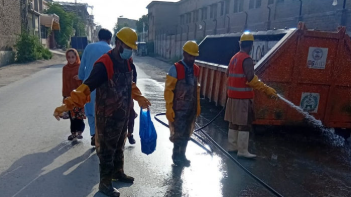
The Capital Metropolitan Government has officially cancelled all leaves for sanitation workers to ensure a full-strength operational baseline. Specifically, authorities have prepared a rigorous duty schedule that requires field staff to remain active throughout the holiday period. This move facilitates the timely disposal of animal waste and maintains the environmental integrity of residential zones. Furthermore, additional heavy machinery will deploy to shift offal away from urban centers, effectively mitigating foul odors and biological risks.
The Translation: Breaking Down the Logistics
In technical terms, this plan transitions from passive reporting to active site management. By cancelling leaves and creating a “special duty schedule,” the government is implementing a surge-capacity model. This ensures that the waste-to-disposal pipeline remains fluid despite the exponential increase in organic waste during Eid. The logic is simple: precision in scheduling prevents the systemic collapse of municipal services during peak demand.
Standardizing Safety in Cattle Markets
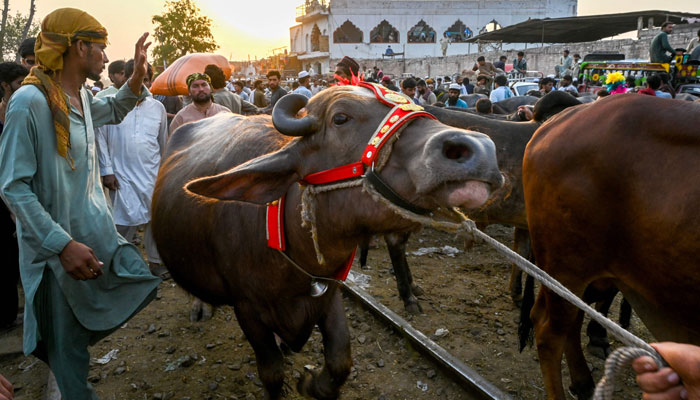
To ensure a secure environment, officials have mandated strict architectural guidelines for all approved cattle markets. Contractors must now install robust bamboo fencing and establish distinct entry and exit points to regulate the flow of buyers. Additionally, specialized teams will apply chemical sprays and disinfectants to prevent the transmission of the Congo virus. These calibrated measures aim to reduce overcrowding and eliminate the risk of accidents within the marketplace.
The Socio-Economic Impact
This initiative directly improves the daily lives of Peshawar’s residents by safeguarding public health and domestic stability. For the average household, efficient waste removal prevents the spread of waterborne diseases and maintains a breathable atmosphere in crowded neighborhoods. Economically, secure and regulated cattle markets protect the investments of local traders while providing a dignified experience for families purchasing sacrificial animals.
Reinforcing the Forward Path
Authorities have declared a zero-tolerance policy against illegal cattle markets to maintain structural order. This non-discriminatory action ensures that all trading occurs within monitored, hygienic zones. Consequently, the city can maintain its aesthetic and environmental baseline during one of the most significant logistical challenges of the year. Through these synchronized efforts, Peshawar aims to provide a healthy and secure environment for both traders and buyers alike.
The Forward Path: A Momentum Shift
This development represents a Momentum Shift for Peshawar’s municipal governance. Rather than relying on reactive measures, the administration is utilizing a data-driven, preemptive strategy. While it functions as a stabilization move for public health, the integration of specialized disinfectants and architectural market controls suggests an evolution toward smarter urban management. It is a catalyst for higher civic standards in Pakistan.