
Pakistan’s technological infrastructure requires a calibrated command center to navigate the global shift toward automated systems. Consequently, the Higher Education Commission (HEC) has appointed Rector NUST, Dr. Muhammad Zahid Latif, as the National Chair on AI and Robotics. This strategic move centralizes the governance of Pakistan’s most transformative digital domains under visionary leadership. The appointment ensures that the nation’s pursuit of innovation remains aligned with global economic paradigms and security structures.
Strengthening the National Chair on AI Framework
The National Chair will operate from the NUST Islamabad campus, serving as a high-precision platform for policy direction and strategic alignment. Furthermore, this initiative involves a panel of experts tasked with a comprehensive assessment of the national ecosystem. This includes overseeing HEC-supported entities such as the National Centre of Artificial Intelligence (NCAI) and the National Centre of Robotics and Automation (NCRA). By establishing this structural baseline, HEC aim to eliminate systemic inefficiencies that currently hinder technological sustainability.
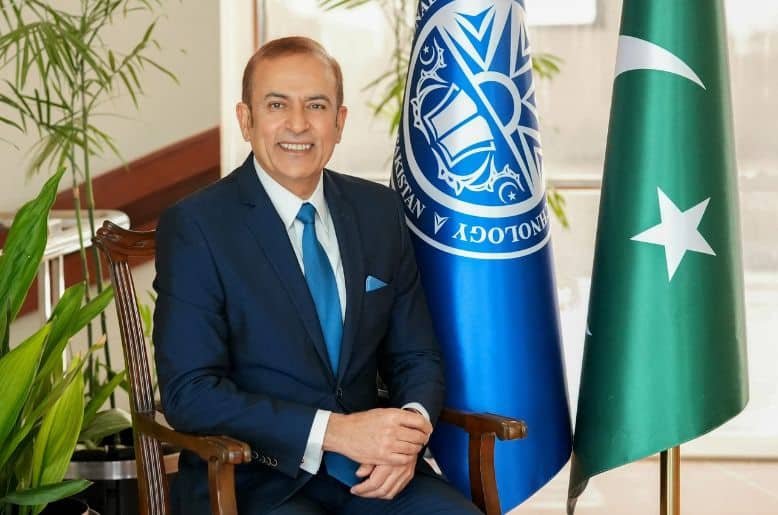
Strategic synergy remains the core objective of this mandate. Rector NUST highlighted that the journey toward digital maturity depends on meaningful collaboration between academia, government, and private industry. Therefore, the initiative seeks to bridge the gap between theoretical research and industrial application. This approach will accelerate Pakistan’s transition into a competitive knowledge economy driven by intelligent systems.
The Translation: Breaking Down the Mandate
In technical terms, this appointment creates a “Master Architect” role for Pakistan’s digital future. Instead of various institutions working in silos, the National Chair on AI will synchronize all research and development efforts. This means that government funding will focus on projects with high practical utility. Essentially, the initiative moves Pakistan from fragmented experimentation to a unified, result-oriented technological strategy.
The Socio-Economic Impact: Precision Growth for Pakistan
How does this development affect the average Pakistani? Firstly, it creates a structured pipeline for STEM students to transition into high-value tech roles within the country. Secondly, the integration of robotics into local industries will likely enhance manufacturing efficiency and reduce operational costs. For households, this signifies the beginning of smarter governance systems, potentially improving public service delivery through automation and data-driven precision.
The Forward Path: A Momentum Shift
This appointment represents a definitive Momentum Shift for Pakistan. By placing the National Chair on AI at NUST, HEC is leveraging an existing hub of academic excellence to act as a catalyst for national progress. However, the ultimate success of this move will depend on how quickly these policy frameworks translate into tangible industrial products. This is a critical step toward ensuring Pakistan does not just consume technology, but actively builds it.








