The structural integrity of a national football team depends on the strategic calibration of veteran talent and tactical discipline. France manager Didier Deschamps has officially unveiled the 26-man France World Cup squad for the 2026 tournament, positioning Kylian Mbappe and Ousmane Dembele as the primary catalysts for their attacking engine.
Kylian Mbappe expects to lead the offensive line as captain, despite a lingering thigh injury sustained at Real Madrid. Specifically, the forward currently sits second on France’s all-time scoring list with 56 goals, trailing Olivier Giroud by a single point. Consequently, this tournament represents a significant milestone for his individual legacy and national leadership.
Strategic Composition of the France World Cup Squad

Ousmane Dembele enters this cycle in peak physical condition following a productive season where he secured the Champions League title with Paris Saint-Germain. Furthermore, as a reigning Ballon d’Or winner, Dembele aims to secure his first-ever World Cup goal during this campaign. He remains one of only four remaining members from the historic 2018 championship team, alongside Mbappe, Lucas Hernandez, and N’Golo Kante.
The roster integrates a baseline of Premier League expertise, featuring seven players including Rayan Cherki and William Saliba. Meanwhile, Deschamps has introduced fresh technical capacity by including Bayern Munich’s Michael Olise and PSG’s Desire Doue. These additions suggest a move toward a more dynamic, high-mobility offensive structure.
Calibrated Omissions and Tactical Choices
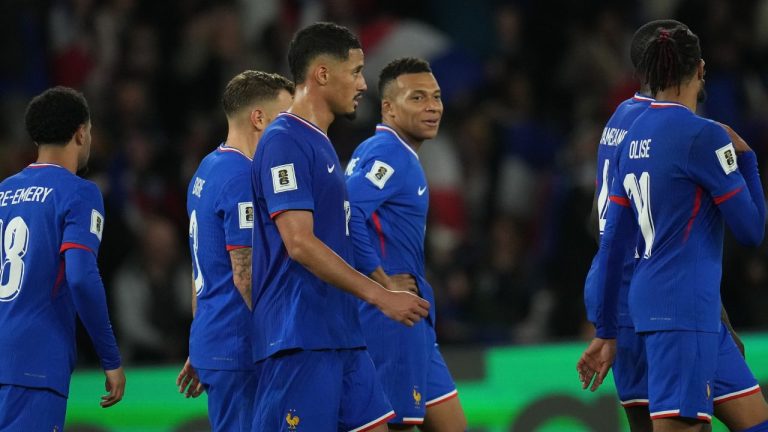
Deschamps made several high-stakes decisions by excluding established names such as Eduardo Camavinga and Randal Kolo Muani. In contrast to previous selections, the manager prioritized current fitness levels and system compatibility over historical performance. For instance, Hugo Ekitike misses the flight to North America due to a severe Achilles injury sustained in April.
The goalkeeping hierarchy remains stable with Mike Maignan as the primary choice. However, the inclusion of uncapped Robin Risser as a backup to Brice Samba indicates a strategic investment in the future of the French defensive baseline.
Official France World Cup Squad Roster

Goalkeepers
- Mike Maignan (AC Milan)
- Robin Risser (Lens)
- Brice Samba (Rennes)
Defenders
- Lucas Digne (Aston Villa)
- Malo Gusto (Chelsea)
- Lucas Hernandez (Paris Saint-Germain)
- Theo Hernandez (Al Hilal)
- Ibrahima Konate (Liverpool)
- Maxence Lacroix (Crystal Palace)
- Jules Kounde (Barcelona)
- William Saliba (Arsenal)
- Dayot Upamecano (Bayern Munich)
Midfielders
- N’Golo Kante (Fenerbahce)
- Manu Kone (Roma)
- Adrien Rabiot (AC Milan)
- Aurelien Tchouameni (Real Madrid)
- Warren Zaire-Emery (Paris Saint-Germain)
Forwards
- Maghnes Akliouche (Monaco)
- Bradley Barcola (Paris Saint-Germain)
- Rayan Cherki (Manchester City)
- Ousmane Dembele (Paris Saint-Germain)
- Desire Doue (Paris Saint-Germain)
- Michael Olise (Bayern Munich)
- Kylian Mbappe (Real Madrid)
- Jean-Philippe Mateta (Crystal Palace)
- Marcus Thuram (Inter Milan)
The “Situation Room” Analysis

The Translation (Clear Context)
Deschamps’ philosophy for the 2026 France World Cup squad focuses on “systemic synergy” rather than a mere collection of superstars. By omitting high-profile players like Camavinga, the manager is signaling that role-specific discipline and recent competitive form are more valuable than individual market value.
The Socio-Economic Impact
For the Pakistani citizen, this development highlights the global commercial scale of football. As Pakistan’s urban centers see a rise in digital streaming and sports tourism, the participation of high-profile icons like Mbappe drives local advertising revenue and inspires a new generation of STEM-focused sports analysts within the country.
The Forward Path (Opinion)
This development represents a Momentum Shift. While the core veterans remain, the integration of seven Premier League players and young PSG talent suggests that France is modernizing its tactical blueprint. If the defense remains calibrated, Les Bleus will likely dominate Group I against Senegal, Iraq, and Norway.