
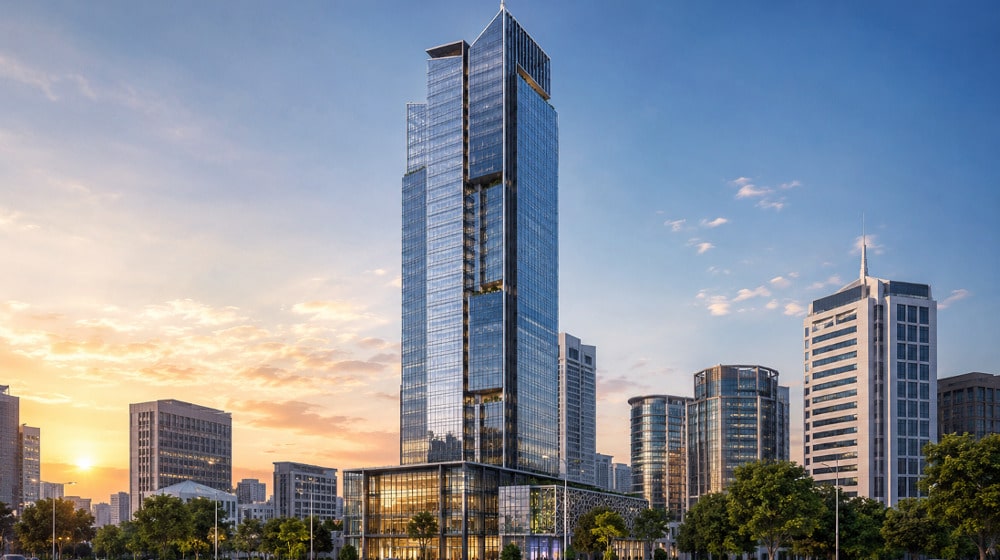
The architectural landscape of Pakistan’s capital is poised for a structural evolution as the Pakistan Airports Authority (PAA) initiates a strategic development in the heart of Islamabad. This calibrated project focuses on constructing a multi-purpose aviation complex in the Blue Area, which experts suggest could become the Islamabad tallest building. By consolidating administrative and commercial functions, the PAA aims to establish a precision-engineered hub for the nation’s aviation sector.
A High-Rise Catalyst in the Blue Area
The PAA has secured a prime 9,000-square-yard plot to facilitate this vertical expansion. Furthermore, the Capital Development Authority (CDA) has already granted formal approval for the building plans, enabling the project to move toward the active construction phase. Consequently, this development represents a major baseline shift in how the capital utilizes high-value urban space.
The proposed complex is not merely an office block; it is designed as a comprehensive ecosystem. The facility will integrate various strategic amenities, including:
- Administrative Hub: Dedicated PAA offices and airline headquarters.
- Commercial Infrastructure: Specialized business centers, banks, and conference facilities.
- Public Engagement: An aviation museum and a modern art gallery.
- Lifestyle Amenities: Hotel accommodations, food courts, fitness centers, and a daycare facility.
Regulatory Milestones and Public Integration
The Pakistan Environmental Protection Agency (Pak-EPA) is currently overseeing the environmental safeguards for the project. To ensure community alignment, the Pak-EPA has invited public feedback and scheduled a formal hearing for May 18. Although the CDA has authorized the structure, official height comparisons with existing landmarks like The Centaurus are still being finalized to confirm its status as the Islamabad tallest building.
The Translation (Clear Context)
The logic behind this project extends beyond mere height. By centralizing aviation management, airline headquarters, and commercial services into one high-density vertical complex, the PAA is reducing operational fragmentation. This mixed-use approach maximizes the utility of the Blue Area, turning a single plot into a multifaceted economic engine that services both the government and the private sector.
The Socio-Economic Impact
For the average Pakistani citizen, this development serves as a catalyst for urban modernization. Professionals will benefit from centralized corporate infrastructure, while families and students gain a new cultural landmark through the aviation museum and art gallery. Furthermore, the inclusion of a daycare center and fitness amenities reflects a modern shift toward supporting a healthier work-life balance for the capital’s workforce.
The Forward Path (Opinion)
This development represents a significant Momentum Shift for Islamabad. As the city transitions from a horizontal spread to vertical density, projects like the PAA aviation complex prove that strategic urban planning can drive national advancement. If executed with precision, this landmark will serve as a structural baseline for future high-rise developments across Pakistan.








