
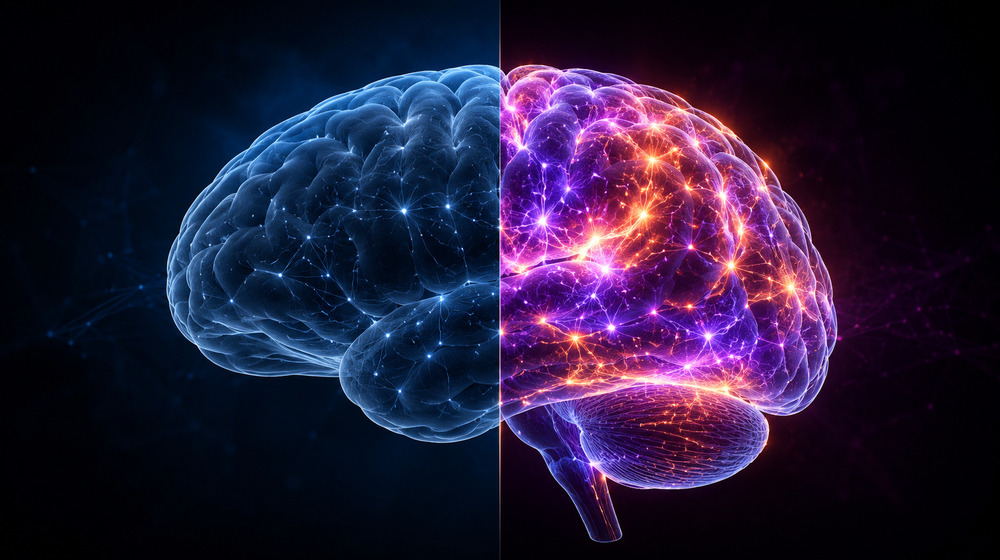
Structural precision within the human connectome serves as the baseline for high-level cognitive performance. A groundbreaking study from Rutgers Health has recently identified that brain processing efficiency relies on a strategic alignment between white matter connectivity and neural timescales. By analyzing how the brain integrates fast and slow information streams, researchers have finally uncovered the architectural secret behind why certain individuals transition between complex tasks with superior speed.
Strategic Alignment in Brain Processing Efficiency
The research, published in Nature Communications, utilized multimodal imaging from 960 participants to map the intricate communication pathways of the mind. Specifically, the study focused on Intrinsic Neural Timescales (INTs), which determine how specific brain regions handle information over varying durations. Consequently, the team discovered that individuals whose physical brain wiring—the white matter—matches these internal timing patterns demonstrate significantly sharper cognitive abilities and improved behavior.

The Rutgers team applied sophisticated mathematical models to these connectomes to track information flow. Moreover, they identified distinct links between neural timing and the genetic, molecular, and cellular properties of individual brain regions. This suggests that brain processing efficiency is not merely a product of habit, but a calibrated biological feature present across species, as similar patterns were observed in animal models.
The Situation Room: Analysis
The Translation (Clear Context)
While most view the brain as a singular processor, it functions more like a decentralized network of “clocks” running at different speeds. The white matter acts as the high-speed fiber-optic cabling that synchronizes these clocks. When the architectural wiring precisely matches the speed requirements of the data being processed, the system achieves peak efficiency. Essentially, cognitive speed is a result of structural synchronization between hardware (connectivity) and software (neural timing).
The Socio-Economic Impact
In Pakistan’s rapidly evolving digital economy, cognitive agility is a vital asset for students, developers, and professionals. Understanding the biological foundations of brain processing efficiency allows for the design of more effective educational frameworks. Furthermore, this research provides a catalyst for addressing the economic burden of cognitive disorders. By optimizing neural health, we can enhance the workforce’s ability to handle high-pressure environments in both urban centers and rural development projects.
The Forward Path (Opinion)
This development represents a significant Momentum Shift in neuroscience. We are moving away from generalized brain mapping toward a paradigm of precision neuro-analysis. By identifying how disruptions in connectivity lead to neuropsychiatric conditions such as schizophrenia or depression, scientists can now develop calibrated interventions. This is a foundational step toward engineering more resilient and efficient minds for the future.
- Precision Networking: White matter integrates information across disparate timescales.
- Connectome Mapping: Mathematical models reveal how data travels through neural pathways.
- Cognitive Advantage: Stronger connectivity-timing alignment correlates with higher intelligence.








