

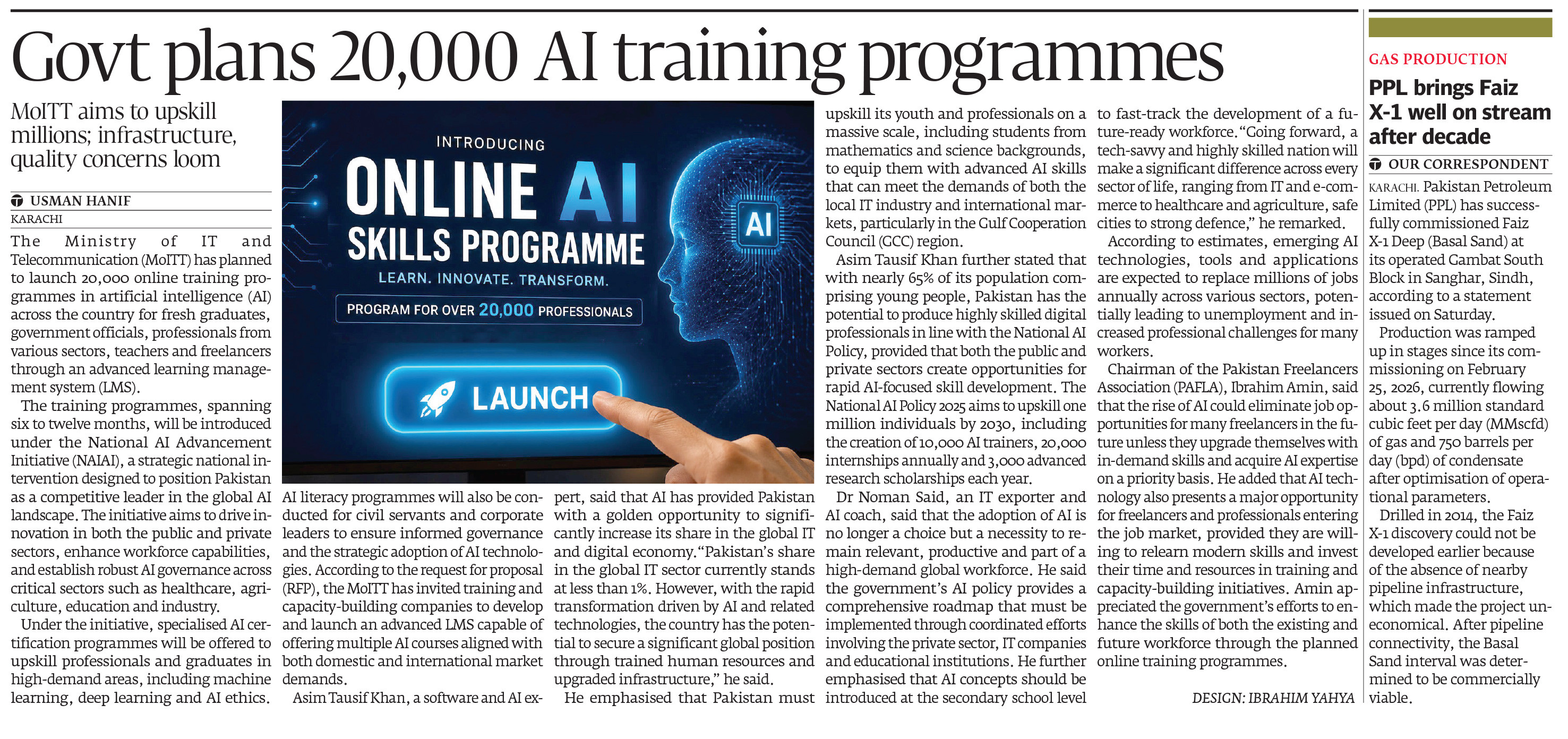
The Ministry of Information Technology and Telecommunication (MoITT) has initiated a strategic deployment of 20,000 AI training programs to pivot the national workforce toward a high-value digital economy. Under the National AI Advancement Initiative (NAIAI), these calibrated learning tracks aim to optimize human capital across multiple sectors. Consequently, this movement serves as a catalyst for integrating Pakistan into the global technology value chain.
Calibrating the Workforce for a Global AI Frontier
The NAIAI framework offers specialized certifications lasting six to twelve months. These programs target fresh graduates, civil servants, and freelancers through a precision-engineered Learning Management System (LMS). Furthermore, the curriculum focuses on high-demand technical domains including machine learning, deep learning, and AI ethics.
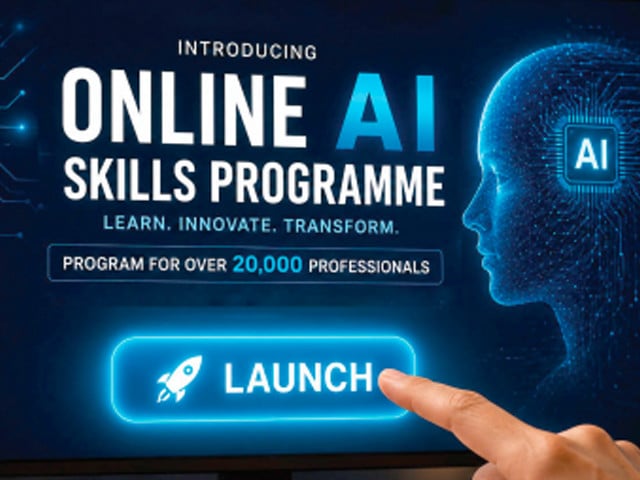
Industry experts, including Asim Tausif Khan, emphasize that Pakistan’s current global IT market share remains below one percent. To address this structural deficit, the government is prioritizing rapid upskilling for local and international markets. In contrast to traditional education, these AI training programs provide the technical agility required to compete in the Gulf and Western digital landscapes.
Strategic Objectives of the National AI Policy 2025
- Workforce Scaling: Training one million citizens in AI-related disciplines by 2030.
- Institutional Support: Producing 10,000 specialized AI trainers to maintain educational standards.
- Research & Development: Allocating 3,000 advanced research scholarships annually to drive domestic innovation.
- Governance Integration: Implementing AI literacy courses for civil servants to ensure data-driven policymaking.
The “Situation Room” Analysis
The Translation (Clear Context)
The MoITT is essentially building a “Digital Industrial Reserve.” By moving beyond basic IT services and focusing on machine learning and AI ethics, Pakistan is shifting from low-end labor to high-end algorithmic development. The use of a centralized LMS ensures that the quality of training remains consistent regardless of the participant’s geographic location.
The Socio-Economic Impact
For the average Pakistani citizen, this initiative represents a significant reduction in the barrier to entry for high-paying global jobs. Students in rural areas gain access to the same high-level AI training programs as those in urban hubs. Consequently, this democratization of high-tech education can lead to increased household remittances and a stabilized middle class through freelance resilience.
The “Forward Path” (Opinion)
This development represents a Momentum Shift. While the goal of training one million people by 2030 is ambitious, the immediate rollout of 20,000 specialized slots creates the necessary baseline for a tech-centric economy. For sustained progress, the private sector must mirror this state-led initiative by integrating AI into secondary school curricula to ensure a future-ready pipeline of talent.








