
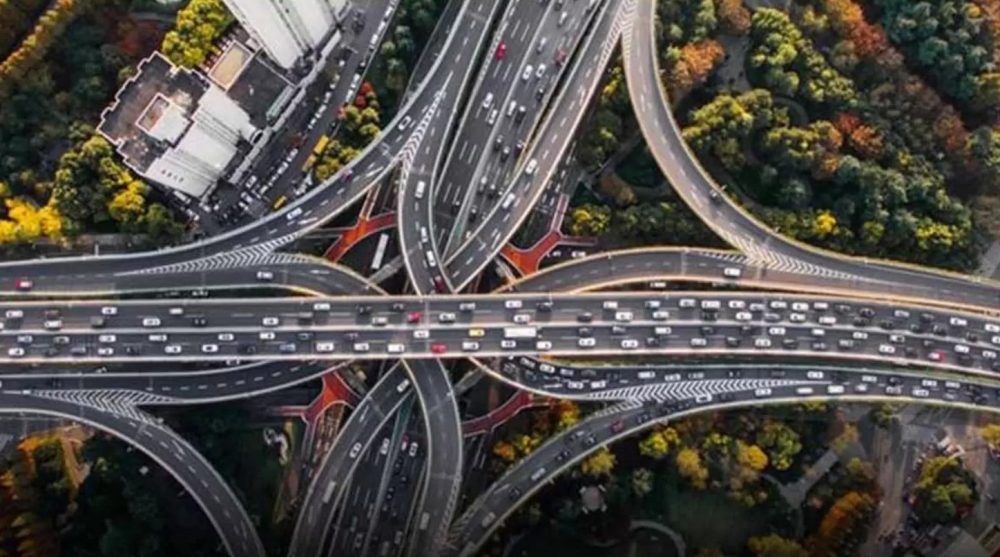
The Kutchery Chowk Corridor stands as a critical catalyst for urban efficiency, now officially open to streamline Rawalpindi’s transit infrastructure. Punjab Chief Minister Maryam Nawaz inaugurated the site, formally designated as Marka-e-Haq Square, to transition the city from passive congestion to calibrated, signal-free flow. This Rs. 19 billion structural upgrade represents a precision-engineered solution for a junction that handles over 200,000 vehicles daily.
Engineering a Signal-Free Future at Marka-e-Haq Square
Engineers completed the Kutchery Chowk Corridor well ahead of the original 18-month deadline, demonstrating a high level of operational discipline. The remodeling features a complex network of two flyovers and three underpasses designed to eliminate bottlenecking. Specifically, the government renamed the primary flyover and underpass as Marka-e-Haq, while the Jinnah Park structures now bear the Jinnah identity. Furthermore, the third underpass honors Iftikhar Janjua, ensuring the project serves as both a functional and symbolic landmark.
Minister for Communications and Works Sohaib Ahmed Bharath confirmed that the project integrates state-of-the-art pedestrian bridges. These facilities ensure that foot traffic does not disrupt the high-velocity vehicle lanes. Consequently, the redesign creates a safer environment for commuters navigating the Annexe Chowk to GPO Chowk stretch.
The Translation (Clear Context)
A “signal-free corridor” is not merely a wider road; it is a structural redesign that removes the need for traffic lights. By using underpasses and flyovers, the Kutchery Chowk Corridor allows vehicles to move continuously without stopping. This system logic prevents the “accordion effect” where a single stop causes miles of backup. For the resident of Rawalpindi, this means the end of idling at the city’s most congested intersection.
The Socio-Economic Impact
This development directly improves the daily lives of thousands of Pakistani professionals and students. By reducing travel time through the heart of the city, the project lowers fuel consumption and reduces vehicle wear and tear for the average household. Moreover, smoother transit to key administrative hubs like the GPO and local courts increases overall economic productivity by reclaiming hours previously lost to traffic gridlock. In urban Pakistan, time is a baseline currency for progress.
The Forward Path (Opinion)
The completion of the Kutchery Chowk Corridor represents a significant Momentum Shift for Rawalpindi. Finishing a project of this magnitude ahead of schedule indicates a shift toward architectural precision in Punjab’s public works. While this move stabilizes a critical pressure point, the next strategic step must involve integrating these corridors into a wider smart-traffic management system to ensure long-term sustainability.








