
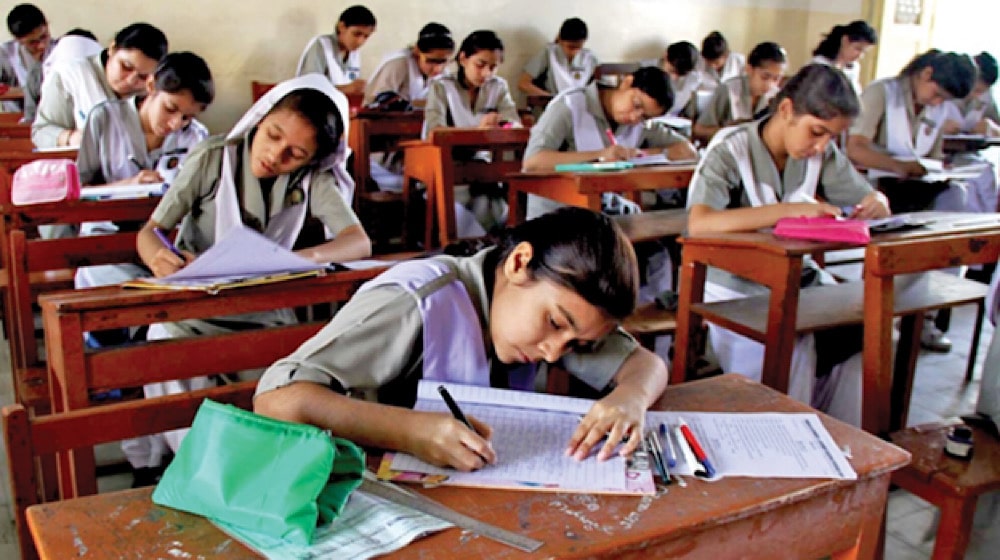
The recent announcement of the Balochistan Matric Results marks a significant calibration of the province’s educational performance. The Balochistan Board of Intermediate and Secondary Education (BBISE) Quetta released the annual matriculation figures, revealing a surge in academic precision. Consequently, this data serves as a vital baseline for measuring the progress of human capital within the region. Students across the province have demonstrated remarkable resilience, achieving a high pass percentage that reflects structural improvements in the local education system.
Strategic Analysis of the Balochistan Matric Results
The 2026 examination cycle produced exceptional individual performances, particularly from the Balochistan Residential Colleges (BRC). Specifically, Ahmed of BRC Loralai secured the first position with a calculated 1,051 marks. Following closely, Matiullah of BRC Zhob attained second place with 1,050 marks. Furthermore, the third position was shared by Younus Khan and Muhammad Mudasir, both of BRC Loralai, who scored 1,046 marks respectively. These figures highlight a competitive academic environment that fosters excellence among young scholars.

Quantitative Efficiency and Pass Percentages
The board’s data department provided a detailed breakdown of the 10th and 9th-grade performance metrics:
- 10th Grade: 77,251 students appeared; 69,002 passed, resulting in a 89.32% pass rate.
- 9th Grade: 68,517 students appeared; 50,400 passed, yielding a 73.56% pass rate.
These statistics indicate a robust transition rate between the two secondary levels. Although the 9th-grade results show more variability, the 10th-grade completion rate suggests a high level of academic stabilization.
The Situation Room: Strategic Impact
The Translation (Clear Context)
In technical terms, the dominance of BRC institutions signifies the success of “Residentially Stabilized Learning.” By providing a controlled environment, these colleges act as a catalyst for high-tier academic output. The 89% pass rate in the 10th grade suggests that standardized testing metrics are becoming more accessible to the general student population, reducing the “failure gap” that previously hindered regional progress.
The Socio-Economic Impact
For the average Pakistani citizen, these results represent a surge in the skilled labor pipeline. As more students in Balochistan successfully clear their matriculation, the local economy gains a more literate and trainable workforce. Specifically, for households in rural Balochistan, these academic successes open doors to federal scholarships and higher education opportunities, which are essential for long-term poverty alleviation.
The Forward Path (Opinion)
We classify this development as a Momentum Shift. The consistent performance of male students in the top tiers and the nearly 90% pass rate in the 10th grade demonstrate a system gaining velocity. However, the 15% discrepancy between 9th and 10th-grade pass rates suggests that the “Foundation Year” (9th grade) requires further strategic intervention to ensure long-term sustainability.
Visit EduNation to find scholarships from around the world.








